
AI & Technology Updates
-
SPARQL-LLM: Natural Language to Knowledge Graph Queries
 SPARQL-LLM is a novel approach that leverages large language models (LLMs) to translate natural language queries into executable SPARQL queries for knowledge graphs. This method addresses the challenge of interacting with complex data structures using everyday language, making it more accessible for users who may not be familiar with the intricacies of SPARQL or knowledge graph schemas. By using LLMs, SPARQL-LLM can understand and process the nuances of human language, providing a more intuitive interface for querying knowledge graphs. The approach involves training the language model on a dataset that pairs natural language questions with their corresponding SPARQL queries. This enables the model to learn the patterns and structures necessary to generate accurate and efficient queries. The ultimate goal is to bridge the gap between human language and machine-readable data, allowing users to extract valuable insights from knowledge graphs without needing specialized technical skills. SPARQL-LLM represents a significant advancement in making data more accessible and usable, particularly for those who are not data scientists or engineers. By simplifying the process of querying complex databases, it empowers a broader audience to leverage the wealth of information contained within knowledge graphs. This matters because it democratizes access to data-driven insights, fostering innovation and informed decision-making across various fields.
-
Memory-Efficient TF-IDF for Large Datasets in Python
 A newly designed library at the C++ level offers a memory-efficient solution for vectorizing large datasets using the TF-IDF method in Python. This innovative approach allows for processing datasets as large as 100GB on machines with as little as 4GB of RAM. The library, named fasttfidf, provides outputs that are comparable to those of the widely-used sklearn library, making it a valuable tool for handling large-scale data without requiring extensive hardware resources. The library's efficiency stems from its ability to handle data processing in a way that minimizes memory usage while maintaining high performance. By re-designing the core components at the C++ level, fasttfidf can manage and process vast amounts of data more effectively than traditional methods. This advancement is particularly beneficial for data scientists and engineers who work with large datasets but have limited computational resources, as it enables them to perform complex data analysis tasks without the need for expensive hardware upgrades. Additionally, fasttfidf now supports the Parquet file format, which is known for its efficient data storage and retrieval capabilities. This support further enhances the library's utility by allowing users to work with data stored in a format that is optimized for performance and scalability. The combination of memory efficiency, high performance, and support for modern data formats makes fasttfidf a compelling choice for those seeking to vectorize large datasets in Python. This matters because it democratizes access to advanced data processing techniques, enabling more users to tackle large-scale data challenges without prohibitive costs.
-
Updated Data Science Resources Handbook
 An updated handbook for data science resources has been released, expanding beyond its original focus on data analysis to encompass a broader range of data science tasks. The restructured guide aims to streamline the process of finding tools and resources, making it more accessible and user-friendly for data scientists and analysts. This comprehensive overhaul includes new sections and resources, reflecting the dynamic nature of the data science field and the diverse needs of its practitioners. The handbook's primary objective is to save time for professionals by providing a centralized repository of valuable tools and resources. With the rapid evolution of data science, having a well-organized and up-to-date resource list can significantly enhance productivity and efficiency. By covering various aspects of data science, from data cleaning to machine learning, the handbook serves as a practical guide for tackling a wide array of tasks. Such a resource is particularly beneficial in an industry where staying current with tools and methodologies is crucial. By offering a curated selection of resources, the handbook not only aids in task completion but also supports continuous learning and adaptation. This matters because it empowers data scientists and analysts to focus more on solving complex problems and less on searching for the right tools, ultimately driving innovation and progress in the field.
-
Embracing Messy Data for Better Models
 Data scientists often begin their careers working with clean, well-organized datasets that make it easy to build models and achieve impressive results in controlled environments. However, when transitioning to real-world applications, these models frequently fail due to the inherent messiness and complexity of real-world data. Inputs can be vague, feedback may contradict itself, and users often describe problems in unexpected ways. This chaotic nature of real-world data is not just noise to be filtered out but a rich source of information that reveals user intent, confusion, and unmet needs. Recognizing the value in messy data requires a shift in perspective. Instead of striving for perfect data schemas, data scientists should focus on understanding how people naturally discuss and interact with problems. This involves paying attention to half sentences, complaints, follow-up comments, and unusual phrasing, as these elements often contain the true signals needed to build effective models. Embracing the messiness of data can lead to a deeper understanding of user needs and result in more practical and impactful models. The transition from clean to messy data has significant implications for feature design, model evaluation, and choice of algorithms. While clean data is useful for learning the mechanics of data science, messy data is where models learn to be truly useful and applicable in real-world scenarios. This paradigm shift can lead to improved results and more meaningful insights than any new architecture or metric. Understanding and leveraging the complexity of real-world data is crucial for building models that are not only accurate but also genuinely helpful to users. Why this matters: Embracing the complexity of real-world data can lead to more effective and impactful data science models, as it helps uncover true user needs and improve model applicability.
-
InstaDeep’s NTv3: Multi-Species Genomics Model
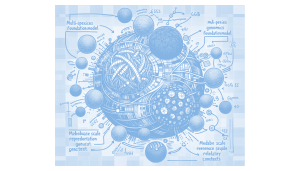 InstaDeep has introduced Nucleotide Transformer v3 (NTv3), a multi-species genomics foundation model designed to enhance genomic prediction and design by connecting local motifs with megabase scale regulatory contexts. NTv3 operates at single-nucleotide resolution for 1 Mb contexts and integrates representation learning, functional track prediction, genome annotation, and controllable sequence generation into a single framework. The model builds on previous versions by extending sequence-only pretraining to longer contexts and incorporating explicit functional supervision and a generative mode, making it capable of handling a wide range of genomic tasks across multiple species. NTv3 employs a U-Net style architecture that processes very long genomic windows, utilizing a convolutional downsampling tower, a transformer stack for long-range dependencies, and a deconvolution tower for base-level resolution restoration. It tokenizes input sequences at the character level, maintaining a vocabulary size of 11 tokens. The model is pretrained on 9 trillion base pairs from the OpenGenome2 resource and post-trained with a joint objective incorporating self-supervision and supervised learning on functional tracks and annotation labels from 24 animal and plant species. This comprehensive training allows NTv3 to achieve state-of-the-art accuracy in functional track prediction and genome annotation, outperforming existing genomic foundation models. Beyond prediction, NTv3 can be fine-tuned as a controllable generative model using masked diffusion language modeling, enabling the design of enhancer sequences with specified activity levels and promoter selectivity. These designs have been validated experimentally, demonstrating improved promoter specificity and intended activity ordering. NTv3's ability to unify various genomic tasks and support long-range, cross-species genome-to-function inference makes it a significant advancement in genomics, providing a powerful tool for researchers and practitioners in the field. This matters because it enhances our understanding and manipulation of genomic data, potentially leading to breakthroughs in fields such as medicine and biotechnology.