
Deep Dives
-
2026 Roadmap for AI Search & RAG Systems
Read Full Article: 2026 Roadmap for AI Search & RAG Systems A practical roadmap for modern AI search and Retrieval-Augmented Generation (RAG) systems emphasizes the need for robust, real-world applications beyond basic vector databases and prompts. Key components include semantic and hybrid retrieval methods, explicit reranking layers, and advanced query understanding and intent recognition. The roadmap also highlights the importance of agentic RAG, which involves query decomposition and multi-hop processing, as well as maintaining data freshness and lifecycle management. Additionally, it addresses grounding and hallucination control, evaluation criteria beyond superficial correctness, and production concerns such as latency, cost, and access control. This roadmap is designed to be language-agnostic and focuses on system design rather than specific frameworks. Understanding these elements is crucial for developing effective and efficient AI search systems that meet real-world demands.
-
AI’s Impact on Healthcare Efficiency and Accuracy
Read Full Article: AI’s Impact on Healthcare Efficiency and Accuracy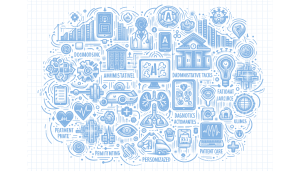 AI is transforming healthcare by optimizing administrative tasks, enhancing diagnostic accuracy, and personalizing patient care. It reduces the administrative burden, aids in charting and documentation, and automates insurance approvals, improving efficiency and reducing burnout. AI also improves diagnostics through image analysis and predictive tools, enabling earlier and more accurate disease detection. Additionally, AI enhances patient care with personalized medication plans, home care monitoring, and triage support, while also revolutionizing medical research. Despite its vast potential, challenges remain in safely integrating AI into healthcare systems. This matters because AI's integration into healthcare can significantly improve efficiency, patient outcomes, and the overall quality of care.
-
Turning Classic Games into DeepRL Environments
Read Full Article: Turning Classic Games into DeepRL Environments Turning classic games into Deep Reinforcement Learning environments offers a unique opportunity for research and competition, allowing AI to engage in AI vs AI and AI vs COM scenarios. The choice of a deep learning framework is crucial for success, with PyTorch being favored for its Pythonic nature and ease of use, supported by a wealth of resources and community support. While TensorFlow is popular in the industry for its production-ready tools, its setup, especially with GPU support on Windows, can be challenging. JAX is another option, though less discussed, it offers unique advantages in specific use cases. Understanding these frameworks and their nuances is essential for developers looking to leverage AI in gaming and other applications.
-
LGAI-EXAONE/K-EXAONE-236B-A23B-GGUF Model Overview
Read Full Article: LGAI-EXAONE/K-EXAONE-236B-A23B-GGUF Model Overview The LGAI-EXAONE/K-EXAONE-236B-A23B-GGUF model is a highly efficient AI architecture featuring a 236 billion parameter design with 23 billion active parameters, optimized with Multi-Token Prediction (MTP) for enhanced inference throughput. It supports a 256K context window using a hybrid attention scheme, significantly reducing memory usage for long-document processing. The model offers multilingual support across six languages with an improved 150k vocabulary for better token efficiency and demonstrates advanced tool-use and search capabilities through multi-agent strategies. Additionally, it is aligned with universal human values and incorporates Korean cultural contexts to address regional sensitivities, ensuring high reliability across diverse risk categories. This matters because it represents a significant advancement in AI efficiency, multilingual capabilities, and cultural sensitivity, potentially impacting various applications and industries.
-
Physical AI Revolutionizing Cars
Read Full Article: Physical AI Revolutionizing Cars Physical AI is an emerging field that integrates artificial intelligence with physical systems, creating machines that can interact with the physical world in more sophisticated ways. This technology is being developed for use in vehicles, potentially transforming how cars operate by allowing them to perform tasks autonomously and adapt to changing environments more effectively. The fusion of AI with physical systems could lead to advancements in safety, efficiency, and user experience in the automotive industry. Understanding and harnessing Physical AI is crucial for the future of transportation and its impact on society.
-
Scaling to 11M Embeddings: Product Quantization Success
Read Full Article: Scaling to 11M Embeddings: Product Quantization Success Handling 11 million embeddings in a large-scale knowledge graph project presented significant challenges in terms of storage, cost, and performance. The Gemini-embeddings-001 model was chosen for its strong semantic representations, but its high dimensionality led to substantial storage requirements. Storing these embeddings in Neo4j resulted in a prohibitive monthly cost of $32,500 due to the high memory footprint. To address this, Product Quantization (PQ), specifically PQ64, was implemented, reducing storage needs by approximately 192 times, bringing the total storage requirement to just 0.704 GB. While there are concerns about retrieval accuracy with such compression, PQ64 maintained a recall@10 of 0.92, with options like PQ128 available for even higher accuracy. This matters because it demonstrates a scalable and cost-effective approach to managing large-scale vector data without significantly compromising performance.
-
Introducing the nanoRLHF Project
Read Full Article: Introducing the nanoRLHF Project nanoRLHF is a project designed to implement core components of Reinforcement Learning from Human Feedback (RLHF) using PyTorch and Triton. It offers educational reimplementations of large-scale systems, focusing on clarity and core concepts rather than efficiency. The project includes minimal Python implementations and custom Triton kernels, such as Flash Attention, and provides training pipelines using open-source math datasets to train a Qwen3 model. This initiative serves as a valuable learning resource for those interested in understanding the internal workings of RL training frameworks. Understanding RLHF is crucial as it enhances AI systems' ability to learn from human feedback, improving their performance and adaptability.
-
Improving RAG Systems with Semantic Firewalls
Read Full Article: Improving RAG Systems with Semantic Firewalls In the GenAI space, the common approach to building Retrieval-Augmented Generation (RAG) systems involves embedding data, performing a semantic search, and stuffing the context window with top results. This approach often leads to confusion as it fills the model with technically relevant but contextually useless data. A new method called "Scale by Subtraction" proposes using a deterministic Multidimensional Knowledge Graph to filter out noise before the language model processes the data, significantly reducing noise and hallucination risk. By focusing on critical and actionable items, this method enhances the model's efficiency and accuracy, offering a more streamlined approach to RAG systems. This matters because it addresses the inefficiencies in current RAG systems, improving the accuracy and reliability of AI-generated responses.
-
Benchmarking 4-bit Quantization in vLLM
Read Full Article: Benchmarking 4-bit Quantization in vLLM A comprehensive analysis of vLLM quantization methods reveals varied performance across different techniques. Marlin achieved the highest token processing speed at 712 tokens per second, significantly outperforming the baseline FP16's 461 tok/s, while GPTQ without Marlin's kernel lagged behind at 276 tok/s. BitsandBytes maintained the smallest quality drop and required no pre-quantized weights, whereas GGUF had the worst perplexity but excelled in HumanEval scores. AWQ showed unexpectedly slow performance in vLLM, processing only 67 tok/s. Understanding these differences is crucial for optimizing model efficiency and performance in machine learning applications.
-
SimpleLLM: Minimal LLM Inference Engine
Read Full Article: SimpleLLM: Minimal LLM Inference Engine SimpleLLM is a lightweight language model inference engine designed to maximize GPU utilization through an asynchronous processing loop that batches requests for optimal throughput. The engine demonstrates impressive performance, achieving 135 tokens per second with a batch size of 1 and over 4,000 tokens per second with a batch size of 64. Currently, it supports only the OpenAI/gpt-oss-120b model on a single NVIDIA H100 GPU. This matters because it provides an efficient and scalable solution for deploying large language models, potentially reducing costs and increasing accessibility for developers.