
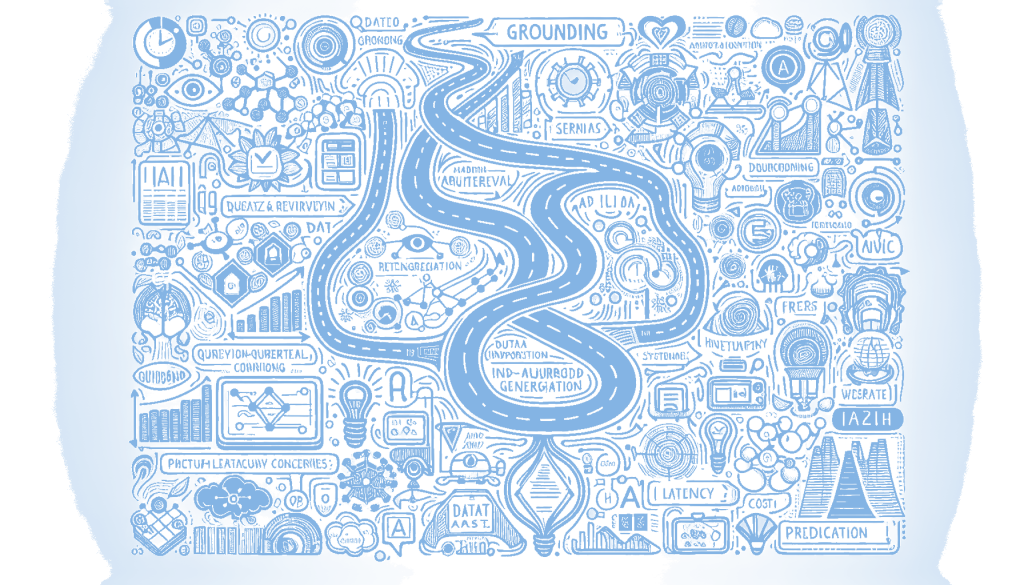
A practical roadmap for modern AI search and Retrieval-Augmented Generation (RAG) systems emphasizes the need for robust, real-world applications beyond basic vector databases and prompts. Key components include semantic and hybrid retrieval methods, explicit reranking layers, and advanced query understanding and intent recognition. The roadmap also highlights the importance of agentic RAG, which involves query decomposition and multi-hop processing, as well as maintaining data freshness and lifecycle management. Additionally, it addresses grounding and hallucination control, evaluation criteria beyond superficial correctness, and production concerns such as latency, cost, and access control. This roadmap is designed to be language-agnostic and focuses on system design rather than specific frameworks. Understanding these elements is crucial for developing effective and efficient AI search systems that meet real-world demands.
The evolution of AI search systems, particularly Retrieval-Augmented Generation (RAG) systems, is a critical area of focus as we approach 2026. These systems are becoming increasingly complex, moving beyond the simplistic combination of vector databases and prompt-based interactions. A comprehensive roadmap highlights the necessity for a multifaceted approach that includes semantic and hybrid retrieval methods, integrating both sparse and dense data retrieval techniques. This blend is essential because it allows for more nuanced and accurate search results, catering to the diverse needs of users and making AI search systems more reliable and effective.
One of the significant advancements in modern AI search is the inclusion of explicit reranking layers and improved query understanding and intent recognition. These components ensure that the search system not only retrieves relevant information but also prioritizes it in a way that aligns with the user’s true intent. This matters because it enhances the user experience by providing more contextually appropriate results, reducing the frustration of sifting through irrelevant data. Additionally, these features help in refining the accuracy of AI responses, which is crucial for maintaining user trust in AI systems.
Agentic RAG systems are another innovative aspect, incorporating query decomposition and multi-hop reasoning. This approach allows AI systems to break down complex queries into manageable parts and draw on multiple data sources to construct a comprehensive response. Such capabilities are vital for handling intricate queries that require a deeper level of understanding and synthesis of information. Moreover, addressing data freshness and lifecycle management ensures that the AI systems provide up-to-date information, which is especially important in fast-paced environments where outdated data can lead to significant errors or misjudgments.
Finally, grounding and hallucination control, along with a shift in evaluation metrics beyond merely assessing if an answer “sounds right,” are pivotal in advancing AI search systems. These elements focus on ensuring that the AI’s responses are not only coherent but also factually accurate and grounded in reality. This is crucial for applications where misinformation can have serious consequences, such as in medical or legal fields. Furthermore, considerations for production concerns, including latency, cost, and access control, are essential for deploying scalable and economically viable AI systems. As we look to the future, these developments in AI search and RAG systems will play a critical role in shaping how we interact with technology and access information.
Read the original article here
Comments
One response to “2026 Roadmap for AI Search & RAG Systems”
The roadmap provides a comprehensive overview of future AI search and RAG systems, especially with its emphasis on semantic retrieval and query understanding. I’m curious about how you envision the integration of agentic RAG with existing data frameworks—what specific challenges do you foresee in ensuring seamless data freshness and lifecycle management within these systems?