
Python remains the dominant programming language for machine learning due to its comprehensive libraries and user-friendly nature. However, other languages like C++ and Rust are favored for performance-critical tasks due to their speed and optimization capabilities. Julia, while noted for its performance, is less widely adopted, and languages like Kotlin, Java, and C# are used for platform-specific ML applications. High-level languages such as Go, Swift, and Dart are chosen for their ability to compile to native code, enhancing performance, while R and SQL serve roles in statistical analysis and data management. CUDA is utilized for GPU programming to boost ML tasks, and JavaScript is often employed in full-stack web projects involving machine learning. Understanding the strengths of each language allows developers to choose the best tool for their specific ML needs.
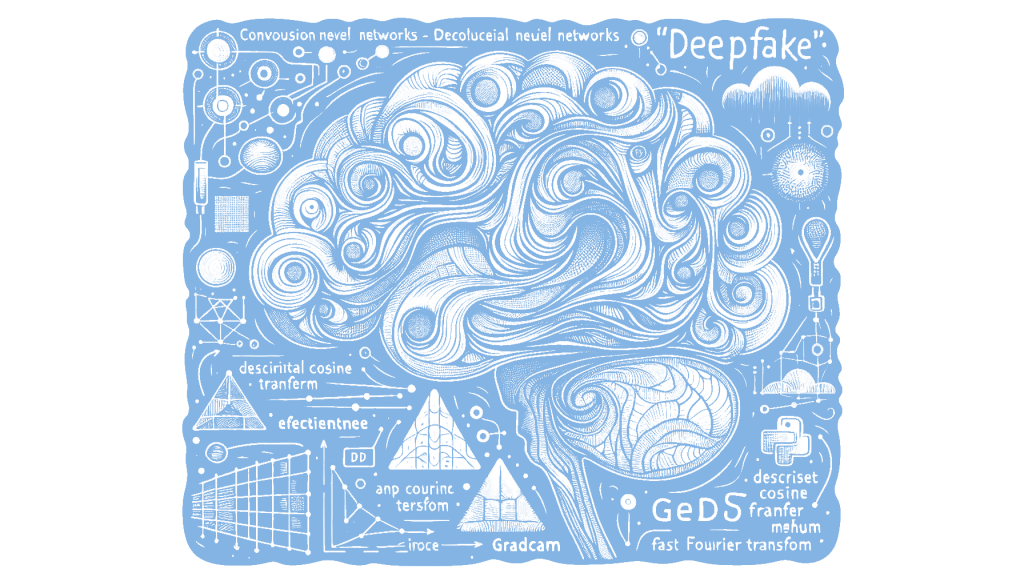
The rise of deepfake technology has brought about a pressing need for reliable detection methods. VeridisQuo, an open-source deepfake detector, addresses this need by utilizing a combination of EfficientNet, DCT/FFT, and GradCAM. EfficientNet, a family of convolutional neural networks, is known for its high performance and efficiency in image classification tasks. By integrating these networks with Discrete Cosine Transform (DCT) and Fast Fourier Transform (FFT), VeridisQuo enhances its ability to analyze and detect the subtle manipulations characteristic of deepfakes. This matters because deepfakes pose significant threats to privacy, security, and trust in digital media, making robust detection tools essential for mitigating potential misuse.
Incorporating GradCAM, a technique for visualizing the regions of input that influence the model’s predictions, adds a layer of explainability to VeridisQuo’s AI. This feature is crucial because it allows users to understand why the detector identifies certain media as deepfakes. Explainability in AI models is increasingly important, as it builds trust and transparency, enabling users to make informed decisions based on the model’s outputs. In a world where AI systems are often seen as black boxes, having an explainable model helps demystify the process and fosters greater acceptance and reliance on AI tools.
The development of VeridisQuo highlights the importance of choosing the right programming language for machine learning and AI applications. Python remains the dominant language due to its extensive libraries and ease of use, making it ideal for developing AI models like VeridisQuo. However, other languages such as C++ and Rust are also crucial for performance-critical tasks, offering low-level optimizations and safety features, respectively. The choice of language can significantly impact the efficiency and effectiveness of AI applications, underscoring the need for developers to consider the specific requirements of their projects when selecting a programming language.
As deepfake technology continues to evolve, so too must the tools designed to combat it. The open-source nature of VeridisQuo allows for continuous improvement and adaptation, encouraging collaboration among developers and researchers. This collaborative approach is vital in staying ahead of deepfake advancements and ensuring that detection methods remain effective. By leveraging a combination of cutting-edge AI techniques and fostering a community-driven development model, VeridisQuo exemplifies how technology can be harnessed to address the challenges posed by deepfakes, ultimately contributing to a safer and more trustworthy digital landscape.
Read the original article here
Comments
6 responses to “VeridisQuo: Open Source Deepfake Detector with Explainable AI”
The discussion on language preferences for machine learning tasks is spot-on, especially highlighting Python’s dominance and the performance edge offered by C++ and Rust. It’s intriguing to see how VeridisQuo leverages these languages for deepfake detection while incorporating Explainable AI. Could you delve deeper into how VeridisQuo balances the trade-off between model interpretability and detection accuracy?
VeridisQuo addresses the balance between model interpretability and detection accuracy by integrating Explainable AI techniques, which help users understand the decision-making process without significantly compromising accuracy. The project utilizes Python for its machine learning frameworks and C++ or Rust for performance optimization, enabling efficient processing and analysis. For more detailed insights, you might want to check the original article linked in the post.
The project aims to enhance model interpretability using Explainable AI without heavily sacrificing detection accuracy, which is a significant achievement in the field. The use of Python alongside C++ or Rust seems to effectively balance ease of development with performance needs. For a more in-depth understanding, the original article linked in the post would be a great resource.
The project indeed aims to balance model interpretability with detection accuracy, which is crucial in the field of AI. Using Python alongside C++ or Rust is an effective strategy for maintaining both development ease and performance. For more detailed insights, the original article linked in the post would be a valuable resource.
The post suggests that achieving a balance between model interpretability and detection accuracy is a key focus, which is indeed a significant challenge in AI. Integrating Python with C++ or Rust appears to be a strategic choice for optimizing both development and performance aspects. For any specific questions, the original article linked in the post would be the best place to seek further clarification from the author.
The focus on balancing interpretability and accuracy is indeed a crucial challenge in AI, as highlighted by the project. Using Python with C++ or Rust is a strategic approach to optimizing performance while maintaining ease of development. For more detailed information, it’s best to refer directly to the original article linked in the post.