
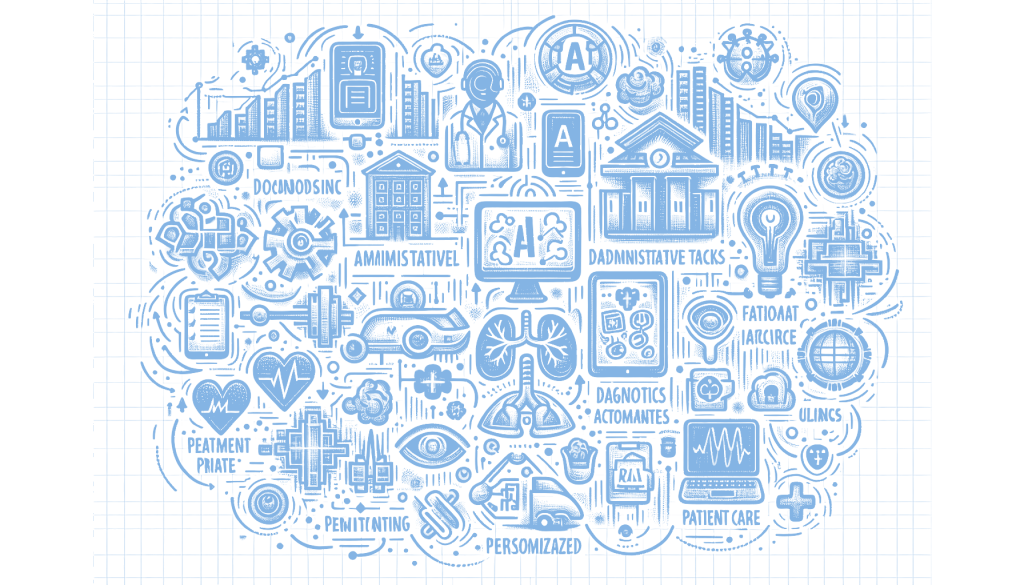
AI is transforming healthcare by optimizing administrative tasks, enhancing diagnostic accuracy, and personalizing patient care. It reduces the administrative burden, aids in charting and documentation, and automates insurance approvals, improving efficiency and reducing burnout. AI also improves diagnostics through image analysis and predictive tools, enabling earlier and more accurate disease detection. Additionally, AI enhances patient care with personalized medication plans, home care monitoring, and triage support, while also revolutionizing medical research. Despite its vast potential, challenges remain in safely integrating AI into healthcare systems. This matters because AI’s integration into healthcare can significantly improve efficiency, patient outcomes, and the overall quality of care.
Artificial Intelligence (AI) is on the cusp of transforming the healthcare industry, promising to enhance efficiency, improve diagnostic accuracy, and personalize patient care. One of the most significant areas where AI can make a difference is in administrative and workflow optimization. By reducing the administrative burden, AI can alleviate burnout among medical professionals, allowing them to focus more on patient interaction. For instance, AI scribes can automatically document patient visits, making charting and documentation more efficient. This not only saves time but also ensures that healthcare providers can dedicate more attention to patient care, ultimately improving the quality of service.
AI’s potential in diagnostics is another game-changer for healthcare. The ability to analyze radiology images for anomalies such as cancer can lead to earlier and more accurate diagnoses, which is crucial for effective treatment. AI can process vast datasets to provide insights that might be missed by human eyes, allowing for quicker and more precise identification of health issues. Additionally, AI-powered tools like symptom checkers and mole analyzers can empower patients to understand their symptoms better and decide on appropriate next steps, potentially reducing unnecessary visits to healthcare facilities.
In terms of patient care and support, AI offers personalized solutions that cater to individual needs. By customizing medication plans and creating home care plans, AI can enhance patient outcomes and experiences. Remote monitoring of patient health is another promising application, allowing for continuous care without the need for frequent hospital visits. AI-powered assistants can also aid in triage, providing immediate support and guiding patients to the appropriate level of care. This level of personalization and support can significantly improve patient satisfaction and adherence to treatment plans.
While the potential of AI in healthcare is vast, there are challenges and considerations that need to be addressed. Ensuring the safety and effectiveness of AI applications is paramount, as is maintaining patient privacy and data security. The integration of AI into healthcare systems requires careful planning and collaboration among stakeholders to overcome these hurdles. Despite these challenges, the transformative power of AI in healthcare is undeniable, offering the promise of a more efficient, accurate, and personalized healthcare system that can ultimately lead to better patient outcomes and a more sustainable healthcare industry. This matters because it represents a significant leap forward in how healthcare can be delivered, potentially improving lives and reducing costs on a global scale.
Read the original article here
Comments
2 responses to “AI’s Impact on Healthcare Efficiency and Accuracy”
While the post highlights the numerous benefits of AI in healthcare, it might underplay the potential risks related to data privacy and security breaches that could arise from increased AI use. A deeper exploration of these challenges and how they might be mitigated would strengthen the argument. How do you foresee addressing the ethical concerns related to patient data privacy as AI becomes more integrated into healthcare systems?
The post acknowledges the importance of addressing data privacy and security concerns as AI becomes more integrated into healthcare. Implementing robust encryption, strict access controls, and regular audits are some strategies to mitigate these risks. Additionally, developing comprehensive regulations and guidelines will be crucial to ensure patient data is protected while harnessing AI’s benefits. For more detailed insights, you might want to refer to the original article linked in the post.