
Nvidia
-
NVIDIA Isaac GR00T N1.6: Sim-to-Real Humanoid Robotics
Read Full Article: NVIDIA Isaac GR00T N1.6: Sim-to-Real Humanoid Robotics Humanoid robots require a combination of cognition, perception, planning, and whole-body control to function effectively in dynamic environments. NVIDIA's Isaac GR00T N1.6 uses a sim-to-real workflow to integrate these capabilities, employing whole-body reinforcement learning, synthetic data-trained navigation, and vision-based localization. This approach allows robots to perform complex tasks by decomposing high-level instructions into stepwise action plans, enabling smooth and adaptive movements across various robot embodiments. The system's architecture, enhanced reasoning, and improved cross-embodiment performance make it applicable for real-world tasks, with zero-shot sim-to-real transfer reducing the need for task-specific finetuning. This matters because it advances the development of versatile humanoid robots capable of operating in diverse and unpredictable environments.
-
Nvidia CEO on AI Enhancements for Older GPUs
Read Full Article: Nvidia CEO on AI Enhancements for Older GPUs Nvidia's CEO has suggested that it might be possible to enhance older graphics cards with AI improvements, sparking interest in the potential for extending the lifespan and capabilities of existing hardware. This idea aligns with ongoing debates about AI's impact on job markets, where opinions vary from concerns over job displacement to optimism about new opportunities and increased productivity. While some worry about an AI-driven economic bubble, others believe that economic and regulatory factors play a more significant role in shaping job markets. The rapid development of AI continues to fuel these discussions, with its future implications still uncertain. Understanding AI's potential to upgrade existing technology is crucial as it could influence both consumer markets and broader economic trends.
-
Jensen Huang’s 121 AI Mentions at CES 2025
Read Full Article: Jensen Huang’s 121 AI Mentions at CES 2025 Jensen Huang mentioned "AI" a total of 121 times during his CES 2025 keynote, prompting the creation of a compilation video that captures each instance. Using open-source tools like Dive, yt-dlp-mcp, and ffmpeg-mcp-lite, the video was downloaded, parsed for timestamps of each "AI" mention, and edited to include these clips in sequence. The process involved downloading the video in 720p with subtitles, parsing the JSON3 subtitle file for precise timing, and using ffmpeg to cut and merge the clips. The final product, a video titled "Jensen_CES_AI.mp4," offers a mesmerizing view of the keynote's focus on artificial intelligence. This matters because it highlights the significant emphasis on AI in tech discussions and presentations, reflecting its growing importance in the industry.
-
Anthropic’s $10B Fundraising at $350B Valuation
Read Full Article: Anthropic’s $10B Fundraising at $350B Valuation Anthropic is reportedly planning to raise $10 billion at a staggering $350 billion valuation, nearly doubling its value from a recent $183 billion valuation just three months ago. The funding round, led by Coatue Management and Singapore's GIC, follows significant investments from Nvidia and Microsoft, which involve Anthropic purchasing $30 billion in compute capacity from Microsoft Azure. This financial boost comes as Anthropic's coding automation tool, Claude Code, continues to gain traction among developers, and as the company gears up for a potential IPO to compete with its rival OpenAI, which is also seeking substantial funding. This matters because it highlights the intense competition and rapid growth in the AI industry, with major players securing massive investments to fuel innovation and market dominance.
-
Caterpillar and Nvidia Bring AI to Construction
Read Full Article: Caterpillar and Nvidia Bring AI to Construction Caterpillar is advancing its construction machinery by integrating AI and automation through a collaboration with Nvidia. The company is piloting an AI assistive system, called "Cat AI," in its Cat 306 CR Mini Excavator, utilizing Nvidia’s Jetson Thor AI platform. This system aids machine operators by answering questions, providing resources, offering safety tips, and scheduling services, while also collecting valuable data for simulations and operational insights. Additionally, Caterpillar is exploring digital twins of construction sites using Nvidia’s Omniverse to enhance project planning and material estimation, marking a significant step towards increased automation in their machinery lineup. This matters because it represents a significant shift towards smarter, more efficient construction processes, enhancing productivity and safety in the industry.
-
Rising GPU, SSD, and RAM Prices: What to Expect
Read Full Article: Rising GPU, SSD, and RAM Prices: What to Expect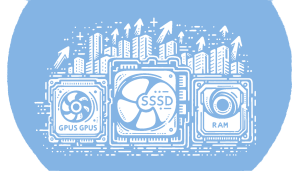 Prices for GPUs, SSDs, and RAM are expected to rise significantly soon, with AMD and NVIDIA planning monthly price increases. NAND flash contract prices have already increased by 20% in November, with further hikes expected, leading to more expensive SSDs. DRAM prices are also set to skyrocket due to limited production capacity and high demand from datacenters and OEMs, with conventional DRAM and server DRAM prices projected to rise by over 55% and 60% respectively in early 2026. These price hikes will impact NVIDIA’s RTX 50 series and AMD’s Radeon RX 9000 lineup, with NVIDIA’s GeForce RTX 5090 potentially reaching $5,000. This matters because it will affect consumers and industries relying on these components, potentially leading to higher costs and delays in technology access.
-
NVIDIA’s Nemotron Speech ASR: Low-Latency Transcription
Read Full Article: NVIDIA’s Nemotron Speech ASR: Low-Latency Transcription NVIDIA has introduced Nemotron Speech ASR, an open-source streaming transcription model designed for low-latency applications like voice agents and live captioning. Utilizing a cache-aware FastConformer encoder and RNNT decoder, the model processes 16 kHz mono audio with configurable chunk sizes ranging from 80 ms to 1.12 s, allowing developers to balance latency and accuracy without retraining. This innovative approach avoids overlapping window recomputation, enhancing concurrency and efficiency on modern NVIDIA GPUs. With a word error rate (WER) between 7.16% and 7.84% across various benchmarks, Nemotron Speech ASR offers a scalable solution for real-time speech applications. This matters because it enables more efficient and accurate real-time speech processing, crucial for applications like voice assistants and live transcription services.
-
Llama AI Tech: New Advancements for Nvidia Users
Read Full Article: Llama AI Tech: New Advancements for Nvidia Users Llama AI technology has recently experienced significant advancements, notably with the release of Llama 3.3 8B Instruct in GGUF format by Meta, and the introduction of a Llama API for seamless model integration into applications. Enhancements in llama.cpp include increased processing speed, a revamped web UI, an improved command-line interface, and the ability to swap models without external software. Additionally, a new router mode has been implemented to efficiently manage multiple models. These developments are crucial as they enhance the usability and performance of AI models, making them more accessible and efficient for developers and users alike.
-
Lenovo Yoga Pro 9i: Bright OLED & Magnetic Stylus
Read Full Article: Lenovo Yoga Pro 9i: Bright OLED & Magnetic Stylus Lenovo's latest Yoga laptops, unveiled for CES 2026, are the most powerful and lightweight models yet. The Yoga Pro 9i, designed for creators, features a 16-inch 4K tandem OLED display with 1,600 nits peak brightness, Intel Panther Lake processors, and up to an RTX 5070 GPU. It includes a Yoga Pen Gen 2 stylus that magnetically attaches to the lid and can be used on the screen or trackpad. Launching in Q2 2026, the Yoga Pro 9i Aura Edition starts at $1,899.99. Meanwhile, the Yoga 7i Slim Ultra Aura Edition, priced from $1,499.99, boasts a 14-inch OLED display with 1,100 nits brightness, weighs just 2.15 pounds, and is 0.55 inches thick, emphasizing portability with three Thunderbolt 4 / USB-C ports. These advancements highlight Lenovo's commitment to combining performance with portability, crucial for modern tech users.
-
Nvidia Shifts Focus to Software with DLSS 4.5
Read Full Article: Nvidia Shifts Focus to Software with DLSS 4.5 Nvidia has shifted its focus from releasing new GeForce graphics card models to enhancing software for existing hardware. At CES, CEO Jensen Huang emphasized the company's AI business, while gaming announcements were made separately. The key software upgrade is DLSS 4.5, which introduces improvements in upscaling and frame generation technologies through a new second-generation transformer model. This model enhances image quality in Performance and Ultra Performance modes by improving pixel prediction. Additionally, DLSS Multi-Frame Generation now increases AI-generated frames per rendered frame from three to five, with a new dynamic feature that adjusts frame generation based on scene complexity. These updates require an RTX 50-series GPU and are designed to optimize performance rather than transform low frame rates into playable ones. This matters because it highlights Nvidia's strategic pivot towards software innovation to enhance gaming experiences, leveraging AI to improve existing hardware capabilities.