
AI
-
Cyera Hits $9B Valuation with New Funding
Read Full Article: Cyera Hits $9B Valuation with New Funding Data security startup Cyera has achieved a $9 billion valuation following a $400 million Series F funding round, just six months after being valued at $6 billion. The New York-based company, which has now raised over $1.7 billion, specializes in data security posture management, helping businesses map sensitive data across cloud systems, track usage, and identify vulnerabilities. The rapid growth is fueled by the increasing data volumes and security concerns associated with AI, enabling Cyera to attract one-fifth of Fortune 500 companies as clients and significantly boost revenue. This highlights the escalating importance of robust data security solutions in the digital age, especially as AI continues to expand.
-
Jensen Huang’s 121 AI Mentions at CES 2025
Read Full Article: Jensen Huang’s 121 AI Mentions at CES 2025 Jensen Huang mentioned "AI" a total of 121 times during his CES 2025 keynote, prompting the creation of a compilation video that captures each instance. Using open-source tools like Dive, yt-dlp-mcp, and ffmpeg-mcp-lite, the video was downloaded, parsed for timestamps of each "AI" mention, and edited to include these clips in sequence. The process involved downloading the video in 720p with subtitles, parsing the JSON3 subtitle file for precise timing, and using ffmpeg to cut and merge the clips. The final product, a video titled "Jensen_CES_AI.mp4," offers a mesmerizing view of the keynote's focus on artificial intelligence. This matters because it highlights the significant emphasis on AI in tech discussions and presentations, reflecting its growing importance in the industry.
-
Eternal Contextual RAG: Fixing Retrieval Failures
Read Full Article: Eternal Contextual RAG: Fixing Retrieval Failures Python remains the dominant programming language for machine learning due to its comprehensive libraries and user-friendly nature. However, for performance-critical tasks, languages like C++ and Rust are preferred due to their efficiency and safety features. Julia, while praised for its performance, struggles with widespread adoption. Other languages such as Kotlin, Java, and C# are utilized for platform-specific applications, while Go, Swift, and Dart are chosen for their ability to compile to native code. R and SQL are important for statistical analysis and data management, while CUDA is essential for GPU programming, and JavaScript is popular for integrating machine learning in web applications. Understanding the strengths of each language helps developers choose the right tool for their specific machine learning needs.
-
Meeting Transcription CLI with Small Language Models
Read Full Article: Meeting Transcription CLI with Small Language Models A new command-line interface (CLI) for meeting transcription leverages Small Language Models, specifically the LFM2-2.6B-Transcript model developed by AMD and Liquid AI. This tool operates without the need for cloud credits or network connectivity, ensuring complete data privacy. By processing transcriptions locally, it eliminates latency issues and provides a secure solution for users concerned about data security. This matters because it offers a private and efficient alternative to cloud-based transcription services, addressing privacy concerns and improving accessibility.
-
NVIDIA’s Nemotron Speech ASR: Low-Latency Transcription
Read Full Article: NVIDIA’s Nemotron Speech ASR: Low-Latency Transcription NVIDIA has introduced Nemotron Speech ASR, an open-source streaming transcription model designed for low-latency applications like voice agents and live captioning. Utilizing a cache-aware FastConformer encoder and RNNT decoder, the model processes 16 kHz mono audio with configurable chunk sizes ranging from 80 ms to 1.12 s, allowing developers to balance latency and accuracy without retraining. This innovative approach avoids overlapping window recomputation, enhancing concurrency and efficiency on modern NVIDIA GPUs. With a word error rate (WER) between 7.16% and 7.84% across various benchmarks, Nemotron Speech ASR offers a scalable solution for real-time speech applications. This matters because it enables more efficient and accurate real-time speech processing, crucial for applications like voice assistants and live transcription services.
-
Programming Languages for ML and AI
Read Full Article: Programming Languages for ML and AI Python remains the dominant programming language for machine learning and AI due to its extensive libraries, ease of use, and versatility. However, C++ is favored for performance-critical tasks, particularly for inference and low-level optimizations, while Julia and Rust are noted for their performance capabilities, with Rust providing additional safety features. Kotlin, Java, and C# cater to specific platforms like Android, and languages such as Go, Swift, and Dart are chosen for their ability to compile to native code. Additionally, R and SQL are utilized for statistical analysis and data management, CUDA for GPU programming, and JavaScript for full-stack projects involving machine learning. Understanding the strengths and applications of these languages is crucial for optimizing machine learning projects across different platforms and performance needs.
-
Mercedes’ Drive Assist Pro: AI-Enhanced Driving
Read Full Article: Mercedes’ Drive Assist Pro: AI-Enhanced Driving Mercedes' advanced driver assist, Drive Assist Pro, enhances the collaborative driving experience by integrating AI and software-defined vehicle technology. The system efficiently manages speed, recognizes traffic signals, and navigates complex driving scenarios like construction zones and double-parked cars without driver intervention. It utilizes a sophisticated AI model, powered by Nvidia's Orin, to handle perception and path planning, offering improved autonomous driving capabilities, including faster parking navigation and precise lane following. This matters as it represents a significant step towards safer and more efficient autonomous driving solutions.
-
Raw Diagnostic Output for Global Constraints
Read Full Article: Raw Diagnostic Output for Global Constraints The discussed method focuses on providing a raw diagnostic output to determine if a structure is globally constrained, without involving factorization, semantics, or training. This approach is suggested for those who find value in separating these aspects, indicating it might be beneficial for specific analytical needs. The method is accessible for review and contribution through a public repository, encouraging community engagement and collaboration. This matters as it offers a streamlined and potentially efficient way to assess structural constraints without the complexity of additional computational processes.
-
Understanding Large Language Models
Read Full Article: Understanding Large Language Models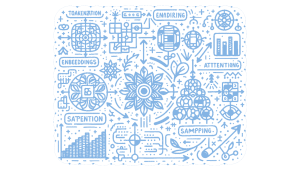 The blog provides a beginner-friendly explanation of how Large Language Models (LLMs) function, focusing on creating a clear mental model of the generation loop. Key concepts such as tokenization, embeddings, attention, probabilities, and sampling are discussed in a high-level and intuitive manner, emphasizing the integration of these components rather than delving into technical specifics. This approach aims to help those working with LLMs or learning about Generative AI to better understand the internals of these models. Understanding LLMs is crucial as they are increasingly used in various applications, impacting fields like natural language processing and AI-driven content creation.
-
Qwen-Image-2512 Released on Huggingface
Read Full Article: Qwen-Image-2512 Released on Huggingface Qwen-Image-2512, a new image model, has been released on Huggingface, a popular platform for sharing machine learning models. This release allows users to explore, post, and comment on the model, fostering a community of collaboration and innovation. The model is expected to enhance image processing capabilities, offering new opportunities for developers and researchers in the field of artificial intelligence. This matters because it democratizes access to advanced image processing technology, enabling a wider range of applications and advancements in AI-driven image analysis.