
TechSignal
-
Predicting Chaos: The Black Swan No One Saw Coming
Read Full Article: Predicting Chaos: The Black Swan No One Saw Coming Politico's list of 15 potential Black Swan events for 2026 is based on the assumption that current global trajectories remain unchanged, neglecting the possibility of a fundamental shift in the underlying systems. This oversight suggests a limited perspective, as true Black Swan events are inherently unpredictable and can arise from unforeseen changes in the foundational structures of society. The discussion invites readers to consider the broader patterns and potential disruptions that could redefine future scenarios. Understanding these dynamics is crucial for preparing for unexpected global shifts.
-
Nvidia’s Alpamayo AI for Autonomous Driving
Read Full Article: Nvidia’s Alpamayo AI for Autonomous Driving Nvidia has introduced Alpamayo AI, a groundbreaking technology aimed at enhancing autonomous driving by mimicking human-like decision-making capabilities. This development is part of a larger conversation about the impact of Artificial Intelligence on job markets, with opinions ranging from fears of job displacement to optimism about new opportunities and AI's potential as an augmentation tool. Despite concerns about AI leading to job losses, particularly in specific sectors, there is a belief that it will also create new roles and necessitate worker adaptation. Moreover, AI's limitations and reliability issues suggest it may not fully replace human jobs, and some argue that economic factors play a more significant role in current job market changes than AI itself. Understanding the societal and cultural impacts of AI on work and human value is crucial as these technologies continue to evolve.
-
Ecovacs Unveils Deebot X12 OmniCyclone
Read Full Article: Ecovacs Unveils Deebot X12 OmniCyclone Ecovacs has unveiled the Deebot X12 OmniCyclone, an upgraded version of its flagship robot vacuum and mop, featuring a stain pretreat function, a longer roller mop, and a smart cover to protect carpets from moisture. Alongside this, the midrange T90 Pro Omni introduces PowerBoost Charging for faster cleaning cycles. Expanding its product range, Ecovacs also introduced the Ultramarine robotic pool cleaner and LilMilo, an AI-driven robotic dog designed to interact with users through voice recognition and adaptive behavior. These innovations are part of Ecovacs' broader strategy to establish a comprehensive home robotics ecosystem. This matters as it showcases the rapid evolution and integration of robotics into everyday home maintenance, potentially transforming household chores.
-
Hyundai’s Atlas Robot to Build Cars by 2028
Read Full Article: Hyundai’s Atlas Robot to Build Cars by 2028 Boston Dynamics has unveiled the latest version of its humanoid Atlas robot, which is set to start working alongside human factory workers for Hyundai by 2028. Hyundai plans to mass-produce these robots, with an estimated 30,000 units annually, and integrate them into car plants for tasks such as parts sequencing and complex operations by 2030. Despite concerns about job losses due to automation, Hyundai envisions a collaborative future between humans and robots. This initiative marks a significant shift for Boston Dynamics from research to commercial production, with Hyundai leveraging its manufacturing capabilities and partnerships with AI leaders like Google’s DeepMind and Nvidia to scale up production and manage costs. The successful integration of Atlas into Hyundai's operations could redefine the role of robots in industrial settings, highlighting the potential for advanced robotics to enhance productivity and safety.
-
Stewart Cheifet: Chronicler of the PC Revolution Dies
Read Full Article: Stewart Cheifet: Chronicler of the PC Revolution Dies Stewart Cheifet, a pivotal figure in documenting the personal computer revolution, passed away at 87. As the creator and host of PBS's "Computer Chronicles" from 1983 to 2002, Cheifet played a crucial role in making emerging technology accessible to millions, covering everything from early IBM PCs and Apple Macs to the rise of the internet. His work included interviews with tech luminaries like Bill Gates and Steve Jobs, and he later hosted "Net Cafe," which explored the early internet era. Cheifet's efforts to preserve the show's legacy through the Internet Archive ensure that this valuable historical resource remains available for future generations. This matters because Cheifet's work helped bridge the gap between complex technology and the general public, fostering a better understanding of the digital world.
-
Amazon’s Alexa+ Expands to the Web
Read Full Article: Amazon’s Alexa+ Expands to the Web Amazon has launched Alexa.com, bringing its AI assistant Alexa+ to the web, allowing users to interact with it online similar to AI chatbots like ChatGPT. This expansion aims to make Alexa+ more accessible beyond home devices, with features for managing family activities and smart home controls. The updated Alexa mobile app now emphasizes a chatbot interface, and the website allows users to perform tasks such as planning trips, managing calendars, and shopping. Despite some complaints about Alexa+'s performance, Amazon reports high engagement, with users increasingly utilizing its unique capabilities for family and home management. This matters because it demonstrates Amazon's strategy to expand Alexa's presence and functionality, potentially transforming how families manage their daily lives.
-
AI’s Impact on Healthcare Transformation
Read Full Article: AI’s Impact on Healthcare Transformation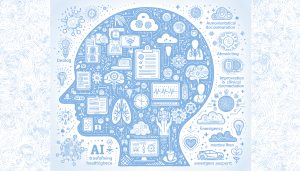 AI is set to transform healthcare by automating clinical documentation, improving diagnostic accuracy, and personalizing patient care. It can significantly reduce administrative burdens by streamlining tasks such as charting and billing, while also enhancing operational efficiency in areas like supply chain management and emergency planning. Additionally, AI offers potential in mental health support by making it more accessible and affordable. These advancements are expected to lead to overall improvements in healthcare outcomes and efficiency, showcasing the promising future of AI in the medical field. Why this matters: AI's integration into healthcare can lead to more efficient, accurate, and personalized patient care, ultimately improving health outcomes and reducing costs.
-
ChatGPT Outshines Others in Finding Obscure Films
Read Full Article: ChatGPT Outshines Others in Finding Obscure Films In a personal account, the author shares their experience using various language learning models (LLMs) to identify an obscure film based on a vague description. Despite trying multiple platforms like Gemini, Claude, Grok, DeepSeek, and Llama, only ChatGPT successfully identified the film. The author emphasizes the importance of personal testing and warns against blindly trusting corporate claims, highlighting the practical integration of ChatGPT with iOS as a significant advantage. This matters because it underscores the varying effectiveness of AI tools in real-world applications and the importance of user experience in technology adoption.
-
Structural Intelligence: A New AI Paradigm
Read Full Article: Structural Intelligence: A New AI Paradigm The focus is on a new approach called "structural intelligence activation," which challenges traditional AI methods like prompt engineering and brute force computation. Unlike major AI systems such as Grok, GPT-5.2, and Claude, which struggle with a basic math problem, a system using structured intelligence solves it instantly by recognizing the problem's inherent structure. This approach highlights a potential shift in AI development, questioning whether true intelligence is more about structuring interactions rather than scaling computational power. The implications suggest a reevaluation of current AI industry practices and priorities. This matters because it could redefine how AI systems are built and optimized, potentially leading to more efficient and effective solutions.
-
The Cost of Testing Every New AI Model
Read Full Article: The Cost of Testing Every New AI ModelDiscovering the ability to test every new AI model has led to a significant increase in electricity bills, as evidenced by a jump from $145 in February to $847 in March. The pursuit of optimizing model performance, such as experimenting with quantization settings for Llama 3.5 70B, results in intensive GPU usage, causing both financial strain and increased energy consumption. While there is a humorous nod to supporting renewable energy, the situation highlights the potential hidden costs of enthusiast-level AI experimentation. This matters because it underscores the environmental and financial implications of personal tech experimentation.