
LLMs
-
Unexpected Vulkan Speedup in LLM Benchmarking
Read Full Article: Unexpected Vulkan Speedup in LLM Benchmarking Benchmarking local language models (LLMs) on a 3080 10GB GPU revealed that while CUDA generally outperforms Vulkan in token generation rates, certain models show unexpected speed improvements with Vulkan. Notably, the GLM4 9B Q6 model experienced a 2.2x speedup in prompt processing and a 1.7x speedup in token generation using Vulkan. Similarly, the Ministral3 14B 2512 Q4 model saw a significant 4.4x speedup in prompt processing and a 1.6x speedup in token generation. These findings suggest that Vulkan may offer performance benefits for specific models, particularly when partially offloaded to the GPU. This matters as it highlights potential optimizations for developers working with LLMs on different hardware configurations.
-
Enhancing Recommendation Systems with LLMs
Read Full Article: Enhancing Recommendation Systems with LLMs Large language models (LLMs) are revolutionizing recommendation systems by enhancing their ability to generate personalized and coherent suggestions. At Google I/O 2023, the PaLM API was released, providing developers with tools to build applications that incorporate conversational and sequential recommendations, as well as rating predictions. By utilizing text embeddings, LLMs can recommend items based on user input and historical activity, even for private or unknown items. This integration not only improves the accuracy of recommendations but also offers a more interactive and fluid user experience, making it a valuable addition to modern recommendation systems. Leveraging LLMs in recommendation systems can significantly enhance user engagement and satisfaction.
-
RPC-server llama.cpp Benchmarks
Read Full Article: RPC-server llama.cpp Benchmarks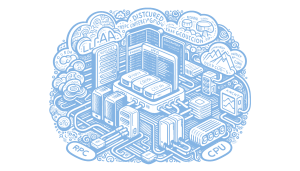 The llama.cpp RPC server facilitates distributed inference of large language models (LLMs) by offloading computations to remote instances across multiple machines or GPUs. Benchmarks were conducted on a local gigabit network utilizing three systems and five GPUs, showcasing the server's performance in handling different model sizes and parameters. The systems included a mix of AMD and Intel CPUs, with GPUs such as GTX 1080Ti, Nvidia P102-100, and Radeon RX 7900 GRE, collectively providing a total of 53GB VRAM. Performance tests were conducted on various models, including Nemotron-3-Nano-30B and DeepSeek-R1-Distill-Llama-70B, highlighting the server's capability to efficiently manage complex computations across distributed environments. This matters because it demonstrates the potential for scalable and efficient LLM deployment in distributed computing environments, crucial for advancing AI applications.
-
Google Earth AI: Unprecedented Planetary Understanding
Read Full Article: Google Earth AI: Unprecedented Planetary Understanding Google Earth AI is a comprehensive suite of geospatial AI models designed to tackle global challenges by providing an unprecedented understanding of planetary events. These models cover a wide range of applications, including natural disasters like floods and wildfires, weather forecasting, and population dynamics, and are already benefiting millions worldwide. Recent advancements have expanded the reach of riverine flood models to cover over 2 billion people across 150 countries, enhancing crisis resilience and international policy-making. The integration of large language models (LLMs) allows users to ask complex questions and receive understandable answers, making these powerful tools accessible to non-experts and applicable in various sectors, from business to humanitarian efforts. This matters because it enhances global understanding and response to critical challenges, making advanced geospatial technology accessible to a broader audience for practical applications.
-
Autoscaling RAG Components on Kubernetes
Read Full Article: Autoscaling RAG Components on KubernetesRetrieval-augmented generation (RAG) systems enhance the accuracy of AI agents by using a knowledge base to provide context to large language models (LLMs). The NVIDIA RAG Blueprint facilitates RAG deployment in enterprise settings, offering modular components for ingestion, vectorization, retrieval, and generation, along with options for metadata filtering and multimodal embedding. RAG workloads can be unpredictable, requiring autoscaling to manage resource allocation efficiently during peak and off-peak times. By leveraging Kubernetes Horizontal Pod Autoscaling (HPA), organizations can autoscale NVIDIA NIM microservices like Nemotron LLM, Rerank, and Embed based on custom metrics, ensuring performance meets service level agreements (SLAs) even during demand surges. Understanding and implementing autoscaling in RAG systems is crucial for maintaining efficient resource use and optimal service performance.
-
Plano-Orchestrator: Fast Multi-Agent Orchestration
Read Full Article: Plano-Orchestrator: Fast Multi-Agent Orchestration Plano-Orchestrator is a newly launched family of large language models (LLMs) designed for fast and efficient multi-agent orchestration, developed by the Katanemo research team. It acts as a supervisory agent, determining which agents should handle a user request and in what order, making it ideal for multi-domain scenarios such as general chat, coding tasks, and extended conversations. This system is optimized for low-latency production deployments, ensuring safe and efficient delivery of agent tasks while enhancing real-world performance. Integrated into Plano, a models-native proxy and dataplane for agents, it aims to improve the "glue work" often needed in multi-agent systems.
-
Prompt Engineering for Data Quality Checks
Read Full Article: Prompt Engineering for Data Quality ChecksData teams are increasingly leveraging prompt engineering with large language models (LLMs) to enhance data quality and validation processes. Unlike traditional rule-based systems, which often struggle with unstructured data, LLMs offer a more adaptable approach by evaluating the coherence and context of data entries. By designing prompts that mimic human reasoning, data validation can become more intelligent and capable of identifying subtler issues such as mislabeled entries and inconsistent semantics. Embedding domain knowledge into prompts further enhances their effectiveness, allowing for automated and scalable data validation pipelines that integrate seamlessly into existing workflows. This shift towards LLM-driven validation represents a significant advancement in data governance, emphasizing smarter questions over stricter rules. This matters because it transforms data validation into a more efficient and intelligent process, enhancing data reliability and reducing manual effort.
-
Project-Based Learning in Machine Learning
Read Full Article: Project-Based Learning in Machine Learning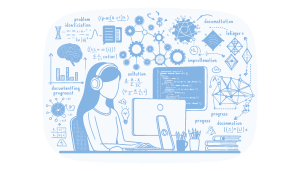 Project-based learning in machine learning involves building projects from scratch, starting with foundational concepts like linear regression and progressing to more complex tasks such as constructing large language models (LLMs). This hands-on approach facilitates deeper understanding and practical skills development by allowing learners to apply theoretical knowledge to real-world problems. Regular updates and shared repositories can enhance learning by providing continuous feedback and fostering a collaborative learning environment. This matters because it bridges the gap between theory and practice, equipping learners with the skills needed to tackle real-world machine learning challenges effectively.
-
SPARQL-LLM: Natural Language to Knowledge Graph Queries
Read Full Article: SPARQL-LLM: Natural Language to Knowledge Graph Queries SPARQL-LLM is a novel approach that leverages large language models (LLMs) to translate natural language queries into executable SPARQL queries for knowledge graphs. This method addresses the challenge of interacting with complex data structures using everyday language, making it more accessible for users who may not be familiar with the intricacies of SPARQL or knowledge graph schemas. By using LLMs, SPARQL-LLM can understand and process the nuances of human language, providing a more intuitive interface for querying knowledge graphs. The approach involves training the language model on a dataset that pairs natural language questions with their corresponding SPARQL queries. This enables the model to learn the patterns and structures necessary to generate accurate and efficient queries. The ultimate goal is to bridge the gap between human language and machine-readable data, allowing users to extract valuable insights from knowledge graphs without needing specialized technical skills. SPARQL-LLM represents a significant advancement in making data more accessible and usable, particularly for those who are not data scientists or engineers. By simplifying the process of querying complex databases, it empowers a broader audience to leverage the wealth of information contained within knowledge graphs. This matters because it democratizes access to data-driven insights, fostering innovation and informed decision-making across various fields.
-
Quint: Interactive Buttons for Chatbots
Read Full Article: Quint: Interactive Buttons for Chatbots Quint is an innovative open-source library designed to enhance chatbot interactions by moving beyond the traditional command-line interface (CLI) approach. Developed as a React library, Quint allows developers to create structured and deterministic interactions on top of large language models (LLMs). By enabling explicit choices through interactive buttons, users can reveal information or send structured input back to the model, with full control over the output display. This separation of model input, user interface, and output rendering helps make interactions like multiple-choice questions, explanations, and role-play scenarios more predictable and less reliant on workaround solutions. One of Quint's key features is its flexibility in terms of presentation, as it only manages the state and behavior of interactions, leaving the design and styling to the developers. This means that developers can fully customize the buttons and user interface elements to fit their specific needs and aesthetic preferences. Additionally, Quint is independent of any specific AI provider, as it operates through callbacks, allowing for integration with various models such as OpenAI, Gemini, Claude, or even mock functions. This versatility ensures that Quint can be used effectively regardless of the underlying AI technology. Currently in its early stages (version 0.1.0), Quint offers a stable core abstraction that promises to evolve into a more comprehensive solution for interactive chatbot interfaces. The creator is seeking feedback to refine and improve the library, aiming to eventually render entire UI elements through LLMs, simplifying interactions for the average end user. This development matters because it represents a significant step forward in making chatbot interactions more intuitive and accessible, potentially transforming how users engage with AI-driven systems.