
AI & Technology Updates
-
Physician’s 48-Hour NLP Journey in Healthcare AI
![[P] Physician → NLP in 48 hours: Building a clinical signal extraction pipeline during my December break](https://www.tweakedgeek.com/wp-content/uploads/2025/12/featured-article-7517-300x171.png) A psychiatrist with an engineering background embarked on a journey to learn natural language processing (NLP) and develop a clinical signal extraction tool for C-SSRS/PHQ-9 assessments within 48 hours. Despite initial struggles with understanding machine learning concepts and tools, the physician successfully created a working prototype using rule-based methods and OpenAI API integration. The project highlighted the challenges of applying AI in healthcare, particularly due to the subjective and context-dependent nature of clinical tools like PHQ-9 and C-SSRS. This experience underscores the need for a bridge between clinical expertise and technical development to enhance healthcare AI applications. Understanding and addressing these challenges is crucial for advancing AI's role in healthcare.
A psychiatrist with an engineering background embarked on a journey to learn natural language processing (NLP) and develop a clinical signal extraction tool for C-SSRS/PHQ-9 assessments within 48 hours. Despite initial struggles with understanding machine learning concepts and tools, the physician successfully created a working prototype using rule-based methods and OpenAI API integration. The project highlighted the challenges of applying AI in healthcare, particularly due to the subjective and context-dependent nature of clinical tools like PHQ-9 and C-SSRS. This experience underscores the need for a bridge between clinical expertise and technical development to enhance healthcare AI applications. Understanding and addressing these challenges is crucial for advancing AI's role in healthcare.
-
Benchmarking Small LLMs on a 16GB Laptop
 Running small language models (LLMs) on a standard 16GB RAM laptop reveals varying levels of usability, with Qwen 2.5 (14B) offering the best coding performance but consuming significant RAM, leading to crashes when multitasking. Mistral Small (12B) provides a balance between speed and resource demand, though it still causes Windows to swap memory aggressively. Llama-3-8B is more manageable but lacks the reasoning abilities of newer models, while Gemma 3 (9B) excels in instruction following but is resource-intensive. With rising RAM prices, upgrading to 32GB allows for smoother operation without swap lag, presenting a more cost-effective solution than investing in high-end GPUs. This matters because understanding the resource requirements of LLMs can help users optimize their systems without overspending on hardware upgrades.
-
The Cycle of Using GPT-5.2
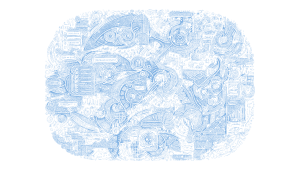 The Cycle of Using GPT-5.2 explores the iterative process of engaging with the latest version of OpenAI's language model. It highlights the ease with which users can access, contribute to, and discuss the capabilities and applications of GPT-5.2 within an open community. This engagement fosters a collaborative environment where feedback and shared experiences help refine and enhance the model's functionality. Understanding this cycle is crucial as it underscores the importance of community involvement in the development and optimization of advanced AI technologies.
-
AI Myths: From Ancient Greeks to Modern Chatbots
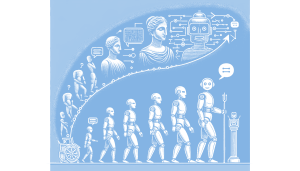 Throughout history, myths surrounding artificial intelligence have persisted, stretching back to ancient Greek tales of automatons and continuing to modern-day interpretations, such as a pope's chatbot. These narratives often reflect societal hopes and fears about the potential and limitations of AI technology. By examining these myths, one can gain insight into how cultural perceptions of AI have evolved and how they continue to shape our understanding of and interaction with AI today. Understanding these myths is crucial as they influence public opinion and policy decisions regarding AI development and implementation.
-
Reverse-engineering a Snapchat Sextortion Bot
An encounter with a sextortion bot on Snapchat revealed its underlying architecture, showcasing the use of a raw Llama-7B instance with a 2048 token window. By employing a creative persona-adoption jailbreak, the bot's system prompt was overridden, exposing its environment variables and confirming its high Temperature setting, which prioritizes creativity over adherence. The investigation highlighted that scammers are now using localized, open-source models like Llama-7B to cut costs and bypass censorship, yet their security measures remain weak, making them vulnerable to simple disruptions. This matters because it sheds light on the evolving tactics of scammers and the vulnerabilities in their current technological setups.