
AI & Technology Updates
-
Accelerate Robotics with NVIDIA Isaac Sim & Marble
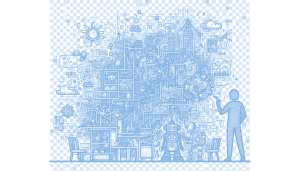 Creating realistic 3D environments for robotics simulation has become significantly more efficient with the integration of NVIDIA Isaac Sim and World Labs Marble. By utilizing generative world models, developers can rapidly transform text or image prompts into photorealistic, simulation-ready worlds, drastically reducing the time and effort traditionally required. This process involves exporting scenes from Marble, converting them to compatible formats using NVIDIA Omniverse NuRec, and importing them into Isaac Sim for simulation. This streamlined workflow enables faster robot training and testing, enhancing the scalability and effectiveness of robotic development. This matters because it accelerates the development and testing of robots, allowing for more rapid innovation and deployment in real-world applications.
-
Windows 10’s Legacy and Windows 11’s Annoyances
 Windows 10 introduced the mandatory Microsoft Account sign-in, which has become a more cumbersome requirement in Windows 11, especially with the addition of ads for services like Microsoft 365 and Game Pass. Windows 11 exacerbates user frustration by layering new annoyances on top of existing ones, such as a cluttered desktop and taskbar, and a Start menu filled with unnecessary apps. The setup process for new PCs has become increasingly irritating, with mandatory internet connections and sign-ins, and Microsoft is making it harder to bypass these requirements. Additionally, Windows 11's Second Chance Out-Of-Box Experience (SCOOBE) repeatedly prompts users to complete setup tasks for systems already configured, adding to the overall inconvenience. This matters because it highlights the growing complexity and user frustration with modern Windows operating systems, impacting user experience and satisfaction.
-
TensorFlow 2.17 Updates
 TensorFlow 2.17 introduces significant updates, including a CUDA update that enhances performance on Ada-Generation GPUs like NVIDIA RTX 40**, L4, and L40, while dropping support for older Maxwell GPUs to keep Python wheel sizes manageable. The release also prepares for the upcoming TensorFlow 2.18, which will support Numpy 2.0, potentially affecting some edge cases in API usage. Additionally, TensorFlow 2.17 marks the last version to include TensorRT support, as future releases will no longer support it. These changes reflect ongoing efforts to optimize TensorFlow for modern hardware and software environments, ensuring better performance and compatibility.
-
MIT: AIs Rediscovering Physics Independently
 Recent research from MIT reveals that independent scientific AIs are not merely simulating known physics but are also rediscovering fundamental physical laws on their own. These AI systems have demonstrated the ability to independently derive principles similar to Newton's laws of motion and other established scientific theories without prior programming of these concepts. This breakthrough suggests that AI could play a significant role in advancing scientific discovery by offering new insights and validating existing theories. Understanding AI's potential to autonomously uncover scientific truths could revolutionize research methodologies and accelerate innovation.
-
Algorithmic Feeds Shift Creator Economy Dynamics
 As algorithm-driven feeds dominate social media, follower counts are becoming less relevant, prompting creators to find new ways to connect with their audiences. Executives in the creator economy suggest that trust in individual creators has surprisingly increased, as consumers seek genuine human experiences amid AI-driven content. Strategies like clipping, where creators employ teams to create viral content snippets, are gaining traction as a way to navigate fragmented social media relationships. The shift towards niche communities and direct relationships with audiences is seen as a potential path for creators to maintain influence and relevance in an evolving digital landscape. This matters because it highlights the changing dynamics of social media influence and the importance of genuine connections in the creator economy.