
AI & Technology Updates
-
Autoscaling RAG Components on Kubernetes
Retrieval-augmented generation (RAG) systems enhance the accuracy of AI agents by using a knowledge base to provide context to large language models (LLMs). The NVIDIA RAG Blueprint facilitates RAG deployment in enterprise settings, offering modular components for ingestion, vectorization, retrieval, and generation, along with options for metadata filtering and multimodal embedding. RAG workloads can be unpredictable, requiring autoscaling to manage resource allocation efficiently during peak and off-peak times. By leveraging Kubernetes Horizontal Pod Autoscaling (HPA), organizations can autoscale NVIDIA NIM microservices like Nemotron LLM, Rerank, and Embed based on custom metrics, ensuring performance meets service level agreements (SLAs) even during demand surges. Understanding and implementing autoscaling in RAG systems is crucial for maintaining efficient resource use and optimal service performance.
-
TensorFlow Lite Plugin for Flutter Released
 The TensorFlow Lite plugin for Flutter has been officially released, now maintained by the Google team after its successful creation by a Google Summer of Code contributor. This plugin allows developers to integrate TensorFlow Lite models into Flutter apps, enhancing mobile app capabilities with features like object detection through a live camera feed. TensorFlow Lite offers cross-platform support and on-device performance optimizations, making it ideal for mobile, embedded, web, and edge devices. Developers can find pre-trained models or create custom ones, and the plugin's GitHub repository provides examples for various machine learning tasks, including image classification. This development is significant as it simplifies the integration of advanced machine learning models into Flutter applications, broadening the scope of what developers can achieve on mobile platforms.
-
Predicting Deforestation Risk with AI
 Forests play a crucial role in maintaining the earth's climate, economy, and biodiversity, yet they continue to be lost at an alarming rate, with 6.7 million hectares of tropical forest disappearing last year alone. Traditionally, satellite data has been used to measure this loss, but a new initiative called "ForestCast" aims to predict future deforestation risks using deep learning models. This approach utilizes satellite data to forecast deforestation risk, offering a more consistent and up-to-date method compared to previous models that relied on outdated input maps. By releasing a public benchmark dataset, the initiative encourages further development and application of these predictive models, potentially transforming forest conservation efforts. This matters because accurately predicting deforestation risk can help implement proactive conservation strategies, ultimately preserving vital ecosystems and combating climate change.
-
Scalable AI Agents with NeMo, Bedrock, and Strands
 AI's future lies in autonomous agents that can reason, plan, and execute tasks across complex systems, necessitating a shift from prototypes to scalable, secure production-ready agents. Developers face challenges in performance optimization, resource scaling, and security when transitioning to production, often juggling multiple tools. The combination of Strands Agents, Amazon Bedrock AgentCore, and NVIDIA NeMo Agent Toolkit offers a comprehensive solution for designing, orchestrating, and scaling sophisticated multi-agent systems. These tools enable developers to build, evaluate, optimize, and deploy AI agents with integrated observability, agent evaluation, and performance optimization on AWS, providing a streamlined workflow from development to deployment. This matters because it bridges the gap between development and production, enabling more efficient and secure deployment of AI agents in enterprise environments.
-
Inside NVIDIA Nemotron 3: Efficient Agentic AI
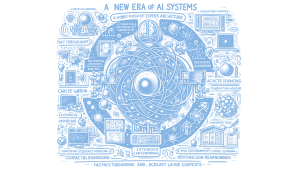 NVIDIA's Nemotron 3 introduces a new era of agentic AI systems with its hybrid Mamba-Transformer mixture-of-experts (MoE) architecture, designed for fast throughput and accurate reasoning across large contexts. The model supports a 1M-token context window, enabling sustained reasoning for complex, multi-agent applications, and is trained using reinforcement learning across various environments to align with real-world agentic tasks. Nemotron 3's openness allows developers to customize and extend models, with available datasets and tools supporting transparency and reproducibility. The Nemotron 3 Nano model is available now, with Super and Ultra models to follow, offering enhanced reasoning depth and efficiency. This matters because it represents a significant advancement in AI technology, enabling more efficient and accurate multi-agent systems crucial for complex problem-solving and decision-making tasks.