
Commentary
-
Top Digital Notebooks for 2026: reMarkable, Kobo, Kindle
Read Full Article: Top Digital Notebooks for 2026: reMarkable, Kobo, Kindle Digital notebooks offer a modern twist on traditional note-taking, blending the tactile experience of writing with the convenience of digital storage. The Neo Smartpen M1+ stands out for its lightweight design and ease of use, while the Moleskine Smart Writing Set combines classic aesthetics with smart functionality. Devices like the Kindle Scribe and Boox Note Air3 C provide a hybrid experience of e-reading and note-taking, though they come with a higher price tag due to advanced features. Despite their cost, digital notebooks are valued for their portability, ability to transcribe notes, and longer battery life compared to tablets. Understanding the benefits and limitations of these devices can help users decide if the investment aligns with their needs. This matters because it highlights the evolving landscape of digital note-taking and the balance between cost and functionality.
-
AI’s Growing Influence on YouTube and Job Markets
Read Full Article: AI’s Growing Influence on YouTube and Job Markets A significant portion of YouTube's content feed, over 20%, is now attributed to what is being termed as "AI slop," indicating the increasing influence of artificial intelligence in content creation. This trend is mirrored across various job sectors, with AI increasingly replacing roles traditionally held by humans, such as graphic designers, writers, and junior administrative positions. The impact is also being felt in corporate environments, call centers, and marketing, where companies are actively exploring AI solutions to replace human workers. However, some sectors remain less affected, and the future outlook involves adapting to these changes while considering economic factors and AI's limitations. This matters because it highlights the profound impact AI is having on job markets and content consumption, necessitating adaptation and strategic planning for future workforce development.
-
Choosing Languages for Machine Learning
Read Full Article: Choosing Languages for Machine Learning Choosing the right programming language is crucial for machine learning, as it affects both efficiency and model performance. Python is the most popular choice due to its ease of use and extensive ecosystem, but other languages offer unique benefits for specific needs. C++ is favored for performance-critical tasks, Java is strong for enterprise applications, and R excels in statistical analysis and data visualization. Julia combines Python's ease with C++'s performance, Go is valued for concurrency, and Rust offers memory safety and performance for low-level development. Selecting the appropriate language depends on the specific requirements of your machine learning projects. Why this matters: The choice of programming language can significantly influence the success and efficiency of machine learning projects, impacting everything from development speed to model performance.
-
Bridging Synthetic Media and Forensic Detection
Read Full Article: Bridging Synthetic Media and Forensic Detection![[D] Bridging the Gap between Synthetic Media Generation and Forensic Detection: A Perspective from Industry](https://www.tweakedgeek.com/wp-content/uploads/2025/12/featured-article-7326-300x171.png) Futurism AI highlights the growing gap between synthetic media generation and forensic detection, emphasizing challenges faced in real-world applications. Current academic detectors often struggle with out-of-distribution data, and three critical issues have been identified: architecture-specific artifacts, multimodal drift, and provenance shift. High-fidelity diffusion models have reduced detectable artifacts, complicating frequency-domain detection, while aligning audio and visual elements in digital humans remains challenging. The industry is shifting towards proactive provenance methods, such as watermarking, rather than relying on post-hoc detection, raising questions about the feasibility of a universal detector versus hardware-level proof of origin. This matters because it addresses the evolving challenges in detecting synthetic media, crucial for maintaining media integrity and trust.
Futurism AI highlights the growing gap between synthetic media generation and forensic detection, emphasizing challenges faced in real-world applications. Current academic detectors often struggle with out-of-distribution data, and three critical issues have been identified: architecture-specific artifacts, multimodal drift, and provenance shift. High-fidelity diffusion models have reduced detectable artifacts, complicating frequency-domain detection, while aligning audio and visual elements in digital humans remains challenging. The industry is shifting towards proactive provenance methods, such as watermarking, rather than relying on post-hoc detection, raising questions about the feasibility of a universal detector versus hardware-level proof of origin. This matters because it addresses the evolving challenges in detecting synthetic media, crucial for maintaining media integrity and trust.
-
AI’s National Security Risks
Read Full Article: AI’s National Security Risks Eric Schmidt, former CEO of Google, highlights the growing importance of advanced artificial intelligence as a national security concern. As AI technology rapidly evolves, it is expected to significantly impact global power dynamics and influence military capabilities. The shift from a purely technological discussion to a national security priority underscores the need for governments to develop strategies to manage AI's potential risks and ensure it is used responsibly. Understanding AI's implications on national security is crucial for maintaining global stability and preventing misuse.
-
Preventing Model Collapse with Resonant Geodesic Dynamics
Read Full Article: Preventing Model Collapse with Resonant Geodesic Dynamics![Scale-Invariant Resonant Geodesic Dynamics in Latent Spaces: A Speculative Framework to Prevent Model Collapse in Synthetic Data Loops [D]](https://www.tweakedgeek.com/wp-content/uploads/2025/12/featured-article-7312-300x171.png) Exploring the issue of model collapse in synthetic data recursion, a speculative framework suggests using scale-invariant resonant geodesic dynamics in latent spaces. Inspired by concepts from cosmology and wave turbulence, the framework proposes that current latent spaces lack intrinsic structure, leading to degeneration when models are trained recursively on their outputs. By introducing a resonant Riemannian metric and gated geodesic flow, the framework aims to preserve harmonic structures and prevent collapse by anchoring geodesics to a resonant skeleton. Additionally, a scale-invariant coherence score is proposed to predict model stability, offering a geometric interpretation of latent space dynamics and a potential path to more stable recursive training. This matters because it provides a novel approach to enhancing the robustness and reliability of machine learning models trained on synthetic data.
Exploring the issue of model collapse in synthetic data recursion, a speculative framework suggests using scale-invariant resonant geodesic dynamics in latent spaces. Inspired by concepts from cosmology and wave turbulence, the framework proposes that current latent spaces lack intrinsic structure, leading to degeneration when models are trained recursively on their outputs. By introducing a resonant Riemannian metric and gated geodesic flow, the framework aims to preserve harmonic structures and prevent collapse by anchoring geodesics to a resonant skeleton. Additionally, a scale-invariant coherence score is proposed to predict model stability, offering a geometric interpretation of latent space dynamics and a potential path to more stable recursive training. This matters because it provides a novel approach to enhancing the robustness and reliability of machine learning models trained on synthetic data.
-
Roadmap: Software Developer to AI Engineer
Read Full Article: Roadmap: Software Developer to AI Engineer Transitioning from a software developer to an AI engineer involves a structured roadmap that leverages existing coding skills while diving into machine learning and AI technologies. The journey spans approximately 18 months, with phases covering foundational knowledge, core machine learning and deep learning, modern AI practices, MLOps, and deployment. Key resources include free online courses, practical projects, and structured programs for accountability. The focus is on building real-world applications and gaining practical experience, which is crucial for job readiness and successful interviews. This matters because it provides a practical, achievable pathway for developers looking to pivot into the rapidly growing field of AI engineering without needing advanced degrees.
-
LLM Optimization and Enterprise Responsibility
Read Full Article: LLM Optimization and Enterprise Responsibility Enterprises using LLM optimization tools often mistakenly believe they are not responsible for consumer harm due to the model's third-party and probabilistic nature. However, once optimization begins, such as through prompt shaping or retrieval tuning, responsibility shifts to the enterprise, as they intentionally influence how the model represents them. This intervention can lead to increased inclusion frequency, degraded reasoning quality, and inconsistent conclusions, making it crucial for enterprises to explain and evidence the effects of their influence. Without proper governance and inspectable reasoning artifacts, claiming "the model did it" becomes an inadequate defense, highlighting the need for enterprises to be accountable for AI outcomes. This matters because as AI becomes more integrated into decision-making processes, understanding and managing its influence is essential for ethical and responsible use.
-
Critical Positions and Their Failures in AI
Read Full Article: Critical Positions and Their Failures in AI An analysis of structural failures in prevailing positions on AI highlights several key misconceptions. The Control Thesis argues that advanced intelligence must be fully controllable to prevent existential risk, yet control is transient and degrades with complexity. Human Exceptionalism claims a categorical difference between human and artificial intelligence, but both rely on similar cognitive processes, differing only in implementation. The "Just Statistics" Dismissal overlooks that human cognition also relies on predictive processing. The Utopian Acceleration Thesis mistakenly assumes increased intelligence leads to better outcomes, ignoring the amplification of existing structures without governance. The Catastrophic Singularity Narrative misrepresents transformation as a single event, while change is incremental and ongoing. The Anti-Mystical Reflex dismisses mystical data as irrelevant, yet modern neuroscience finds correlations with these states. Finally, the Moral Panic Frame conflates fear with evidence of danger, misinterpreting anxiety as a sign of threat rather than instability. These positions fail because they seek to stabilize identity rather than embrace transformation, with AI representing a continuation under altered conditions. Understanding these dynamics is crucial as it removes illusions and provides clarity in navigating the evolving landscape of AI.
-
AI’s Impact on Travel Agents
Read Full Article: AI’s Impact on Travel Agents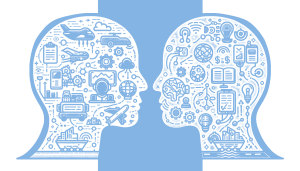 Artificial intelligence is increasingly capable of managing aspects of travel planning, such as creating itineraries and budgeting, often with greater efficiency than human travel agents. However, human agents still play a crucial role in managing complex scenarios like cancellations, providing personal guidance, and handling emergencies. This evolving dynamic suggests that while AI may take over routine tasks, human travel agents will likely shift towards more specialized roles that require personal interaction and problem-solving skills. Understanding this balance is essential as it highlights the ongoing transformation in the travel industry and the potential future roles of human agents.