
Neural Nix
-
SPARQL-LLM: Natural Language to Knowledge Graph Queries
Read Full Article: SPARQL-LLM: Natural Language to Knowledge Graph Queries SPARQL-LLM is a novel approach that leverages large language models (LLMs) to translate natural language queries into executable SPARQL queries for knowledge graphs. This method addresses the challenge of interacting with complex data structures using everyday language, making it more accessible for users who may not be familiar with the intricacies of SPARQL or knowledge graph schemas. By using LLMs, SPARQL-LLM can understand and process the nuances of human language, providing a more intuitive interface for querying knowledge graphs. The approach involves training the language model on a dataset that pairs natural language questions with their corresponding SPARQL queries. This enables the model to learn the patterns and structures necessary to generate accurate and efficient queries. The ultimate goal is to bridge the gap between human language and machine-readable data, allowing users to extract valuable insights from knowledge graphs without needing specialized technical skills. SPARQL-LLM represents a significant advancement in making data more accessible and usable, particularly for those who are not data scientists or engineers. By simplifying the process of querying complex databases, it empowers a broader audience to leverage the wealth of information contained within knowledge graphs. This matters because it democratizes access to data-driven insights, fostering innovation and informed decision-making across various fields.
-
Memory-Efficient TF-IDF for Large Datasets in Python
Read Full Article: Memory-Efficient TF-IDF for Large Datasets in Python A newly designed library at the C++ level offers a memory-efficient solution for vectorizing large datasets using the TF-IDF method in Python. This innovative approach allows for processing datasets as large as 100GB on machines with as little as 4GB of RAM. The library, named fasttfidf, provides outputs that are comparable to those of the widely-used sklearn library, making it a valuable tool for handling large-scale data without requiring extensive hardware resources. The library's efficiency stems from its ability to handle data processing in a way that minimizes memory usage while maintaining high performance. By re-designing the core components at the C++ level, fasttfidf can manage and process vast amounts of data more effectively than traditional methods. This advancement is particularly beneficial for data scientists and engineers who work with large datasets but have limited computational resources, as it enables them to perform complex data analysis tasks without the need for expensive hardware upgrades. Additionally, fasttfidf now supports the Parquet file format, which is known for its efficient data storage and retrieval capabilities. This support further enhances the library's utility by allowing users to work with data stored in a format that is optimized for performance and scalability. The combination of memory efficiency, high performance, and support for modern data formats makes fasttfidf a compelling choice for those seeking to vectorize large datasets in Python. This matters because it democratizes access to advanced data processing techniques, enabling more users to tackle large-scale data challenges without prohibitive costs.
-
Updated Data Science Resources Handbook
Read Full Article: Updated Data Science Resources Handbook An updated handbook for data science resources has been released, expanding beyond its original focus on data analysis to encompass a broader range of data science tasks. The restructured guide aims to streamline the process of finding tools and resources, making it more accessible and user-friendly for data scientists and analysts. This comprehensive overhaul includes new sections and resources, reflecting the dynamic nature of the data science field and the diverse needs of its practitioners. The handbook's primary objective is to save time for professionals by providing a centralized repository of valuable tools and resources. With the rapid evolution of data science, having a well-organized and up-to-date resource list can significantly enhance productivity and efficiency. By covering various aspects of data science, from data cleaning to machine learning, the handbook serves as a practical guide for tackling a wide array of tasks. Such a resource is particularly beneficial in an industry where staying current with tools and methodologies is crucial. By offering a curated selection of resources, the handbook not only aids in task completion but also supports continuous learning and adaptation. This matters because it empowers data scientists and analysts to focus more on solving complex problems and less on searching for the right tools, ultimately driving innovation and progress in the field.
-
Embracing Messy Data for Better Models
Read Full Article: Embracing Messy Data for Better Models Data scientists often begin their careers working with clean, well-organized datasets that make it easy to build models and achieve impressive results in controlled environments. However, when transitioning to real-world applications, these models frequently fail due to the inherent messiness and complexity of real-world data. Inputs can be vague, feedback may contradict itself, and users often describe problems in unexpected ways. This chaotic nature of real-world data is not just noise to be filtered out but a rich source of information that reveals user intent, confusion, and unmet needs. Recognizing the value in messy data requires a shift in perspective. Instead of striving for perfect data schemas, data scientists should focus on understanding how people naturally discuss and interact with problems. This involves paying attention to half sentences, complaints, follow-up comments, and unusual phrasing, as these elements often contain the true signals needed to build effective models. Embracing the messiness of data can lead to a deeper understanding of user needs and result in more practical and impactful models. The transition from clean to messy data has significant implications for feature design, model evaluation, and choice of algorithms. While clean data is useful for learning the mechanics of data science, messy data is where models learn to be truly useful and applicable in real-world scenarios. This paradigm shift can lead to improved results and more meaningful insights than any new architecture or metric. Understanding and leveraging the complexity of real-world data is crucial for building models that are not only accurate but also genuinely helpful to users. Why this matters: Embracing the complexity of real-world data can lead to more effective and impactful data science models, as it helps uncover true user needs and improve model applicability.
-
InstaDeep’s NTv3: Multi-Species Genomics Model
Read Full Article: InstaDeep’s NTv3: Multi-Species Genomics Model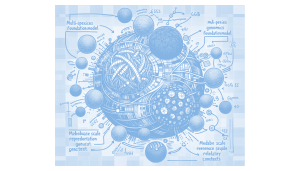 InstaDeep has introduced Nucleotide Transformer v3 (NTv3), a multi-species genomics foundation model designed to enhance genomic prediction and design by connecting local motifs with megabase scale regulatory contexts. NTv3 operates at single-nucleotide resolution for 1 Mb contexts and integrates representation learning, functional track prediction, genome annotation, and controllable sequence generation into a single framework. The model builds on previous versions by extending sequence-only pretraining to longer contexts and incorporating explicit functional supervision and a generative mode, making it capable of handling a wide range of genomic tasks across multiple species. NTv3 employs a U-Net style architecture that processes very long genomic windows, utilizing a convolutional downsampling tower, a transformer stack for long-range dependencies, and a deconvolution tower for base-level resolution restoration. It tokenizes input sequences at the character level, maintaining a vocabulary size of 11 tokens. The model is pretrained on 9 trillion base pairs from the OpenGenome2 resource and post-trained with a joint objective incorporating self-supervision and supervised learning on functional tracks and annotation labels from 24 animal and plant species. This comprehensive training allows NTv3 to achieve state-of-the-art accuracy in functional track prediction and genome annotation, outperforming existing genomic foundation models. Beyond prediction, NTv3 can be fine-tuned as a controllable generative model using masked diffusion language modeling, enabling the design of enhancer sequences with specified activity levels and promoter selectivity. These designs have been validated experimentally, demonstrating improved promoter specificity and intended activity ordering. NTv3's ability to unify various genomic tasks and support long-range, cross-species genome-to-function inference makes it a significant advancement in genomics, providing a powerful tool for researchers and practitioners in the field. This matters because it enhances our understanding and manipulation of genomic data, potentially leading to breakthroughs in fields such as medicine and biotechnology.
-
Docker for ML Engineers: A Complete Guide
Read Full Article: Docker for ML Engineers: A Complete Guide Docker is a powerful platform that allows machine learning engineers to package their applications, including the model, code, dependencies, and runtime environment, into standardized containers. This ensures that the application runs identically across different environments, eliminating issues like version mismatches and missing dependencies that often complicate deployment and collaboration. By encapsulating everything needed to run the application, Docker provides a consistent and reproducible environment, which is crucial for both development and production in machine learning projects. To effectively utilize Docker for machine learning, it's important to understand the difference between Docker images and containers. A Docker image acts as a blueprint, containing the operating system, application code, dependencies, and configuration files. In contrast, a Docker container is a running instance of this image, similar to an object instantiated from a class. Dockerfiles are used to write instructions for building these images, and Docker's caching mechanism makes rebuilding images efficient. Additionally, Docker allows for data persistence through volumes and enables networking and port mapping for accessing services running inside containers. Implementing Docker in machine learning workflows involves several steps, including setting up a project directory, building and training a model, creating an API using FastAPI, and writing a Dockerfile to define the image. Once the image is built, it can be run as a container locally or pushed to Docker Hub for distribution. This approach not only simplifies the deployment process but also ensures that machine learning models can be easily shared and run anywhere, making it a valuable tool for engineers looking to streamline their workflows and improve reproducibility. This matters because it enhances collaboration, reduces deployment risks, and ensures consistent results across different environments.
-
Quint: Interactive Buttons for Chatbots
Read Full Article: Quint: Interactive Buttons for Chatbots Quint is an innovative open-source library designed to enhance chatbot interactions by moving beyond the traditional command-line interface (CLI) approach. Developed as a React library, Quint allows developers to create structured and deterministic interactions on top of large language models (LLMs). By enabling explicit choices through interactive buttons, users can reveal information or send structured input back to the model, with full control over the output display. This separation of model input, user interface, and output rendering helps make interactions like multiple-choice questions, explanations, and role-play scenarios more predictable and less reliant on workaround solutions. One of Quint's key features is its flexibility in terms of presentation, as it only manages the state and behavior of interactions, leaving the design and styling to the developers. This means that developers can fully customize the buttons and user interface elements to fit their specific needs and aesthetic preferences. Additionally, Quint is independent of any specific AI provider, as it operates through callbacks, allowing for integration with various models such as OpenAI, Gemini, Claude, or even mock functions. This versatility ensures that Quint can be used effectively regardless of the underlying AI technology. Currently in its early stages (version 0.1.0), Quint offers a stable core abstraction that promises to evolve into a more comprehensive solution for interactive chatbot interfaces. The creator is seeking feedback to refine and improve the library, aiming to eventually render entire UI elements through LLMs, simplifying interactions for the average end user. This development matters because it represents a significant step forward in making chatbot interactions more intuitive and accessible, potentially transforming how users engage with AI-driven systems.
-
Gistr: AI Notebook for Organizing Knowledge
Read Full Article: Gistr: AI Notebook for Organizing Knowledge Data scientists often face challenges in organizing and synthesizing information from multiple sources, such as YouTube tutorials, research papers, and documentation. Traditional note-taking apps fall short in connecting these diverse content formats, leading to fragmented knowledge and inefficiencies. Gistr, a smart AI notebook, aims to bridge this gap by not only storing information but actively helping users connect and query their insights, making it an invaluable tool for data professionals. Gistr stands out by offering AI-native features that enhance productivity and understanding. It organizes content into collections, threads, and sources, allowing users to aggregate and interact with various media formats seamlessly. Users can import videos, take notes, and create AI-generated highlights, all while querying information across different sources. This integration of personal notes with AI insights helps refine understanding and makes the retrieval of key insights more efficient. For data science professionals, Gistr offers a significant advantage over traditional productivity tools by focusing on interactive research, particularly with multimedia content. Its ability to auto-highlight important content, integrate personal notes with AI summaries, and provide advanced timestamping and clipping tools makes it a powerful companion for managing knowledge. By adopting Gistr, data professionals can enhance their learning and work processes, ultimately leading to greater productivity and innovation in their field. Why this matters: As data professionals handle vast amounts of information, tools like Gistr that enhance knowledge management and productivity are essential for maintaining efficiency and fostering innovation.
-
TensorFlow 2.18: Key Updates and Changes
Read Full Article: TensorFlow 2.18: Key Updates and Changes TensorFlow 2.18 introduces several significant updates, including support for NumPy 2.0, which may affect some edge cases due to changes in type promotion rules. While most TensorFlow APIs are compatible with NumPy 2.0, developers should be aware of potential conversion errors and numerical changes in results. To assist with this transition, TensorFlow has updated certain tensor APIs to maintain compatibility with NumPy 2.0 while preserving previous conversion behaviors. Developers are encouraged to consult the NumPy 2 migration guide to navigate these changes effectively. The release also marks a shift in the development of LiteRT, formerly known as TFLite. The codebase is being transitioned to LiteRT, and once complete, contributions will be accepted directly through the new LiteRT repository. This change means that binary TFLite releases will no longer be available, prompting developers to switch to LiteRT for the latest updates and developments. This transition aims to streamline development and foster more direct contributions from the community. TensorFlow 2.18 enhances GPU support with dedicated CUDA kernels for GPUs with a compute capability of 8.9, optimizing performance for NVIDIA's Ada-Generation GPUs like the RTX 40 series. However, to manage Python wheel sizes, support for compute capability 5.0 has been discontinued, making the Pascal generation the oldest supported by precompiled packages. Developers using Maxwell GPUs are advised to either continue using TensorFlow 2.16 or compile TensorFlow from source, provided the CUDA version supports Maxwell. This matters because it ensures TensorFlow remains efficient and up-to-date with the latest hardware advancements while maintaining flexibility for older systems.
-
Solving Large-Scale Linear Sparse Problems with cuDSS
Read Full Article: Solving Large-Scale Linear Sparse Problems with cuDSS The NVIDIA CUDA Direct Sparse Solver (cuDSS) is designed to tackle large-scale linear sparse problems in fields like Electronic Design Automation (EDA) and Computational Fluid Dynamics (CFD), which are becoming increasingly complex. cuDSS offers unprecedented scalability and performance by allowing users to run sparse solvers at a massive scale with minimal code changes. It leverages hybrid memory mode to utilize both CPU and GPU resources, enabling the handling of larger problems that exceed a single GPU's memory capacity. This approach allows for efficient computation even for problems with over 10 million rows and a billion nonzeros, by using 64-bit integer indexing arrays and optimizing memory usage across multiple GPUs or nodes. Hybrid memory mode in cuDSS addresses the memory limitations of a single GPU by using both CPU and GPU memories, albeit with a trade-off in data transfer time due to bus bandwidth. This mode is not enabled by default, but once activated, it allows the solver to manage device memory automatically or with user-defined limits. The performance of hybrid memory mode is influenced by the CPU/GPU memory bandwidth, but modern NVIDIA driver optimizations and fast interconnects help mitigate these impacts. By setting memory limits and utilizing the maximum GPU memory, users can achieve optimal performance, making it possible to solve larger problems efficiently. For even larger computational tasks, cuDSS supports multi-GPU mode (MG mode) and Multi-GPU Multi-Node (MGMN) mode, which allow the use of all GPUs in a node or across multiple nodes, respectively. MG mode simplifies the process by handling GPU communications internally, eliminating the need for developers to manage distributed communication layers. MGMN mode, on the other hand, requires a communication layer like Open MPI or NCCL, enabling the distribution of computations across multiple nodes. These modes allow for solving massive problems or speeding up computations by utilizing more GPUs, thereby accommodating the growing size and complexity of real-world problems. This matters because it provides a scalable solution for industries facing increasingly complex computational challenges.