
Docker
-
Open-Source MCP Gateway for LLM Connections
Read Full Article: Open-Source MCP Gateway for LLM ConnectionsPlexMCP is an open-source MCP gateway that simplifies the management of multiple MCP server connections by consolidating them into a single endpoint. It supports various communication protocols like HTTP, SSE, WebSocket, and STDIO, and is compatible with any local LLM that supports MCP, such as those using ollama or llama.cpp. PlexMCP offers a dashboard for managing connections and monitoring usage, and can be self-hosted using Docker or accessed through a hosted version at plexmcp.com. This matters because it streamlines the integration process for developers working with multiple language models, saving time and resources.
-
6 Docker Tricks for Data Science Reproducibility
Read Full Article: 6 Docker Tricks for Data Science Reproducibility Reproducibility in data science can be compromised by issues such as dependency drift, non-deterministic builds, and hardware differences. Docker can mitigate these problems if containers are treated as reproducible artifacts. Key strategies include locking base images by digest to ensure deterministic rebuilds, installing OS packages in a single layer to avoid hidden cache states, and using lock files to pin dependencies. Additionally, encoding execution commands within the container and making hardware assumptions explicit can further enhance reproducibility. These practices help maintain a consistent and reliable environment, crucial for accurate and repeatable data science experiments.
-
CNN in x86 Assembly: Cat vs Dog Classifier
Read Full Article: CNN in x86 Assembly: Cat vs Dog Classifier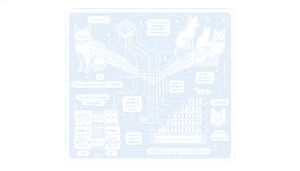 An ambitious project involved implementing a Convolutional Neural Network (CNN) from scratch in x86-64 assembly to classify images of cats and dogs, using a dataset of 25,000 RGB images. The project aimed to deeply understand CNNs by focusing on low-level operations such as memory layout, data movement, and SIMD arithmetic, without relying on any machine learning frameworks or libraries. Key components like Conv2D, MaxPool, Dense layers, activations, forward and backward propagation, and the data loader were developed in pure assembly, achieving a performance approximately 10 times faster than a NumPy version. Despite the challenges of debugging at this scale, the implementation successfully runs inside a lightweight Debian Slim Docker container, showcasing a unique blend of low-level programming and machine learning. This matters because it demonstrates the potential for significant performance improvements in neural networks through low-level optimizations.
-
Streamline ML Serving with Infrastructure Boilerplate
Read Full Article: Streamline ML Serving with Infrastructure Boilerplate An MLOps engineer has developed a comprehensive infrastructure boilerplate for model serving, designed to streamline the transition from a trained model to a production API. The stack includes tools like MLflow for model registry, FastAPI for inference API, and a combination of PostgreSQL, Redis, and MinIO for data handling, all orchestrated through Kubernetes with Docker Desktop K8s. Key features include ensemble predictions, hot model reloading, and stage-based deployment, enabling efficient model versioning and production-grade health probes. The setup offers a quick deployment process with a 5-minute setup via Docker and a one-command Kubernetes deployment, aiming to address common pain points in ML deployment workflows. This matters because it simplifies and accelerates the deployment of machine learning models into production environments, which is often a complex and time-consuming process.
-
Deploy Mistral AI’s Voxtral on Amazon SageMaker
Read Full Article: Deploy Mistral AI’s Voxtral on Amazon SageMaker Deploying Mistral AI's Voxtral on Amazon SageMaker involves configuring models like Voxtral-Mini and Voxtral-Small using the serving.properties file and deploying them through a specialized Docker container. This setup includes essential audio processing libraries and SageMaker environment variables, allowing for dynamic model-specific code injection from Amazon S3. The deployment supports various use cases, including text and speech-to-text processing, multimodal understanding, and function calling using voice input. The modular design enables seamless switching between different Voxtral model variants without needing to rebuild containers, optimizing memory utilization and inference performance. This matters because it demonstrates a scalable and flexible approach to deploying advanced AI models, facilitating the development of sophisticated voice-enabled applications.
-
5 Fun Docker Projects for Beginners
Read Full Article: 5 Fun Docker Projects for Beginners Docker is a powerful tool that packages applications and their dependencies into containers, ensuring consistent performance across different environments. For beginners looking to harness Docker's capabilities, five engaging projects offer a hands-on learning experience. These projects include hosting a static website with Nginx, managing multi-container applications with Docker Compose, sharing a single database among multiple containers, setting up automated continuous integration with Jenkins, and implementing logging and monitoring using Prometheus, Loki, and Grafana. Each project focuses on a core Docker skill, from containerization to network configuration, and demonstrates practical applications such as automated builds and real-time monitoring. By completing these projects, learners can gain a comprehensive understanding of Docker's potential in creating isolated, reproducible, and scalable environments for various applications. This matters because mastering Docker can significantly enhance efficiency and reliability in software development and deployment processes.
-
Docker for ML Engineers: A Complete Guide
Read Full Article: Docker for ML Engineers: A Complete Guide Docker is a powerful platform that allows machine learning engineers to package their applications, including the model, code, dependencies, and runtime environment, into standardized containers. This ensures that the application runs identically across different environments, eliminating issues like version mismatches and missing dependencies that often complicate deployment and collaboration. By encapsulating everything needed to run the application, Docker provides a consistent and reproducible environment, which is crucial for both development and production in machine learning projects. To effectively utilize Docker for machine learning, it's important to understand the difference between Docker images and containers. A Docker image acts as a blueprint, containing the operating system, application code, dependencies, and configuration files. In contrast, a Docker container is a running instance of this image, similar to an object instantiated from a class. Dockerfiles are used to write instructions for building these images, and Docker's caching mechanism makes rebuilding images efficient. Additionally, Docker allows for data persistence through volumes and enables networking and port mapping for accessing services running inside containers. Implementing Docker in machine learning workflows involves several steps, including setting up a project directory, building and training a model, creating an API using FastAPI, and writing a Dockerfile to define the image. Once the image is built, it can be run as a container locally or pushed to Docker Hub for distribution. This approach not only simplifies the deployment process but also ensures that machine learning models can be easily shared and run anywhere, making it a valuable tool for engineers looking to streamline their workflows and improve reproducibility. This matters because it enhances collaboration, reduces deployment risks, and ensures consistent results across different environments.