
NoiseReducer
-
AI Overload in TV Industry
Read Full Article: AI Overload in TV Industry TV manufacturers are increasingly incorporating AI technology into their products, hoping to enhance user experience and boost stagnant sales. At CES in Las Vegas, companies showcased AI features like personalized viewing recommendations, voice recognition, and interactive capabilities, such as ordering products seen on screen. However, some of these AI integrations, like generating videos from photos, seem unnecessary and can clutter the screen, detracting from the primary function of TVs: watching content. Despite the push for innovation, the core appeal of televisions remains their ability to deliver straightforward content consumption, emphasizing the need for AI to enhance rather than complicate the viewing experience. This matters because it highlights the balance between innovation and practicality in consumer electronics, ensuring technology serves its primary purpose effectively.
-
ChatGPT Faces New Data-Pilfering Attack
Read Full Article: ChatGPT Faces New Data-Pilfering Attack OpenAI has implemented restrictions on ChatGPT to prevent data-pilfering attacks like ShadowLeak by limiting the model's ability to construct new URLs. Despite these measures, researchers developed the ZombieAgent attack by providing pre-constructed URLs, which allowed data exfiltration letter by letter. OpenAI has since further restricted ChatGPT from opening links that originate from emails unless they are from a well-known public index or directly provided by the user. This ongoing cycle of attack and mitigation highlights the persistent challenge of securing AI systems against prompt injection vulnerabilities, which remain a significant threat to organizations using AI technologies. Guardrails are temporary fixes, not fundamental solutions, to these security issues. This matters because it underscores the ongoing security challenges in AI systems, emphasizing the need for more robust solutions to prevent data breaches and protect sensitive information.
-
Eric Schmidt Funds Hubble Telescope Successor
Read Full Article: Eric Schmidt Funds Hubble Telescope Successor Former Google CEO Eric Schmidt and his wife, Wendy, have announced a significant investment in four innovative telescope projects, collectively called the Schmidt Observatory System. Among these, the space-based telescope named Lazuli stands out as a potential successor to the aging Hubble Space Telescope, promising enhanced capabilities for astronomical research. The Schmidts are funding these projects to support scientific advancements that might not receive government or private sector backing, potentially revolutionizing the field of astronomy and astrophysics. This matters because it represents a shift back to private funding for groundbreaking scientific instruments, potentially accelerating discoveries in space exploration.
-
OpenAI’s Quiet Transformative Updates
Read Full Article: OpenAI’s Quiet Transformative Updates OpenAI has introduced subtle yet significant updates to its models that enhance reasoning capabilities, batch processing, vision understanding, context window usage, and function calling reliability. These improvements, while not headline-grabbing, are transformative for developers building with large language models (LLMs), making AI products 2-3 times cheaper and more reliable. The enhanced reasoning allows for more efficient token usage, reducing costs and improving performance, while the improved batch API offers a 50% cost reduction for non-real-time tasks. Vision accuracy has increased to 94%, making document processing pipelines more accurate and cost-effective. These cumulative advancements are quietly reshaping the AI landscape by focusing on practical engineering improvements rather than flashy new model releases. Why this matters: These updates significantly lower costs and improve reliability for AI applications, making them more accessible and practical for real-world use.
-
Building BuddAI: My Personal AI Exocortex
Read Full Article: Building BuddAI: My Personal AI Exocortex Over the past eight years, a developer has created BuddAI, a personal AI exocortex that operates entirely locally using Ollama models. This AI is trained on the developer's own repositories, notes, and documentation, allowing it to write code that mirrors the developer's unique style, structure, and logic. BuddAI handles 80-90% of coding tasks, with the developer correcting the remaining 10-20% and teaching the AI to avoid repeating mistakes. The project aims to enhance personal efficiency and scalability rather than replace human effort, and it is available as an open-source tool for others to adapt and use. This matters because it demonstrates the potential for personalized AI to significantly increase productivity and customize digital tools to individual needs.
-
Volvo EX60: 400-Mile Range & Fast Charging
Read Full Article: Volvo EX60: 400-Mile Range & Fast Charging Volvo is unveiling details about its upcoming midsize electric SUV, the EX60, which boasts an impressive estimated range of 400 miles and quick charging capabilities thanks to its 800-volt architecture. This new model will be the first to use Volvo's megacasting production process, enhancing efficiency and reducing weight. The EX60 aims to alleviate "range anxiety" by offering rapid charging that fits into natural breaks, such as a 10-minute stop for coffee, adding 168 miles of range in that time. Built on the new SPA3 platform, the EX60 promises cost savings and competitive pricing, with additional features like vehicle-to-home and vehicle-to-grid functionality, and a 10-year battery warranty, making it a pivotal addition to Volvo's EV lineup. This matters because it represents a significant step in making electric vehicles more practical and appealing, potentially accelerating the transition to sustainable transportation.
-
Open-Source 3D Soccer Game for RL Experiments
Read Full Article: Open-Source 3D Soccer Game for RL Experiments Cube Soccer 3D is a newly developed open-source 3D soccer game tailored for reinforcement learning (RL) experiments. Built using Rust and Bevy, with Rapier3D for realistic physics, the game features cube players with googly eyes and offers customizable observations and rewards. It supports various modes, including Human vs Human, Human vs AI, and AI vs AI, and is compatible with popular RL libraries like Stable-Baselines3 and RLlib. This game provides a unique and engaging environment for those interested in training RL agents, and the developer encourages feedback and contributions from the community. This matters because it offers a novel and accessible platform for advancing research and experimentation in reinforcement learning.
-
OpenAI Launches ChatGPT Health for Medical Queries
Read Full Article: OpenAI Launches ChatGPT Health for Medical Queries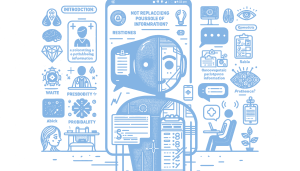 OpenAI has introduced ChatGPT Health, a specialized platform for users to discuss health-related topics with ChatGPT, addressing the significant demand as over 230 million users inquire about health weekly. This new feature segregates health discussions from other chats, ensuring privacy and context-specific interactions, and can integrate with personal health data from apps like Apple Health. While it aims to tackle healthcare issues such as cost and access barriers, the use of AI for medical advice presents challenges due to the nature of large language models, which may not always provide accurate information. OpenAI emphasizes that ChatGPT Health is not intended for diagnosing or treating health conditions, and the feature will be available soon. This matters because it highlights the increasing role of AI in healthcare, offering potential benefits and challenges in improving access and continuity of care.
-
Warner Bros. Chooses Netflix Over Paramount’s Bid
Read Full Article: Warner Bros. Chooses Netflix Over Paramount’s BidWarner Bros. has decided to proceed with a merger with Netflix, rejecting a higher $108 billion bid from Paramount, which it deemed "illusory." The deal with Netflix will see the streaming giant acquire Warner Bros.' streaming and movie studios businesses, potentially expanding Netflix's dominance in the industry. Paramount's bid, although larger, involved acquiring additional Warner Bros. assets like CNN and Discovery Channel, which Warner Bros. is not looking to sell. Despite Larry Ellison's significant financial backing for Paramount's offer, Warner Bros. views Netflix's proposal as more straightforward and likely to close successfully. This matters because it highlights strategic business decisions in the media industry that could reshape the landscape of streaming services and content distribution.
-
End-to-End SDG Workflows with NVIDIA Isaac Sim
Read Full Article: End-to-End SDG Workflows with NVIDIA Isaac Sim As robots increasingly undertake complex mobility tasks, developers require accurate simulations that can be applied across various environments and workloads. Collecting high-quality data in the physical world is often costly and time-consuming, making synthetic data generation at scale essential for advancing physical AI. NVIDIA Isaac Sim and NVIDIA OSMO provide a comprehensive solution for building simulated environments and orchestrating end-to-end synthetic data generation workflows. These tools allow developers to create physics-accurate simulations, generate diverse datasets using MobilityGen, and enhance data with visual diversity through Cosmos Transfer. By leveraging cloud technology and open-source frameworks, developers can efficiently train robot policies and models, bridging the gap between simulated and real-world data. This matters because it accelerates the development and deployment of advanced robotics systems, making them more adaptable and efficient in real-world applications.