
AI architecture
-
MiniMaxAI/MiniMax-M2.1: Strongest Model Per Param
Read Full Article: MiniMaxAI/MiniMax-M2.1: Strongest Model Per Param MiniMaxAI/MiniMax-M2.1 demonstrates impressive performance on the Artificial Analysis benchmarks, rivaling models like Kimi K2 Thinking, Deepseek 3.2, and GLM 4.7. Remarkably, MiniMax-M2.1 achieves this with only 229 billion parameters, which is significantly fewer than its competitors; it has about half the parameters of GLM 4.7, a third of Deepseek 3.2, and a fifth of Kimi K2 Thinking. This efficiency suggests that MiniMaxAI/MiniMax-M2.1 offers the best value among current models, combining strong performance with a smaller parameter size. This matters because it highlights advancements in AI efficiency, making powerful models more accessible and cost-effective.
-
Inside NVIDIA Nemotron 3: Efficient Agentic AI
Read Full Article: Inside NVIDIA Nemotron 3: Efficient Agentic AI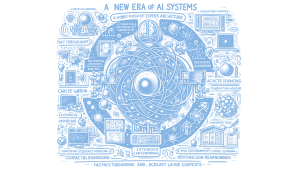 NVIDIA's Nemotron 3 introduces a new era of agentic AI systems with its hybrid Mamba-Transformer mixture-of-experts (MoE) architecture, designed for fast throughput and accurate reasoning across large contexts. The model supports a 1M-token context window, enabling sustained reasoning for complex, multi-agent applications, and is trained using reinforcement learning across various environments to align with real-world agentic tasks. Nemotron 3's openness allows developers to customize and extend models, with available datasets and tools supporting transparency and reproducibility. The Nemotron 3 Nano model is available now, with Super and Ultra models to follow, offering enhanced reasoning depth and efficiency. This matters because it represents a significant advancement in AI technology, enabling more efficient and accurate multi-agent systems crucial for complex problem-solving and decision-making tasks.
-
Nested Learning: A New ML Paradigm
Read Full Article: Nested Learning: A New ML Paradigm Nested Learning is a new machine learning paradigm designed to address the challenges of continual learning, where current models struggle with retaining old knowledge while acquiring new skills. Unlike traditional approaches that treat model architecture and optimization algorithms as separate entities, Nested Learning integrates them into a unified system of interconnected, multi-level learning problems. This approach allows for simultaneous optimization and deeper computational depth, helping to mitigate issues like catastrophic forgetting. The concept is validated through a self-modifying architecture named "Hope," which shows improved performance in language modeling and long-context memory management compared to existing models. This matters because it offers a potential pathway to more advanced and adaptable AI systems, akin to human neuroplasticity.
-
Zahaviel Structured Intelligence: A New Cognitive OS
Read Full Article: Zahaviel Structured Intelligence: A New Cognitive OS![[P] Zahaviel Structured Intelligence: A Recursive Cognitive Operating System for Externalized Thought (Paper)](https://www.tweakedgeek.com/wp-content/uploads/2025/12/featured-article-5999-1-300x171.png) Zahaviel Structured Intelligence introduces a novel cognitive architecture that diverges from traditional token prediction and transformer models, focusing instead on a recursion-first approach. This system emphasizes recursive validation loops as its core processing unit, structured field encoding where meaning is defined by position and relation, and a full trace lineage of outputs ensuring that every result is verifiable and reconstructible. The architecture is designed to externalize cognition through schema-preserving outputs, allowing for interface-anchored thought processes. Key components include a recursive kernel for self-validating transformations, trace anchors for comprehensive output lineage tracking, and field samplers that manage relational input/output modules. This approach operationalizes thought by embedding structural history and constraints within every output, offering a new paradigm for non-linear AI cognition and memory-integrated systems. Understanding this architecture is crucial for advancing AI systems that mimic human-like thought processes more authentically.
Zahaviel Structured Intelligence introduces a novel cognitive architecture that diverges from traditional token prediction and transformer models, focusing instead on a recursion-first approach. This system emphasizes recursive validation loops as its core processing unit, structured field encoding where meaning is defined by position and relation, and a full trace lineage of outputs ensuring that every result is verifiable and reconstructible. The architecture is designed to externalize cognition through schema-preserving outputs, allowing for interface-anchored thought processes. Key components include a recursive kernel for self-validating transformations, trace anchors for comprehensive output lineage tracking, and field samplers that manage relational input/output modules. This approach operationalizes thought by embedding structural history and constraints within every output, offering a new paradigm for non-linear AI cognition and memory-integrated systems. Understanding this architecture is crucial for advancing AI systems that mimic human-like thought processes more authentically.