
AI democratization
-
Local Advancements in Multimodal AI
Read Full Article: Local Advancements in Multimodal AI The latest advancements in multimodal AI include several open-source projects that push the boundaries of text-to-image, vision-language, and interactive world generation technologies. Notable developments include Qwen-Image-2512, which sets a new standard for realistic human and natural texture rendering, and Dream-VL & Dream-VLA, which introduce a diffusion-based architecture for enhanced multimodal understanding. Other innovations like Yume-1.5 enable text-controlled 3D world generation, while JavisGPT focuses on sounding-video generation. These projects highlight the growing accessibility and capability of AI tools, offering new opportunities for creative and practical applications. This matters because it democratizes advanced AI technologies, making them accessible for a wider range of applications and fostering innovation.
-
Grafted Titans: Enhancing LLMs with Neural Memory
Read Full Article: Grafted Titans: Enhancing LLMs with Neural Memory An experiment with Test-Time Training (TTT) aimed to replicate Google's "Titans" architecture by grafting a trainable memory module onto a frozen open-weight model, Qwen-2.5-0.5B, using consumer-grade hardware. This new architecture, called "Grafted Titans," appends memory embeddings to the input layer through a trainable cross-attention gating mechanism, allowing the memory to update while the base model remains static. In tests using the BABILong benchmark, the Grafted Titans model achieved 44.7% accuracy, outperforming the vanilla Qwen model's 34.0% accuracy by acting as a denoising filter. However, the model faces limitations such as signal dilution and susceptibility to input poisoning, and further research is needed to address these issues. This matters because it explores innovative ways to enhance neural network performance without extensive computational resources, potentially democratizing access to advanced AI capabilities.
-
NextToken: Streamlining AI Engineering Workflows
Read Full Article: NextToken: Streamlining AI Engineering Workflows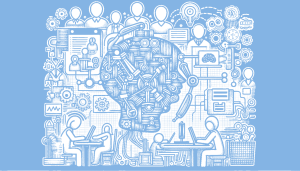 NextToken is an AI agent designed to alleviate the tedious aspects of AI and machine learning workflows, allowing engineers to focus more on model building rather than setup and debugging. It assists in environment setup, code debugging, data cleaning, and model training, providing explanations and real-time visualizations to enhance understanding and efficiency. By automating these grunt tasks, NextToken aims to make AI and ML more accessible, reducing the steep learning curve that often deters newcomers from completing projects. This matters because it democratizes AI/ML development, enabling more people to engage with and contribute to these fields.
-
Llama 3.3 8B Instruct: Access and Finetuning
Read Full Article: Llama 3.3 8B Instruct: Access and Finetuning The Llama 3.3 8B Instruct model, part of Facebook's Llama API, was initially difficult to access due to its finetuning capabilities being hidden behind support tickets. Despite initial challenges, including a buggy user interface and issues with downloading the model, persistence led to successful access and finetuning of the model. The process revealed that the adapter used for finetuning could be separated, allowing the original model to be retrieved. This matters because it demonstrates the complexities and potential barriers in accessing and utilizing advanced AI models, highlighting the importance of user-friendly interfaces and transparent processes in technology deployment.
-
Farmer Builds AI Engine with LLMs and Code Interpreter
Read Full Article: Farmer Builds AI Engine with LLMs and Code Interpreter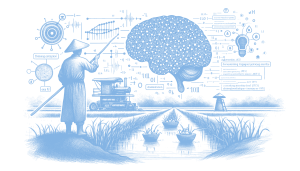 A Korean garlic farmer, who lacks formal coding skills, has developed a unique approach to building an "executing engine" using large language models (LLMs) and sandboxed code interpreters. By interacting with AI chat interfaces, the farmer structures ideas and runs them through a code interpreter to achieve executable results, emphasizing the importance of verifying real execution versus simulated outputs. This iterative process involves cross-checking results with multiple AIs to avoid hallucinations and ensure accuracy. Despite the challenges, the farmer finds value and insights in this experimental method, demonstrating how AI can empower individuals without technical expertise to engage in complex problem-solving and innovation. Why this matters: This highlights the potential of AI tools to democratize access to advanced technology, enabling individuals from diverse backgrounds to innovate and contribute to technical fields without traditional expertise.