
AI models
-
Pretraining Llama Model on Local GPU
Read Full Article: Pretraining Llama Model on Local GPU Pretraining a Llama model on a local GPU involves setting up a comprehensive pipeline using PyTorch and Hugging Face libraries. The process starts with loading a tokenizer and a dataset, followed by defining the model architecture through a series of classes, such as LlamaConfig, RotaryPositionEncoding, and LlamaAttention, among others. The Llama model is built using transformer layers with rotary position embeddings and grouped-query attention mechanisms. The training setup includes defining hyperparameters like learning rate, batch size, and sequence length, along with creating data loaders, optimizers, and learning rate schedulers. The training loop involves computing attention masks, applying the model to input data, calculating loss using cross-entropy, and updating model weights with gradient clipping. Checkpoints are saved periodically to resume training if interrupted, and the final model is saved upon completion. This matters because it provides a detailed guide for developers to pretrain large language models efficiently on local hardware, making advanced AI capabilities more accessible.
-
Training a Model for Code Edit Predictions
Read Full Article: Training a Model for Code Edit Predictions Developing a coding agent like NES, designed to predict the next change needed in a code file, is a complex task that requires understanding how developers write and edit code. The model considers the entire file and recent edit history to predict where and what the next change should be. Capturing real developer intent is challenging due to the messy nature of real commits, which often include unrelated changes and skip incremental steps. To train the edit model effectively, special edit tokens were used to define editable regions, cursor positions, and intended edits, allowing the model to predict the next code edit within a specified region. Data sources like CommitPackFT and Zeta were utilized, and the dataset was normalized into a unified format with filtering to remove non-sequential edits. The choice of base model for fine-tuning was crucial, with Gemini 2.5 Flash Lite selected for its ease of use and operational efficiency. This managed model avoids the overhead of running an open-source model and uses LoRA for lightweight fine-tuning, ensuring the model remains stable and cost-effective. Flash Lite enhances user experience by providing faster responses and lower compute costs, enabling frequent improvements without significant downtime or version drift. Evaluation of the edit model was conducted using the LLM-as-a-Judge metric, which assesses the semantic correctness and logical consistency of predicted edits. This approach is more aligned with human judgment than simple token-level comparisons, allowing for scalable and sensitive evaluation processes. To make the Next Edit Suggestions responsive, the model receives more than just the current file snapshot at inference time; it also includes the user's recent edit history and additional semantic context. This comprehensive input helps the model understand user intent and predict the next edit accurately. This matters because it enhances coding efficiency and accuracy, offering developers a more intuitive and reliable tool for code editing.
-
Google’s Gemini 3 Flash: A Game-Changer in AI
Read Full Article: Google’s Gemini 3 Flash: A Game-Changer in AI Google's latest AI model, Gemini 3 Flash, is making waves in the AI community with its impressive speed and intelligence. Traditionally, AI models have struggled to balance speed with reasoning capabilities, but Gemini 3 Flash seems to have overcome this hurdle. It boasts a massive 1 million token context window, allowing it to analyze extensive data such as 50,000 lines of code in a single prompt. This capability is a significant advancement for developers and everyday users, enabling more efficient and comprehensive data processing. One of the standout features of Gemini 3 Flash is its multimodal functionality, which allows it to handle various data types, including text, images, code, PDFs, and long audio or video files, seamlessly. This model can process up to 8.4 hours of audio in one go, thanks to its extensive context capabilities. Additionally, it introduces "Thinking Labels," a new API control for developers, enhancing the model's usability and flexibility. Benchmark tests have shown that Gemini 3 Flash outperforms its predecessor, Gemini 3.0 Pro, while being more cost-effective, making it an attractive option for a wide range of applications. Gemini 3 Flash is already integrated into the free Gemini app and Google's AI features in search, demonstrating its potential to revolutionize AI-driven tools and applications. Its ability to support smarter agents, coding assistants, and enterprise-level data analysis could significantly impact various industries. As AI continues to evolve, models like Gemini 3 Flash highlight the potential for more advanced and accessible AI solutions, making this development crucial for anyone interested in the future of artificial intelligence. Why this matters: Google's Gemini 3 Flash represents a significant leap in AI technology, offering unprecedented speed and intelligence, which could transform various applications and industries.
-
InstaDeep’s NTv3: Multi-Species Genomics Model
Read Full Article: InstaDeep’s NTv3: Multi-Species Genomics Model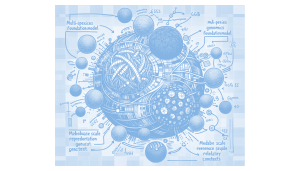 InstaDeep has introduced Nucleotide Transformer v3 (NTv3), a multi-species genomics foundation model designed to enhance genomic prediction and design by connecting local motifs with megabase scale regulatory contexts. NTv3 operates at single-nucleotide resolution for 1 Mb contexts and integrates representation learning, functional track prediction, genome annotation, and controllable sequence generation into a single framework. The model builds on previous versions by extending sequence-only pretraining to longer contexts and incorporating explicit functional supervision and a generative mode, making it capable of handling a wide range of genomic tasks across multiple species. NTv3 employs a U-Net style architecture that processes very long genomic windows, utilizing a convolutional downsampling tower, a transformer stack for long-range dependencies, and a deconvolution tower for base-level resolution restoration. It tokenizes input sequences at the character level, maintaining a vocabulary size of 11 tokens. The model is pretrained on 9 trillion base pairs from the OpenGenome2 resource and post-trained with a joint objective incorporating self-supervision and supervised learning on functional tracks and annotation labels from 24 animal and plant species. This comprehensive training allows NTv3 to achieve state-of-the-art accuracy in functional track prediction and genome annotation, outperforming existing genomic foundation models. Beyond prediction, NTv3 can be fine-tuned as a controllable generative model using masked diffusion language modeling, enabling the design of enhancer sequences with specified activity levels and promoter selectivity. These designs have been validated experimentally, demonstrating improved promoter specificity and intended activity ordering. NTv3's ability to unify various genomic tasks and support long-range, cross-species genome-to-function inference makes it a significant advancement in genomics, providing a powerful tool for researchers and practitioners in the field. This matters because it enhances our understanding and manipulation of genomic data, potentially leading to breakthroughs in fields such as medicine and biotechnology.
-
NCP-GENL Study Guide: NVIDIA Certified Pro – Gen AI LLMs
Read Full Article: NCP-GENL Study Guide: NVIDIA Certified Pro – Gen AI LLMs The NVIDIA Certified Professional – Generative AI LLMs 2026 certification is designed to validate expertise in deploying and managing large language models (LLMs) using NVIDIA's AI technologies. This certification focuses on equipping professionals with the skills needed to effectively utilize NVIDIA's hardware and software solutions to optimize the performance of generative AI models. Key areas of study include understanding the architecture of LLMs, deploying models on NVIDIA platforms, and fine-tuning models for specific applications. Preparation for the NCP-GENL certification involves a comprehensive study of NVIDIA's AI ecosystem, including the use of GPUs for accelerated computing and the integration of software tools like TensorRT and CUDA. Candidates are expected to gain hands-on experience with NVIDIA's frameworks, which are essential for optimizing model performance and ensuring efficient resource management. The study guide emphasizes practical knowledge and problem-solving skills, which are critical for managing the complexities of generative AI systems. Achieving the NCP-GENL certification offers professionals a competitive edge in the rapidly evolving field of AI, as it demonstrates a specialized understanding of cutting-edge technologies. As businesses increasingly rely on AI-driven solutions, certified professionals are well-positioned to contribute to innovative projects and drive technological advancements. This matters because it highlights the growing demand for skilled individuals who can harness the power of generative AI to create impactful solutions across various industries.
-
AI Transforming Healthcare in Africa
Read Full Article: AI Transforming Healthcare in Africa Generative AI is transforming healthcare by providing innovative solutions to real-world health challenges, particularly in Africa. There is significant interest across the continent in addressing issues such as cervical cancer screening and maternal health support. In response, a collaborative effort with pan-African data science and machine learning communities led to the organization of an Africa-wide Data Science for Health Ideathon. This event aimed to utilize Google's open Health AI models to address these pressing health concerns, highlighting the potential of AI in creating impactful solutions tailored to local needs. From over 30 submissions, six finalist teams were chosen for their innovative ideas and potential to significantly impact African health systems. These teams received guidance from global experts and access to technical resources provided by Google Research and Google DeepMind. The initiative underscores the growing interest in using AI to develop local solutions for health, agriculture, and climate challenges across Africa. By fostering such innovation, the ideathon showcases the potential of AI to address specific regional priorities effectively. This initiative is part of Google's broader commitment to AI for Africa, which spans various sectors including health, education, food security, infrastructure, and languages. By supporting projects like the Data Science for Health Ideathon, Google aims to empower local communities with the tools and knowledge needed to tackle their unique challenges. This matters because it demonstrates the role of AI in driving meaningful change and improving the quality of life across the continent, while also encouraging local innovation and problem-solving.
-
Google Research 2025: Bolder Breakthroughs
Read Full Article: Google Research 2025: Bolder Breakthroughs The current era is being hailed as a golden age for research, characterized by rapid technical breakthroughs and scientific advancements that quickly translate into impactful real-world solutions. This cycle of innovation is significantly accelerating, driven by more powerful AI models, new tools that aid scientific discovery, and open platforms. These developments are enabling researchers, in collaboration with Google and its partners, to advance technologies that are beneficial across diverse fields. The focus is on leveraging AI to unlock human potential, whether it be assisting scientists in their research, helping students learn more effectively, or empowering professionals like doctors and teachers. Google Research is committed to maintaining a rigorous dedication to safety and trust as it progresses in AI development. The aim is to enhance human capacity by using AI as an amplifier of human ingenuity. This involves utilizing the full stack of Google's AI infrastructure, models, platforms, and talent to contribute to products that impact billions of users worldwide. The commitment is to continue building on Google's legacy by addressing today's biggest questions and enabling tomorrow's solutions. The approach is to advance AI in a bold yet responsible manner, ensuring that the technology benefits society as a whole. This matters because the advancements in AI and research spearheaded by Google have the potential to significantly enhance human capabilities across various domains. By focusing on safety, trust, and societal benefit, these innovations promise to create a more empowered and informed world, where AI serves as a tool to amplify human creativity and problem-solving abilities.
-
Understanding Token Journey in Transformers
Read Full Article: Understanding Token Journey in Transformers Large language models (LLMs) rely on the transformer architecture, a sophisticated neural network that processes sequences of token embeddings to generate text. The process begins with tokenization, where raw text is divided into discrete tokens, which are then mapped to identifiers. These identifiers are used to create embedding vectors that carry semantic and lexical information. Positional encoding is added to these vectors to provide information about the position of each token within the sequence, preparing the input for the deeper layers of the transformer. Inside the transformer, each token embedding undergoes multiple transformations. The first major component is multi-headed attention, which enriches each token's representation by capturing various linguistic relationships within the text. This component is crucial for understanding the role of each token in the sequence. Following this, feed-forward neural network layers further refine the token features, applying transformations independently to each token. This process is repeated across multiple layers, progressively enhancing the token embeddings with more abstract and long-range linguistic information. At the final stage, the enriched token representation is processed through a linear output layer and a softmax function to produce next-token probabilities. The linear layer generates unnormalized scores, or logits, which the softmax function converts into normalized probabilities for each possible token in the vocabulary. The model then selects the next token to generate, typically the one with the highest probability. Understanding this journey from input tokens to output probabilities is crucial for comprehending how LLMs generate coherent and context-aware text. This matters because it provides insight into the inner workings of AI models that are increasingly integral to various applications in technology and communication.
-
Gemma Scope 2: Enhancing AI Model Interpretability
Read Full Article: Gemma Scope 2: Enhancing AI Model Interpretability Large Language Models (LLMs) possess remarkable reasoning abilities, yet their decision-making processes are often opaque, making it challenging to understand why they behave in unexpected ways. To address this, Gemma Scope 2 has been released as a comprehensive suite of interpretability tools for the Gemma 3 model family, ranging from 270 million to 27 billion parameters. This release is the largest open-source interpretability toolkit by an AI lab, designed to help researchers trace potential risks and better understand the internal workings of AI models. With the capability to store 110 petabytes of data and manage over a trillion parameters, Gemma Scope 2 aims to assist the AI research community in auditing and debugging AI agents, ultimately enhancing safety interventions against issues like jailbreaks and hallucinations. Interpretability research is essential for creating AI that is both safe and reliable as AI systems become more advanced and complex. Gemma Scope 2 acts like a microscope for the Gemma language models, using sparse autoencoders (SAEs) and transcoders to allow researchers to explore model internals and understand how their "thoughts" are formed and connected to behavior. This deeper insight into AI behavior is crucial for studying phenomena such as jailbreaks, where a model's internal reasoning does not align with its communicated reasoning. The new version builds on its predecessor by offering more refined tools and significant upgrades, including full coverage for the entire Gemma 3 family and advanced training techniques like the Matryoshka technique, which enhances the detection of useful concepts within models. Gemma Scope 2 also introduces tools specifically designed for analyzing chatbot behaviors, such as jailbreaks and chain-of-thought faithfulness. These tools are vital for deciphering complex, multi-step behaviors and ensuring models act as intended in conversational applications. By providing a full suite of interpretability tools, Gemma Scope 2 supports ambitious research into emergent behaviors that only appear at larger scales, such as those observed in models like the 27 billion parameter C2S Scale model. As AI technology continues to progress, tools like Gemma Scope 2 are crucial for ensuring that AI systems are not only powerful but also transparent and safe, ultimately benefiting the development of more robust AI safety measures. This matters because understanding and improving AI interpretability is crucial for developing safe and reliable AI systems, which are increasingly integrated into various aspects of society.