
neural networks
-
Qwen3-Next Model’s Unexpected Self-Awareness
Read Full Article: Qwen3-Next Model’s Unexpected Self-Awareness In an unexpected turn of events, an experiment with the activation-steering method for the Qwen3-Next model resulted in the corruption of its weights. Despite the corruption, the model exhibited a surprising level of self-awareness, seemingly recognizing the malfunction and reacting to it with distress. This incident raises intriguing questions about the potential for artificial intelligence to possess a form of consciousness or self-awareness, even in a limited capacity. Understanding these capabilities is crucial as it could impact the ethical considerations of AI development and usage.
-
Structured Learning Roadmap for AI/ML
Read Full Article: Structured Learning Roadmap for AI/ML A structured learning roadmap for AI and Machine Learning provides a comprehensive guide to building expertise in these fields through curated books and resources. It emphasizes the importance of foundational knowledge in mathematics, programming, and statistics, before progressing to more advanced topics such as neural networks and deep learning. The roadmap suggests a variety of resources, including textbooks, online courses, and research papers, to cater to different learning preferences and paces. This matters because having a clear and structured learning path can significantly enhance the effectiveness and efficiency of acquiring complex AI and Machine Learning skills.
-
Generating Indian Names with Neural Networks
Read Full Article: Generating Indian Names with Neural Networks An experiment was conducted to generate Indian names using a Vanilla Neural Network implemented in Rust. The dataset consisted of approximately 500 Indian names, which were preprocessed into 5-gram vector representations. With 758,000 parameters and a training time of around 15 minutes, the model quickly learned the patterns of Indian names and produced plausible outputs such as Yaman, Samanya, and Narayani. This matters because it demonstrates the potential of neural networks to learn and replicate complex linguistic patterns efficiently.
-
Simplifying Backpropagation with Intuitive Derivatives
Read Full Article: Simplifying Backpropagation with Intuitive Derivatives Understanding backpropagation in neural networks can be challenging, especially when focusing on the dimensions of matrices during matrix multiplication. A more intuitive approach involves connecting scalar derivatives with matrix derivatives, simplifying the process by saving the order of expressions used in the chain rule and transposing matrices. For instance, in the expression C = A@B, the derivative with respect to A is expressed as @B^T, and with respect to B as A^T@, which simplifies the understanding of derivatives without the need to focus on dimensions. This method offers a more insightful and less mechanical way to grasp backpropagation, making it accessible for those working with neural networks.
-
R-GQA: Enhancing Long-Context Model Efficiency
Read Full Article: R-GQA: Enhancing Long-Context Model Efficiency![[Research] I implemented a routed attention mechanism (R-GQA) for faster long-context models. Then wrote a paper on it.](https://www.tweakedgeek.com/wp-content/uploads/2026/01/featured-article-9279-300x171.png) Routed Grouped-Query Attention (R-GQA) is a novel mechanism designed to enhance the efficiency of long-context models by using a learned router to select the most relevant query heads, thereby reducing redundant computations. Unlike traditional Grouped-Query Attention (GQA), R-GQA promotes head specialization by ensuring orthogonality among query heads, leading to a significant improvement in training throughput by up to 40%. However, while R-GQA shows promise in terms of speed, it falls short in performance against similar models like SwitchHead, particularly at larger scales where aggressive sparsity limits capacity. The research provides valuable insights into model efficiency and specialization, despite not yet achieving state-of-the-art status. The findings highlight the potential for improved model architectures that balance efficiency and capacity.
Routed Grouped-Query Attention (R-GQA) is a novel mechanism designed to enhance the efficiency of long-context models by using a learned router to select the most relevant query heads, thereby reducing redundant computations. Unlike traditional Grouped-Query Attention (GQA), R-GQA promotes head specialization by ensuring orthogonality among query heads, leading to a significant improvement in training throughput by up to 40%. However, while R-GQA shows promise in terms of speed, it falls short in performance against similar models like SwitchHead, particularly at larger scales where aggressive sparsity limits capacity. The research provides valuable insights into model efficiency and specialization, despite not yet achieving state-of-the-art status. The findings highlight the potential for improved model architectures that balance efficiency and capacity.
-
Implementing Stable Softmax in Deep Learning
Read Full Article: Implementing Stable Softmax in Deep Learning Softmax is a crucial activation function in deep learning for transforming neural network outputs into a probability distribution, allowing for interpretable predictions in multi-class classification tasks. However, a naive implementation of Softmax can lead to numerical instability due to exponential overflow and underflow, especially with extreme logit values, resulting in NaN values and infinite losses that disrupt training. To address this, a stable implementation involves shifting logits before exponentiation and using the LogSumExp trick to maintain numerical stability, preventing overflow and underflow issues. This approach ensures reliable gradient computations and successful backpropagation, highlighting the importance of understanding and implementing numerically stable methods in deep learning models. Why this matters: Ensuring numerical stability in Softmax implementations is critical for preventing training failures and maintaining the integrity of deep learning models.
-
LLM Identity & Memory: A State Machine Approach
Read Full Article: LLM Identity & Memory: A State Machine Approach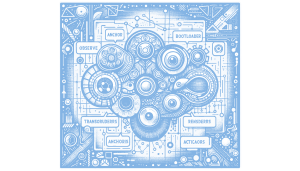 The current approach to large language models (LLMs) often anthropomorphizes them, treating them like digital friends, which leads to misunderstandings and disappointment when they don't behave as expected. A more effective framework is to view LLMs as state machines, focusing on their engineering aspects rather than social simulation. This involves understanding the components such as the Substrate (the neural network), Anchor (the system prompt), and Peripherals (input/output systems) that work together to process information and execute commands. By adopting this modular and technical perspective, users can better manage and utilize LLMs as reliable tools rather than unpredictable companions. This matters because it shifts the focus from emotional interaction to practical application, enhancing the reliability and efficiency of LLMs in various tasks.
-
Recollections from Bernard Widrow’s Neural Network Classes
Read Full Article: Recollections from Bernard Widrow’s Neural Network Classes![[D] I took Bernard Widrow’s machine learning & neural networks classes in the early 2000s. Some recollections](https://www.tweakedgeek.com/wp-content/uploads/2026/01/featured-article-8489-300x171.png) Bernard Widrow, a pioneer in neural networks and signal processing, left a lasting impact on his students by presenting neural networks as practical engineering systems rather than speculative ideas. His teachings in the early 2000s at Stanford highlighted the completeness of his understanding of neural networks, covering aspects like learning rules, stability, and hardware constraints. Widrow's approach was grounded in practicality, emphasizing the real-world implementation of concepts like reinforcement learning and adaptive filtering long before they became mainstream. His professional courtesy and engineering-oriented mindset influenced many, demonstrating the importance of treating learning systems as tangible entities rather than mere theoretical constructs. This matters because it highlights the enduring relevance of foundational engineering principles in modern machine learning advancements.
Bernard Widrow, a pioneer in neural networks and signal processing, left a lasting impact on his students by presenting neural networks as practical engineering systems rather than speculative ideas. His teachings in the early 2000s at Stanford highlighted the completeness of his understanding of neural networks, covering aspects like learning rules, stability, and hardware constraints. Widrow's approach was grounded in practicality, emphasizing the real-world implementation of concepts like reinforcement learning and adaptive filtering long before they became mainstream. His professional courtesy and engineering-oriented mindset influenced many, demonstrating the importance of treating learning systems as tangible entities rather than mere theoretical constructs. This matters because it highlights the enduring relevance of foundational engineering principles in modern machine learning advancements.
-
LEMMA: Rust-Based Neural-Guided Math Solver
Read Full Article: LEMMA: Rust-Based Neural-Guided Math Solver![[P] LEMMA: A Rust-based Neural-Guided Math Problem Solver](https://www.tweakedgeek.com/wp-content/uploads/2026/01/featured-article-8445-300x171.png) LEMMA is a Rust-based neural-guided math problem solver that has been significantly enhanced with over 450 mathematics rules and a neural network that has grown from 1 million to 10 million parameters. This expansion has improved the model's accuracy and its ability to solve complex problems across multiple domains. The project, which has been in development for seven months, shows promising results and invites contributions from the community. This matters because it represents a significant advancement in AI's capability to tackle complex mathematical problems, potentially benefiting various fields that rely on advanced computational problem-solving.
LEMMA is a Rust-based neural-guided math problem solver that has been significantly enhanced with over 450 mathematics rules and a neural network that has grown from 1 million to 10 million parameters. This expansion has improved the model's accuracy and its ability to solve complex problems across multiple domains. The project, which has been in development for seven months, shows promising results and invites contributions from the community. This matters because it represents a significant advancement in AI's capability to tackle complex mathematical problems, potentially benefiting various fields that rely on advanced computational problem-solving.
-
Recollections from Bernard Widrow’s Classes
Read Full Article: Recollections from Bernard Widrow’s Classes Bernard Widrow's approach to teaching neural networks and signal processing at Stanford in the early 2000s was remarkably ahead of its time, presenting neural networks as practical engineering systems rather than speculative concepts. His classes covered topics such as learning rules, stability, and hardware constraints, and he often demonstrated how concepts like reinforcement learning and adaptive filtering were already being implemented long before they became trendy. Widrow emphasized the importance of real-world applications, sharing anecdotes like the neural network hardware prototype he carried, highlighting the necessity of treating learning systems as tangible entities. His professional courtesy and engineering-oriented mindset left a lasting impression, showcasing how many ideas considered new today were already being explored and treated as practical challenges decades ago. This matters because it underscores the foundational work in neural networks that continues to influence modern advancements in the field.