
neural networks
-
Visualizing DeepSeek’s mHC Training Fix
Read Full Article: Visualizing DeepSeek’s mHC Training Fix DeepSeek's recent paper introduces Manifold-Constrained Hyper-Connections (mHC) to address training instability in deep learning models with many layers. When stacking over 60 layers of learned mixing matrices, small amplifications can compound, leading to explosive growth in training gains. By projecting these matrices onto a "doubly stochastic" manifold using the Sinkhorn-Knopp algorithm, gains remain bounded regardless of depth, with just one iteration significantly reducing gain from 1016 to approximately 1. An interactive demo and PyTorch implementation are available for experimentation, illustrating how this approach effectively stabilizes training. This matters because it offers a solution to a critical challenge in scaling deep learning models safely and efficiently.
-
Interactive Visualization of DeepSeek’s mHC Stability
Read Full Article: Interactive Visualization of DeepSeek’s mHC Stability![[P] Interactive visualization of DeepSeek's mHC - why doubly stochastic constraints fix Hyper-Connection instability](https://www.tweakedgeek.com/wp-content/uploads/2026/01/featured-article-8316-300x171.png) An interactive demo has been created to explore DeepSeek's mHC paper, addressing the instability in Hyper-Connections caused by the multiplication of learned matrices across multiple layers. This instability results in exponential amplification, reaching values as high as 10^16. The solution involves projecting these matrices onto a doubly stochastic manifold using the Sinkhorn-Knopp algorithm, which ensures that the composite mapping remains bounded, regardless of depth. Surprisingly, just one iteration of the Sinkhorn process is sufficient to stabilize the gain from 10^16 to approximately 1. This matters because it offers a practical method to enhance the stability and performance of deep learning models that utilize Hyper-Connections.
An interactive demo has been created to explore DeepSeek's mHC paper, addressing the instability in Hyper-Connections caused by the multiplication of learned matrices across multiple layers. This instability results in exponential amplification, reaching values as high as 10^16. The solution involves projecting these matrices onto a doubly stochastic manifold using the Sinkhorn-Knopp algorithm, which ensures that the composite mapping remains bounded, regardless of depth. Surprisingly, just one iteration of the Sinkhorn process is sufficient to stabilize the gain from 10^16 to approximately 1. This matters because it offers a practical method to enhance the stability and performance of deep learning models that utilize Hyper-Connections.
-
Manifold-Constrained Hyper-Connections in AI
Read Full Article: Manifold-Constrained Hyper-Connections in AI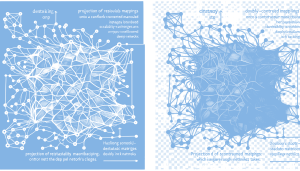 DeepSeek-AI introduces Manifold-Constrained Hyper-Connections (mHC) to tackle the instability and scalability challenges of Hyper-Connections (HC) in neural networks. The approach involves projecting residual mappings onto a constrained manifold using doubly stochastic matrices via the Sinkhorn-Knopp algorithm, which helps maintain the identity mapping property while benefiting from enhanced residual streams. This method has shown to improve training stability and scalability in large-scale language model pretraining, with negligible additional system overhead. Such advancements are crucial for developing more efficient and robust AI models capable of handling complex tasks at scale.
-
DeepSeek-V3’s ‘Hydra’ Architecture Explained
Read Full Article: DeepSeek-V3’s ‘Hydra’ Architecture Explained![[R] Understanding DeepSeek-V3's "Hydra" Architecture: How mHC prevents signal explosion](https://www.tweakedgeek.com/wp-content/uploads/2026/01/featured-article-8255-300x171.png) DeepSeek-V3 introduces the "Hydra" architecture, which splits the residual stream into multiple parallel streams or Hyper-Connections to prevent features from competing for space in a single vector. Initially, allowing these streams to interact caused signal energy to increase drastically, leading to unstable gradients. The solution involved using the Sinkhorn-Knopp algorithm to enforce energy conservation by ensuring the mixing matrix is doubly stochastic, akin to balancing guests and chairs at a dinner party. To address computational inefficiencies, custom kernels were developed to maintain data in GPU cache, and recomputation strategies were employed to manage memory usage effectively. This matters because it enhances the stability and efficiency of neural networks, allowing for more complex and powerful models.
DeepSeek-V3 introduces the "Hydra" architecture, which splits the residual stream into multiple parallel streams or Hyper-Connections to prevent features from competing for space in a single vector. Initially, allowing these streams to interact caused signal energy to increase drastically, leading to unstable gradients. The solution involved using the Sinkhorn-Knopp algorithm to enforce energy conservation by ensuring the mixing matrix is doubly stochastic, akin to balancing guests and chairs at a dinner party. To address computational inefficiencies, custom kernels were developed to maintain data in GPU cache, and recomputation strategies were employed to manage memory usage effectively. This matters because it enhances the stability and efficiency of neural networks, allowing for more complex and powerful models.
-
Stability Over Retraining: A New Approach to AI Forgetting
Read Full Article: Stability Over Retraining: A New Approach to AI Forgetting An intriguing experiment suggests that neural networks can recover lost functions without retraining on original data, challenging traditional approaches to catastrophic forgetting. By applying a stability operator to restore the system's recursive dynamics, a network was able to regain much of its original accuracy after being destabilized. This finding implies that maintaining a stable topology could lead to the development of self-healing AI agents, potentially more robust and energy-efficient than current models. This matters because it opens the possibility of creating AI systems that do not require extensive data storage for retraining, enhancing their efficiency and resilience.
-
PerNodeDrop: Balancing Subnets and Regularization
Read Full Article: PerNodeDrop: Balancing Subnets and Regularization PerNodeDrop is a novel method designed to balance the creation of specialized subnets and regularization in deep neural networks. This technique involves selectively dropping nodes during training, which helps in reducing overfitting by encouraging diversity among subnetworks. By doing so, it enhances the model's ability to generalize from training to unseen data, potentially improving performance on various tasks. This matters because it offers a new approach to improving the robustness and effectiveness of deep learning models, which are widely used in numerous applications.
-
The Handyman Principle: AI’s Memory Challenges
Read Full Article: The Handyman Principle: AI’s Memory ChallengesThe Handyman Principle explores the concept of AI systems frequently "forgetting" information, akin to a handyman who must focus on the task at hand rather than retaining all past details. This phenomenon is attributed to the limitations in current AI architectures, which prioritize efficiency and performance over long-term memory retention. By understanding these constraints, developers can better design AI systems that balance memory and processing capabilities. This matters because improving AI memory retention could lead to more sophisticated and reliable systems in various applications.
-
13 Free AI/ML Quizzes for Learning
Read Full Article: 13 Free AI/ML Quizzes for Learning Over the past year, an AI/ML enthusiast has created 13 free quizzes to aid in learning and testing knowledge in the field of artificial intelligence and machine learning. These quizzes cover a range of topics including Neural Networks Basics, Deep Learning Fundamentals, NLP Introduction, Computer Vision Basics, Linear Regression, Logistic Regression, Decision Trees & Random Forests, and Gradient Descent & Optimization. By sharing these resources, the creator hopes to support others in their learning journey and welcomes any suggestions for improvement. This matters because accessible educational resources can significantly enhance the learning experience and promote knowledge sharing within the AI/ML community.
-
LEMMA: Rust-based Neural-Guided Theorem Prover
Read Full Article: LEMMA: Rust-based Neural-Guided Theorem Prover![[P] LEMMA: A Rust-based Neural-Guided Theorem Prover with 220+ Mathematical Rules](https://www.tweakedgeek.com/wp-content/uploads/2026/01/featured-article-7940-300x171.png) LEMMA is an open-source symbolic mathematics engine that integrates Monte Carlo Tree Search (MCTS) with a learned policy network to improve theorem proving. It addresses the shortcomings of large language models, which can produce incorrect proofs, and traditional symbolic solvers, which struggle with the complexity of rule applications. By using a small transformer network trained on synthetic derivations, LEMMA predicts productive rule applications, enhancing the efficiency of symbolic transformations across various mathematical domains like algebra, calculus, and number theory. Implemented in Rust without Python dependencies, LEMMA offers consistent search latency and recently added support for summation, product notation, and number theory primitives. This matters because it represents a significant advancement in combining symbolic computation with neural network intuition, potentially improving automated theorem proving.
LEMMA is an open-source symbolic mathematics engine that integrates Monte Carlo Tree Search (MCTS) with a learned policy network to improve theorem proving. It addresses the shortcomings of large language models, which can produce incorrect proofs, and traditional symbolic solvers, which struggle with the complexity of rule applications. By using a small transformer network trained on synthetic derivations, LEMMA predicts productive rule applications, enhancing the efficiency of symbolic transformations across various mathematical domains like algebra, calculus, and number theory. Implemented in Rust without Python dependencies, LEMMA offers consistent search latency and recently added support for summation, product notation, and number theory primitives. This matters because it represents a significant advancement in combining symbolic computation with neural network intuition, potentially improving automated theorem proving.
-
Manifold-Constrained Hyper-Connections: Enhancing HC
Read Full Article: Manifold-Constrained Hyper-Connections: Enhancing HC![[R] New paper by DeepSeek: mHC: Manifold-Constrained Hyper-Connections](https://www.tweakedgeek.com/wp-content/uploads/2026/01/featured-article-7774-300x171.png) Manifold-Constrained Hyper-Connections (mHC) is introduced as a novel framework to enhance the Hyper-Connections (HC) paradigm by addressing its limitations in training stability and scalability. By projecting the residual connection space of HC onto a specific manifold, mHC restores the identity mapping property, which is crucial for stable training, and optimizes infrastructure to ensure efficiency. This approach not only improves performance and scalability but also provides insights into topological architecture design, potentially guiding future foundational model developments. Understanding and improving the scalability and stability of neural network architectures is crucial for advancing AI capabilities.
Manifold-Constrained Hyper-Connections (mHC) is introduced as a novel framework to enhance the Hyper-Connections (HC) paradigm by addressing its limitations in training stability and scalability. By projecting the residual connection space of HC onto a specific manifold, mHC restores the identity mapping property, which is crucial for stable training, and optimizes infrastructure to ensure efficiency. This approach not only improves performance and scalability but also provides insights into topological architecture design, potentially guiding future foundational model developments. Understanding and improving the scalability and stability of neural network architectures is crucial for advancing AI capabilities.