
neural networks
-
Build a Deep Learning Library with Python & NumPy
Read Full Article: Build a Deep Learning Library with Python & NumPy![Learn to build a Deep Learning library from scratch in Python and NumPy (autograd, CNNs, ResNets) [free]"](https://www.tweakedgeek.com/wp-content/uploads/2026/01/featured-article-7756-300x171.png) This project offers a comprehensive guide to building a deep learning library from scratch using Python and NumPy, aiming to demystify the complexities of modern frameworks. Key components include creating an autograd engine for automatic differentiation, constructing neural network modules with layers and activations, implementing optimizers like SGD and Adam, and developing a training loop for model persistence and dataset handling. Additionally, it covers the construction and training of Convolutional Neural Networks (CNNs), providing a conceptual and educational resource rather than a production-ready framework. Understanding these foundational elements is crucial for anyone looking to deepen their knowledge of deep learning and its underlying mechanics.
This project offers a comprehensive guide to building a deep learning library from scratch using Python and NumPy, aiming to demystify the complexities of modern frameworks. Key components include creating an autograd engine for automatic differentiation, constructing neural network modules with layers and activations, implementing optimizers like SGD and Adam, and developing a training loop for model persistence and dataset handling. Additionally, it covers the construction and training of Convolutional Neural Networks (CNNs), providing a conceptual and educational resource rather than a production-ready framework. Understanding these foundational elements is crucial for anyone looking to deepen their knowledge of deep learning and its underlying mechanics.
-
Llama 3.2 3B fMRI Circuit Tracing Insights
Read Full Article: Llama 3.2 3B fMRI Circuit Tracing Insights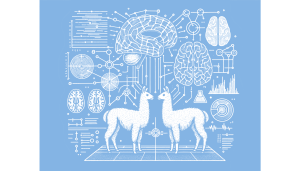 Research into the Llama 3.2 3B fMRI model reveals intriguing patterns in the correlation of hidden activations across layers. Most correlated dimensions are transient, appearing briefly in specific layers and then vanishing, suggesting short-lived subroutines rather than stable features. Some dimensions persist in specific layers, indicating mid-to-late control signals, while a small set of dimensions recur across different prompts and layers, maintaining stable polarity. The research aims to further isolate these recurring dimensions to better understand their roles, potentially leading to insights into the model's inner workings. Understanding these patterns matters as it could enhance the interpretability and reliability of complex AI models.
-
Resolving Inconsistencies in Linear Systems
Read Full Article: Resolving Inconsistencies in Linear Systems In the linear equation system Ax=b, inconsistencies can arise when the vector b is not within the column space of A. A common solution is to add a column of 1's to matrix A, which expands the column space by introducing a new direction of reachability, allowing previously unreachable vectors like b to be included in the expanded span. This process doesn't rotate the column space but rather introduces a uniform shift, similar to how adding a constant in y=mx+b shifts the line vertically, transforming the linear system into an affine one. This matters because it provides a method to resolve inconsistencies in linear systems, making them more flexible and applicable to a wider range of problems.
-
Dropout: Regularization Through Randomness
Read Full Article: Dropout: Regularization Through Randomness Neural networks often suffer from overfitting, where they memorize training data instead of learning generalizable patterns, especially as they become deeper and more complex. Traditional regularization methods like L2 regularization and early stopping can fall short in addressing this issue. In 2012, Geoffrey Hinton and his team introduced dropout, a novel technique where neurons are randomly deactivated during training, preventing any single pathway from dominating the learning process. This approach not only limits overfitting but also encourages the development of distributed and resilient representations, making dropout a pivotal method in enhancing the robustness and adaptability of deep learning models. Why this matters: Dropout is crucial for improving the generalization and performance of deep neural networks, which are foundational to many modern AI applications.
-
Weight Initialization: Starting Your Network Right
Read Full Article: Weight Initialization: Starting Your Network RightWeight initialization is a crucial step in setting up neural networks, as it can significantly impact the model's convergence and overall performance. Proper initialization helps avoid issues like vanishing or exploding gradients, which can hinder the learning process. Techniques such as Xavier and He initialization are commonly used to ensure weights are set in a way that maintains the scale of input signals throughout the network. Understanding and applying effective weight initialization strategies is essential for building robust and efficient deep learning models. This matters because it can dramatically improve the training efficiency and accuracy of neural networks.
-
Inside the Learning Process of AI
Read Full Article: Inside the Learning Process of AI AI models learn by training on large datasets, adjusting their internal parameters, such as weights and biases, to minimize errors in predictions. Initially, these models are fed labeled data and use a loss function to measure the difference between predicted and actual outcomes. Through algorithms like gradient descent and the process of backpropagation, weights and biases are updated to reduce the loss over time. This iterative process helps the model generalize from the training data, enabling it to make accurate predictions on new, unseen inputs, thereby capturing the underlying patterns in the data. Understanding this learning process is crucial for developing AI systems that can perform reliably in real-world applications.
-
Activation Functions in Language Models
Read Full Article: Activation Functions in Language Models Activation functions are crucial components in neural networks, enabling them to learn complex, non-linear patterns beyond simple linear transformations. They introduce non-linearity, allowing networks to approximate any function, which is essential for tasks like image recognition and language understanding. The evolution of activation functions has moved from ReLU, which helped overcome vanishing gradients, to more sophisticated functions like GELU and SwiGLU, which offer smoother transitions and better gradient flow. SwiGLU, with its gating mechanism, has become the standard in modern language models due to its expressiveness and ability to improve training stability and model performance. Understanding and choosing the right activation function is vital for building effective and stable language models. Why this matters: Activation functions are fundamental to the performance and stability of neural networks, impacting their ability to learn and generalize complex patterns in data.
-
Visualizing Geometric Phase Transitions in Neural Nets
Read Full Article: Visualizing Geometric Phase Transitions in Neural Nets![[P] algebra-de-grok: Visualizing hidden geometric phase transition in modular arithmetic networks](https://www.tweakedgeek.com/wp-content/uploads/2025/12/featured-article-6498-300x171.png) A lightweight visualization tool has been developed to track the emergence of algebraic structures within neural networks training on modular arithmetic, highlighting the transition from memorization to generalization, known as "grokking." This tool uses real-time geometry to plot embedding constellations, transitioning from random noise to ordered algebraic groups, and employs metric-based detection to flag grokking onset well before validation accuracy spikes. It operates with minimal dependencies and visualizes the Fourier spectrum of neuron activations, turning a black-box phase transition into a visible geometric event. While tuned for algorithmic datasets and running on CPU, it provides a valuable tool for understanding network generalization on algorithmic tasks, with an open and adaptable codebase for further exploration. This matters because it offers insights into the internal reorganization of neural networks, enhancing our understanding of how they generalize beyond traditional loss metrics.
A lightweight visualization tool has been developed to track the emergence of algebraic structures within neural networks training on modular arithmetic, highlighting the transition from memorization to generalization, known as "grokking." This tool uses real-time geometry to plot embedding constellations, transitioning from random noise to ordered algebraic groups, and employs metric-based detection to flag grokking onset well before validation accuracy spikes. It operates with minimal dependencies and visualizes the Fourier spectrum of neuron activations, turning a black-box phase transition into a visible geometric event. While tuned for algorithmic datasets and running on CPU, it provides a valuable tool for understanding network generalization on algorithmic tasks, with an open and adaptable codebase for further exploration. This matters because it offers insights into the internal reorganization of neural networks, enhancing our understanding of how they generalize beyond traditional loss metrics.
-
Automated Algorithmic Optimization with AlphaEvolve
Read Full Article: Automated Algorithmic Optimization with AlphaEvolve![[R] Automated algorithmic optimization (AlphaEvolve)](https://www.tweakedgeek.com/wp-content/uploads/2025/12/featured-article-6353-300x171.png) The concept of AlphaEvolve proposes a novel approach to algorithmic optimization by leveraging neural networks to learn a continuous space representing a combinatorial space of algorithms. This involves defining a learnable embedding space where algorithms are mapped using a BERT-like objective, allowing for functional closeness to correspond to Euclidean proximity. The method utilizes a learned mapping to represent performance, transforming algorithm invention into an optimization problem that seeks to maximize performance gains. By steering the activation of a code-generation model, theoretical vectors are decoded into executable code, potentially revolutionizing how algorithms are discovered and optimized. This matters because it could significantly enhance the efficiency and capability of algorithm development, leading to breakthroughs in computational tasks.
The concept of AlphaEvolve proposes a novel approach to algorithmic optimization by leveraging neural networks to learn a continuous space representing a combinatorial space of algorithms. This involves defining a learnable embedding space where algorithms are mapped using a BERT-like objective, allowing for functional closeness to correspond to Euclidean proximity. The method utilizes a learned mapping to represent performance, transforming algorithm invention into an optimization problem that seeks to maximize performance gains. By steering the activation of a code-generation model, theoretical vectors are decoded into executable code, potentially revolutionizing how algorithms are discovered and optimized. This matters because it could significantly enhance the efficiency and capability of algorithm development, leading to breakthroughs in computational tasks.
-
NOMA: Dynamic Neural Networks with Compiler Integration
Read Full Article: NOMA: Dynamic Neural Networks with Compiler Integration![[P] NOMA: Neural networks that realloc themselves during training (compile-time autodiff to LLVM IR)](https://www.tweakedgeek.com/wp-content/uploads/2025/12/featured-article-6346-300x171.png) NOMA, or Neural-Oriented Machine Architecture, is an experimental systems language and compiler designed to integrate reverse-mode automatic differentiation as a compiler pass, translating Rust to LLVM IR. Unlike traditional Python frameworks like PyTorch or TensorFlow, NOMA treats neural networks as managed memory buffers, allowing dynamic changes in network topology during training without halting the process. This is achieved through explicit language primitives for memory management, which preserve optimizer states across growth events, making it possible to modify network capacity seamlessly. The project is currently in alpha, with implemented features including native compilation, various optimizers, and tensor operations, while seeking community feedback on enhancing control flow, GPU backend, and tooling. This matters because it offers a novel approach to neural network training, potentially increasing efficiency and flexibility in machine learning systems.
NOMA, or Neural-Oriented Machine Architecture, is an experimental systems language and compiler designed to integrate reverse-mode automatic differentiation as a compiler pass, translating Rust to LLVM IR. Unlike traditional Python frameworks like PyTorch or TensorFlow, NOMA treats neural networks as managed memory buffers, allowing dynamic changes in network topology during training without halting the process. This is achieved through explicit language primitives for memory management, which preserve optimizer states across growth events, making it possible to modify network capacity seamlessly. The project is currently in alpha, with implemented features including native compilation, various optimizers, and tensor operations, while seeking community feedback on enhancing control flow, GPU backend, and tooling. This matters because it offers a novel approach to neural network training, potentially increasing efficiency and flexibility in machine learning systems.