
AI tools
-
Top 0.1% Users by Messages: Value for $20/Month
Read Full Article: Top 0.1% Users by Messages: Value for $20/Month Being among the top 0.1% of users by messages sent highlights the extensive use and reliance on ChatGPT for ongoing projects and iterative work. The $20/month subscription fee is seen as a valuable investment for users who frequently engage with the platform, allowing for enhanced productivity and support in managing complex tasks. This level of usage underscores the platform's utility and effectiveness for those who integrate it deeply into their workflow. Understanding the value proposition of such subscriptions can help users make informed decisions about their investments in productivity tools.
-
AI’s Impact on Travel Agents
Read Full Article: AI’s Impact on Travel Agents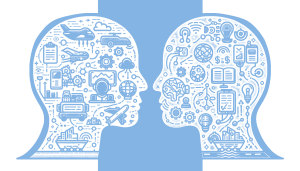 Artificial intelligence is increasingly capable of managing aspects of travel planning, such as creating itineraries and budgeting, often with greater efficiency than human travel agents. However, human agents still play a crucial role in managing complex scenarios like cancellations, providing personal guidance, and handling emergencies. This evolving dynamic suggests that while AI may take over routine tasks, human travel agents will likely shift towards more specialized roles that require personal interaction and problem-solving skills. Understanding this balance is essential as it highlights the ongoing transformation in the travel industry and the potential future roles of human agents.
-
Streamlining AI Paper Discovery with Research Agent
Read Full Article: Streamlining AI Paper Discovery with Research Agent With the overwhelming number of AI research papers published annually, a new open-source pipeline called Research Agent aims to streamline the process of finding relevant work. The tool pulls recent arxiv papers from specific AI categories, filters them by semantic similarity to a research brief, classifies them into relevant categories, and ranks them based on influence signals. It also provides easy access to top-ranked papers with abstracts and plain English summaries. While the tool offers a promising solution to AI paper fatigue, it faces challenges such as potential inaccuracies in summaries due to LLM randomness and the non-stationary nature of influence prediction. Feedback is sought on improving ranking signals and identifying potential failure modes. This matters because it addresses the challenge of staying updated with significant AI research amidst an ever-growing volume of publications.
-
Enhancing Navigation in Long AI Chats
Read Full Article: Enhancing Navigation in Long AI Chats Despite advancements in AI capabilities, managing lengthy conversations with AI models like ChatGPT, Claude, and Gemini remains challenging due to navigation issues. Users often struggle to scroll through extensive chat logs to locate previous context or decisions, which can be cumbersome and inefficient. To address this, a Chrome extension was developed to enhance the navigation and usability of long AI interactions, making it easier for users to revisit and reuse past conversations. Improving navigation in AI chats is crucial for enhancing user experience and maximizing the utility of AI tools in extended dialogues.
-
aichat: Efficient Session Management Tool
Read Full Article: aichat: Efficient Session Management Tool The aichat tool enhances productivity in Claude-Code or Codex-CLI sessions by allowing users to continue their work without the need for compaction, which often results in the loss of important details. By using the >resume trigger, users can seamlessly continue their work through three modes: blind trim, smart-trim, and rollover, each offering different ways to manage session context. The tool also features a super-fast Rust/Tantivy-based full-text search for retrieving context from past sessions, making it easier to find and continue previous work. This functionality is particularly valuable for users who frequently hit context limits in their sessions and need efficient ways to manage and retrieve session data. This matters because it offers a practical solution to maintain workflow continuity and efficiency in environments with limited context capacity.
-
AI-Doomsday-Toolbox: Distributed Inference & Workflows
Read Full Article: AI-Doomsday-Toolbox: Distributed Inference & Workflows The AI Doomsday Toolbox v0.513 introduces significant updates, enabling the distribution of large AI models across multiple devices using a master-worker setup via llama.cpp. This update allows users to manually add workers and allocate RAM and layer proportions per device, enhancing the flexibility and efficiency of model execution. New features include the ability to transcribe and summarize audio and video content, generate and upscale images in a single workflow, and share media directly to transcription workflows. Additionally, models and ZIM files can now be used in-place without copying, though this requires All Files Access permission. Users should uninstall previous versions due to a database schema change. These advancements make AI processing more accessible and efficient, which is crucial for leveraging AI capabilities in everyday applications.
-
BULaMU-Dream: Pioneering AI for African Languages
Read Full Article: BULaMU-Dream: Pioneering AI for African Languages BULaMU-Dream is a pioneering text-to-image model specifically developed to interpret prompts in Luganda, marking a significant milestone as the first of its kind for an African language. This innovative model was trained from scratch, showcasing the potential for expanding access to multimodal AI tools, particularly in underrepresented languages. By utilizing tiny conditional diffusion models, BULaMU-Dream demonstrates that such technology can be developed and operated on cost-effective setups, making AI more accessible and inclusive. This matters because it promotes linguistic diversity in AI technology and empowers communities by providing tools that cater to their native languages.
-
Advancements in Local LLMs and Llama AI
Read Full Article: Advancements in Local LLMs and Llama AI In 2025, the landscape of local Large Language Models (LLMs) has evolved significantly, with llama.cpp becoming a preferred choice for its performance and integration with Llama models. Mixture of Experts (MoE) models are gaining traction for their ability to efficiently run large models on consumer hardware. New local LLMs with enhanced capabilities, particularly in vision and multimodal tasks, are emerging, broadening their application scope. Additionally, Retrieval-Augmented Generation (RAG) systems are being utilized to mimic continuous learning, while advancements in high-VRAM hardware are facilitating the use of more complex models on consumer-grade machines. This matters because these advancements make powerful AI tools more accessible, enabling broader innovation and application across various fields.
-
Agentic AI: 10 Key Developments This Week
Read Full Article: Agentic AI: 10 Key Developments This Week Recent developments in Agentic AI showcase significant advancements and challenges across various platforms and industries. OpenAI is enhancing security for ChatGPT by employing reinforcement learning to address potential exploits, while Claude Code is introducing custom agent hooks for developers to extend functionalities. Forbes highlights the growing complexity for small businesses managing multiple AI tools, likening it to handling numerous remote controls for a single TV. Additionally, Google and other tech giants are focusing on educating users about agent integration and the transformative impact on job roles, emphasizing the need for workforce adaptation. These updates underscore the rapid evolution and integration of AI agents in daily operations, emphasizing the necessity for businesses and individuals to adapt to these technological shifts.
-
Nuggt Canvas: Transforming AI Outputs
Read Full Article: Nuggt Canvas: Transforming AI Outputs![[P] A better looking MCP Client (Open Source)](https://www.tweakedgeek.com/wp-content/uploads/2025/12/featured-article-6573-300x171.png) Nuggt Canvas is an open-source project designed to transform natural language requests into interactive user interfaces, enhancing the typical chatbot experience by moving beyond text-based outputs. This tool utilizes a simple Domain-Specific Language (DSL) to describe UI components, ensuring structured and predictable results, and supports the Model Context Protocol (MCP) to connect with real tools and data sources like APIs and databases. The project invites feedback and collaboration to expand its capabilities, particularly in UI components, DSL support, and MCP tool examples. By making AI outputs more interactive and usable, Nuggt Canvas aims to improve how users engage with AI-generated content.
Nuggt Canvas is an open-source project designed to transform natural language requests into interactive user interfaces, enhancing the typical chatbot experience by moving beyond text-based outputs. This tool utilizes a simple Domain-Specific Language (DSL) to describe UI components, ensuring structured and predictable results, and supports the Model Context Protocol (MCP) to connect with real tools and data sources like APIs and databases. The project invites feedback and collaboration to expand its capabilities, particularly in UI components, DSL support, and MCP tool examples. By making AI outputs more interactive and usable, Nuggt Canvas aims to improve how users engage with AI-generated content.