
catastrophic forgetting
-
Stability Over Retraining: A New Approach to AI Forgetting
Read Full Article: Stability Over Retraining: A New Approach to AI Forgetting An intriguing experiment suggests that neural networks can recover lost functions without retraining on original data, challenging traditional approaches to catastrophic forgetting. By applying a stability operator to restore the system's recursive dynamics, a network was able to regain much of its original accuracy after being destabilized. This finding implies that maintaining a stable topology could lead to the development of self-healing AI agents, potentially more robust and energy-efficient than current models. This matters because it opens the possibility of creating AI systems that do not require extensive data storage for retraining, enhancing their efficiency and resilience.
-
HOPE Replica Achieves Negative Forgetting on SplitMNIST
Read Full Article: HOPE Replica Achieves Negative Forgetting on SplitMNIST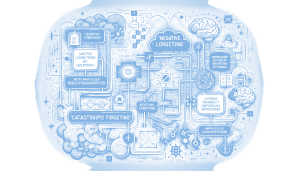 A HOPE replica, inspired by the paper "Nested Learning: The Illusion of Deep Learning Architecture," has achieved negative forgetting on the SplitMNIST task, which is a significant accomplishment in task incremental learning (Task IL). Negative forgetting, also known as positive transfer, implies that the model not only retains previously learned tasks but also improves on them while learning new tasks. This achievement highlights the potential for developing more efficient deep learning models that can better manage and utilize knowledge across multiple tasks. Understanding and implementing such models can lead to advancements in AI that are more adaptable and capable of continuous learning.
-
Nested Learning: A New ML Paradigm
Read Full Article: Nested Learning: A New ML Paradigm Nested Learning is a new machine learning paradigm designed to address the challenges of continual learning, where current models struggle with retaining old knowledge while acquiring new skills. Unlike traditional approaches that treat model architecture and optimization algorithms as separate entities, Nested Learning integrates them into a unified system of interconnected, multi-level learning problems. This approach allows for simultaneous optimization and deeper computational depth, helping to mitigate issues like catastrophic forgetting. The concept is validated through a self-modifying architecture named "Hope," which shows improved performance in language modeling and long-context memory management compared to existing models. This matters because it offers a potential pathway to more advanced and adaptable AI systems, akin to human neuroplasticity.