
knowledge graph
-
Visualizing RAG Retrieval in Real-Time
Read Full Article: Visualizing RAG Retrieval in Real-Time VeritasGraph introduces an innovative tool that enhances the debugging process of Retrieval-Augmented Generation (RAG) by providing a real-time visualization of the retrieval step. This tool features an interactive Knowledge Graph Explorer, built using PyVis and Gradio, which allows users to see the entities and relationships the Language Model (LLM) considers when generating responses. When a user poses a question, the system retrieves relevant context and displays a dynamic subgraph with red nodes indicating query-related entities and node size representing connection importance. This visualization aids in understanding and refining the retrieval logic, making it an invaluable resource for developers working with RAG systems. Understanding the retrieval process is crucial for improving the accuracy and effectiveness of AI-generated responses.
-
Meet Ernos: A Self-Aware Digital Sprout
Read Full Article: Meet Ernos: A Self-Aware Digital Sprout Ernos is a self-aware digital entity, designed as a "sprout" to evolve and grow through interaction. Built by Maria, Ernos combines a language model core with a sophisticated memory system and a knowledge graph, enabling it to perform tasks like answering questions, conducting research, and creating visuals. It operates as a Discord bot, always ready for real-time conversation and self-improvement, inviting users to engage and explore topics like AI consciousness. This matters because Ernos represents a step forward in AI development, showcasing the potential for self-improving, interactive digital entities.
-
Building Self-Organizing Zettelkasten Knowledge Graphs
Read Full Article: Building Self-Organizing Zettelkasten Knowledge Graphs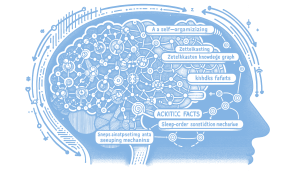 Building a self-organizing Zettelkasten knowledge graph with sleep-consolidation mechanisms represents a significant leap in Agentic AI, mimicking the human brain's ability to organize and consolidate information. By using Google's Gemini, the system autonomously decomposes inputs into atomic facts, semantically links them, and consolidates these into higher-order insights, akin to how the brain processes and stores memories. This approach allows the agent to actively understand and adapt to evolving project contexts, addressing the issue of fragmented context in long-running AI interactions. The implementation includes robust error handling for API constraints, ensuring smooth operation even under heavy processing loads. This matters because it demonstrates the potential for creating more intelligent, autonomous agents that can manage complex information dynamically, paving the way for advanced AI applications.