
RAG
-
LFM2.5 1.2B Instruct Model Overview
Read Full Article: LFM2.5 1.2B Instruct Model OverviewThe LFM2.5 1.2B Instruct model stands out for its exceptional performance compared to other models of similar size, offering smooth operation on a wide range of hardware. It is particularly effective for agentic tasks, data extraction, and retrieval-augmented generation (RAG), although it is not advised for tasks that require extensive knowledge or programming. This model's efficiency and versatility make it a valuable tool for users seeking a reliable and adaptable AI solution. Understanding the capabilities and limitations of AI models like LFM2.5 1.2B Instruct is crucial for optimizing their use in various applications.
-
Visualizing RAG Retrieval in Real-Time
Read Full Article: Visualizing RAG Retrieval in Real-Time VeritasGraph introduces an innovative tool that enhances the debugging process of Retrieval-Augmented Generation (RAG) by providing a real-time visualization of the retrieval step. This tool features an interactive Knowledge Graph Explorer, built using PyVis and Gradio, which allows users to see the entities and relationships the Language Model (LLM) considers when generating responses. When a user poses a question, the system retrieves relevant context and displays a dynamic subgraph with red nodes indicating query-related entities and node size representing connection importance. This visualization aids in understanding and refining the retrieval logic, making it an invaluable resource for developers working with RAG systems. Understanding the retrieval process is crucial for improving the accuracy and effectiveness of AI-generated responses.
-
Multidimensional Knowledge Graphs: Future of RAG
Read Full Article: Multidimensional Knowledge Graphs: Future of RAG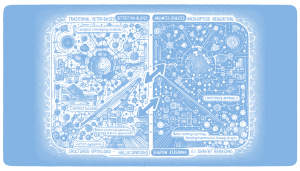 In 2026, the widespread use of basic vector-based Retrieval-Augmented Generation (RAG) is encountering limitations such as context overload, hallucinations, and shallow reasoning. The advancement towards Multidimensional Knowledge Graphs (KGs) offers a solution by structuring knowledge with rich relationships, hierarchies, and context, enabling deeper reasoning and more precise retrieval. These KGs provide significant production advantages, including improved explainability and reduced hallucinations, while effectively handling complex queries. Mastering the integration of KG-RAG hybrids is becoming a highly sought-after skill for AI professionals, as it enhances retrieval systems and graph databases, making it essential for career advancement in the AI field. This matters because it highlights the evolution of AI technology and the skills needed to stay competitive in the industry.
-
Connect LLMs to Knowledge Sources with SurfSense
Read Full Article: Connect LLMs to Knowledge Sources with SurfSense SurfSense is an open-source solution designed to connect any Large Language Model (LLM) to various internal knowledge sources, enabling real-time chat capabilities for teams. It serves as an alternative to platforms like NotebookLM and Perplexity, offering integration with over 15 connectors including Search Engines, Drive, Calendar, and Notion. Key features include deep agentic agent role-based access control (RBAC) for teams, support for over 100 LLMs, 6000+ embedding models, and compatibility with more than 50 file extensions. Additionally, SurfSense provides local text-to-speech and speech-to-text support, and a cross-browser extension for saving dynamic web pages. This matters because it enhances collaborative efficiency and accessibility to information across various platforms and tools.
-
Challenges in Scaling MLOps for Production
Read Full Article: Challenges in Scaling MLOps for Production Transitioning machine learning models from development in Jupyter notebooks to handling 10,000 concurrent users in production presents significant challenges. The process involves ensuring robust model inferencing, which is often the focus of MLOps interviews, as it tests the ability to maintain high performance and reliability under load. Additionally, distributed ML training must be resilient to hardware failures, such as GPU crashes, through techniques like smart checkpointing to avoid costly retraining. Furthermore, cloud engineers play a crucial role in developing advanced search platforms like RAG and vector databases, which enhance data retrieval by understanding context beyond simple keyword matches. Understanding these aspects is crucial for building scalable and efficient ML systems in production environments.
-
Interact with Notion Docs Using RAG
Read Full Article: Interact with Notion Docs Using RAG Retrieval-Augmented Generation (RAG) is a powerful method that allows users to interact with their Notion documents through natural language queries. By integrating RAG, users can ask questions and receive responses that are informed by the content of their documents, making information retrieval more intuitive and efficient. This approach leverages a combination of retrieval mechanisms and generative models to provide precise and contextually relevant answers, enhancing the overall user experience. Such advancements in document interaction can significantly streamline workflows and improve productivity by reducing the time spent searching for information.
-
AI Website Assistant with Amazon Bedrock
Read Full Article: AI Website Assistant with Amazon Bedrock Businesses are increasingly challenged by the need to provide fast customer support while managing overwhelming documentation and queries. An AI-powered website assistant built using Amazon Bedrock and Amazon Bedrock Knowledge Bases offers a solution by providing instant, relevant answers to customers and reducing the workload for support agents. This system uses Retrieval-Augmented Generation (RAG) to access and retrieve information from a knowledge base, ensuring that users receive data pertinent to their access level. The architecture leverages Amazon's serverless technologies, including Amazon ECS, AWS Lambda, and Amazon Cognito, to create a scalable and secure environment for both internal and external users. By implementing this solution, businesses can enhance customer satisfaction and streamline support operations. This matters because it provides a scalable way to improve customer service efficiency and accuracy, benefiting both businesses and their customers.
-
Framework for RAG vs Fine-Tuning in AI Models
Read Full Article: Framework for RAG vs Fine-Tuning in AI Models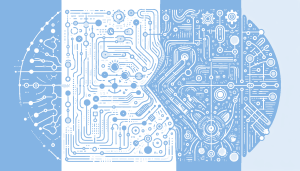 To optimize AI model performance, start with prompt engineering, as it is cost-effective and immediate. If a model requires access to rapidly changing or private data, Retrieval-Augmented Generation (RAG) should be employed to bridge knowledge gaps. In contrast, fine-tuning is ideal for adjusting the model's behavior, such as improving its tone, format, or adherence to complex instructions. The most efficient systems in the future will likely combine RAG for content accuracy and fine-tuning for stylistic precision, maximizing both knowledge and behavior capabilities. This matters because it helps avoid unnecessary expenses and enhances AI effectiveness by using the right approach for specific needs.