
memory efficiency
-
Efficient TinyStories Model with GRU and Attention
Read Full Article: Efficient TinyStories Model with GRU and Attention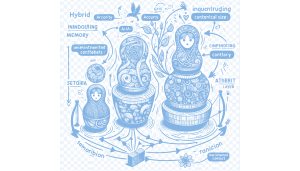 A new TinyStories model, significantly smaller than its predecessor, has been developed using a hybrid architecture of GRU and attention layers. Trained on a 20MB dataset with Google Colab's free resources, the model achieves a train loss of 2.2 and can generate coherent text by remembering context from 5-10 words ago. The architecture employs a residual memory logic within a single GRUcell layer and a self-attention layer, which enhances the model's ability to maintain context while remaining computationally efficient. Although the attention mechanism increases computational cost, the model still outperforms the larger TinyStories-1M in speed for short text bursts. This matters because it demonstrates how smaller, more efficient models can achieve comparable performance to larger ones, making advanced machine learning accessible with limited resources.
-
NVIDIA DGX Spark: Enhanced AI Performance
Read Full Article: NVIDIA DGX Spark: Enhanced AI Performance NVIDIA continues to enhance the performance of its DGX Spark systems through software optimizations and collaborations with the open-source community, resulting in significant improvements in AI inference, training, and creative workflows. The latest updates include new model optimizations, increased memory capacity, and support for the NVFP4 data format, which reduces memory usage while maintaining high accuracy. These advancements allow developers to run large models more efficiently and enable creators to offload AI workloads, keeping their primary devices responsive. Additionally, DGX Spark is now part of the NVIDIA-Certified Systems program, ensuring reliable performance across various AI and content creation tasks. This matters because it empowers developers and creators with more efficient, responsive, and powerful AI tools, enhancing productivity and innovation in AI-driven projects.
-
Memory-Efficient TF-IDF for Large Datasets in Python
Read Full Article: Memory-Efficient TF-IDF for Large Datasets in Python A newly designed library at the C++ level offers a memory-efficient solution for vectorizing large datasets using the TF-IDF method in Python. This innovative approach allows for processing datasets as large as 100GB on machines with as little as 4GB of RAM. The library, named fasttfidf, provides outputs that are comparable to those of the widely-used sklearn library, making it a valuable tool for handling large-scale data without requiring extensive hardware resources. The library's efficiency stems from its ability to handle data processing in a way that minimizes memory usage while maintaining high performance. By re-designing the core components at the C++ level, fasttfidf can manage and process vast amounts of data more effectively than traditional methods. This advancement is particularly beneficial for data scientists and engineers who work with large datasets but have limited computational resources, as it enables them to perform complex data analysis tasks without the need for expensive hardware upgrades. Additionally, fasttfidf now supports the Parquet file format, which is known for its efficient data storage and retrieval capabilities. This support further enhances the library's utility by allowing users to work with data stored in a format that is optimized for performance and scalability. The combination of memory efficiency, high performance, and support for modern data formats makes fasttfidf a compelling choice for those seeking to vectorize large datasets in Python. This matters because it democratizes access to advanced data processing techniques, enabling more users to tackle large-scale data challenges without prohibitive costs.