
natural language
-
Open-Source SQL Data Agent with LangChain
Read Full Article: Open-Source SQL Data Agent with LangChain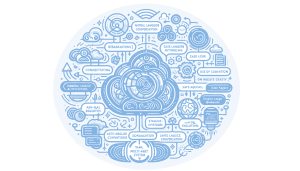 An open-source natural language to SQL data agent has been developed using LangChain and LangGraph, leveraging LangChain’s SQLDatabase utility for efficient database access. This tool supports various databases, including PostgreSQL, Azure SQL, Cosmos DB, Databricks SQL, and BigQuery, and offers Azure AD authentication for Azure-native databases. Users can ask questions in plain English, which are processed through an intent detection agent to generate and safely execute SQL queries, returning results in a natural language format. The system is designed as a YAML-driven, multi-agent framework with an Agent-to-Agent server for seamless integration and communication between agents. This matters because it simplifies data querying for users without SQL expertise, enhancing accessibility and efficiency in data management.
-
TP-Link’s Aireal AI Assistant Enhances Smart Home Experience
Read Full Article: TP-Link’s Aireal AI Assistant Enhances Smart Home Experience TP-Link's smart home brand, Tapo, is introducing an AI assistant named Aireal, which will be integrated into its smart home and Wi-Fi networking devices. Aireal is designed to enhance user experience by allowing natural language commands for tasks like creating smart home routines or troubleshooting Wi-Fi issues. The assistant will also be integrated into Tapo's security cameras, providing AI-generated text descriptions of captured footage, facial recognition, and the ability to search footage with simple queries. Aireal will initially launch in an early access program on select products, with a broader rollout planned in the US later this year, though it will require a subscription fee. This matters because it represents a significant step towards more intuitive and efficient smart home management, potentially making technology more accessible and user-friendly.
-
AI Transforms Interfaces, Not Jobs
Read Full Article: AI Transforms Interfaces, Not Jobs The focus of AI's impact is shifting from job replacement to interface transformation. Traditionally, people needed to master specific tools like Excel or Photoshop, but AI now allows users to interact through natural language, simplifying tasks such as data summarization or photo editing. This shift makes AI seem less impressive to experts but revolutionary for novices, as it democratizes capabilities rather than causing widespread job loss. The key to success in this new landscape lies in knowing how to effectively communicate requests to AI, rather than in-depth tool knowledge. Understanding this shift is crucial as it emphasizes the importance of adaptability and communication skills in the evolving job market.
-
Bosch’s AI Barista with Alexa Plus
Read Full Article: Bosch’s AI Barista with Alexa Plus Bosch has introduced its Personal AI Barista, powered by Alexa Plus, for its 800 Series espresso machines, enabling users to customize drinks through natural language conversation with an Echo smart speaker. However, the integration with Alexa Plus has faced challenges, as the AI struggles with straightforward tasks that previous versions handled well. Despite these issues, the new system promises more versatile drink-making capabilities, allowing users to request any beverage from its extensive library. Additionally, Bosch unveiled Bosch Cook AI at CES, an intelligent cooking solution that guides users through complex meal preparations and coordinates multiple appliances via the Home Connect app. This matters because advancements in AI technology are reshaping how we interact with everyday appliances, aiming to enhance convenience and personalization in our daily routines.
-
Sam Altman: Future of Software Engineering
Read Full Article: Sam Altman: Future of Software Engineering Sam Altman envisions a future where natural language replaces traditional coding, allowing anyone to create software by simply describing their ideas in plain English. This shift could eliminate the need for large developer teams, as AI handles the building, testing, and maintenance of applications autonomously. The implications extend beyond coding, potentially automating entire company operations and management tasks. As software creation becomes more accessible, the focus may shift to the scarcity of innovative ideas, aesthetic judgment, and effective execution. This matters because it could democratize software development and fundamentally change the landscape of work and innovation.
-
2025: The Year in LLMs
Read Full Article: 2025: The Year in LLMs The year 2025 is anticipated to be a pivotal moment for Large Language Models (LLMs) as advancements in AI technology continue to accelerate. These models are expected to become more sophisticated, with enhanced capabilities in natural language understanding and generation, potentially transforming industries such as healthcare, finance, and education. The evolution of LLMs could lead to more personalized and efficient interactions between humans and machines, fostering innovation and improving productivity. Understanding these developments is crucial as they could significantly impact how information is processed and utilized in various sectors.
-
3 New Tricks With Google Gemini’s Major Upgrade
Read Full Article: 3 New Tricks With Google Gemini’s Major Upgrade Google Gemini has received a major upgrade, enhancing its conversational capabilities by allowing users to interact with the AI bot using natural language voice commands. This development aims to make interactions more fluid and akin to chatting with a friend, accommodating interruptions and informal speech patterns. Despite the conversational format, the responses provided by Gemini remain consistent with those obtained through traditional text queries. This matters as it represents a significant step towards more intuitive and human-like interactions with AI, potentially broadening its accessibility and ease of use.
-
Nuggt Canvas: Transforming AI Outputs
Read Full Article: Nuggt Canvas: Transforming AI Outputs![[P] A better looking MCP Client (Open Source)](https://www.tweakedgeek.com/wp-content/uploads/2025/12/featured-article-6573-300x171.png) Nuggt Canvas is an open-source project designed to transform natural language requests into interactive user interfaces, enhancing the typical chatbot experience by moving beyond text-based outputs. This tool utilizes a simple Domain-Specific Language (DSL) to describe UI components, ensuring structured and predictable results, and supports the Model Context Protocol (MCP) to connect with real tools and data sources like APIs and databases. The project invites feedback and collaboration to expand its capabilities, particularly in UI components, DSL support, and MCP tool examples. By making AI outputs more interactive and usable, Nuggt Canvas aims to improve how users engage with AI-generated content.
Nuggt Canvas is an open-source project designed to transform natural language requests into interactive user interfaces, enhancing the typical chatbot experience by moving beyond text-based outputs. This tool utilizes a simple Domain-Specific Language (DSL) to describe UI components, ensuring structured and predictable results, and supports the Model Context Protocol (MCP) to connect with real tools and data sources like APIs and databases. The project invites feedback and collaboration to expand its capabilities, particularly in UI components, DSL support, and MCP tool examples. By making AI outputs more interactive and usable, Nuggt Canvas aims to improve how users engage with AI-generated content.
-
Top AI-Powered App Builders
Read Full Article: Top AI-Powered App Builders AI-powered app builders are revolutionizing software development by allowing users to create applications using natural language prompts, automated code generation, and AI-driven design. Platforms like Lovable and FlutterFlow cater to beginners with their accessible learning curves and rapid prototyping capabilities, although they may face limitations with scalability and complex backend projects. Replit offers a comprehensive online development environment suitable for more experienced users, while Dyad emphasizes privacy and ownership with its open-source framework. Bolt.new stands out for its browser-based efficiency and support for modern JavaScript frameworks but may incur costs with extensive use. These tools are significant as they democratize app development, making it more accessible to a broader audience and accelerating the transition from concept to product.
-
SPARQL-LLM: Natural Language to Knowledge Graph Queries
Read Full Article: SPARQL-LLM: Natural Language to Knowledge Graph Queries SPARQL-LLM is a novel approach that leverages large language models (LLMs) to translate natural language queries into executable SPARQL queries for knowledge graphs. This method addresses the challenge of interacting with complex data structures using everyday language, making it more accessible for users who may not be familiar with the intricacies of SPARQL or knowledge graph schemas. By using LLMs, SPARQL-LLM can understand and process the nuances of human language, providing a more intuitive interface for querying knowledge graphs. The approach involves training the language model on a dataset that pairs natural language questions with their corresponding SPARQL queries. This enables the model to learn the patterns and structures necessary to generate accurate and efficient queries. The ultimate goal is to bridge the gap between human language and machine-readable data, allowing users to extract valuable insights from knowledge graphs without needing specialized technical skills. SPARQL-LLM represents a significant advancement in making data more accessible and usable, particularly for those who are not data scientists or engineers. By simplifying the process of querying complex databases, it empowers a broader audience to leverage the wealth of information contained within knowledge graphs. This matters because it democratizes access to data-driven insights, fostering innovation and informed decision-making across various fields.