
neural network
-
Hybrid ML-Bayesian Trading System
Read Full Article: Hybrid ML-Bayesian Trading System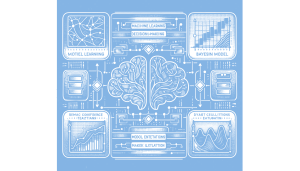 The trading system "Paimon Bless V17.7" integrates a hybrid machine learning and Bayesian approach to manage model uncertainty and dynamically allocate risk. It employs a three-model ensemble: a shallow neural network with Monte Carlo Dropout for uncertainty estimation, a Bayesian Gaussian Naive Bayes Classifier for robust predictions, and a Four-Moment Kelly Criterion Engine for dynamic risk allocation. The system prioritizes models based on their real-time confidence, with higher uncertainty resulting in lower model weight, and incorporates a feedback loop for continuous learning and adaptation to market conditions. This approach aims to enhance trade selectivity and risk management, acknowledging the noisy and non-stationary nature of market data. This matters because it offers a sophisticated method for improving trading strategies by explicitly addressing uncertainty and adapting to changing market environments, potentially leading to more stable and profitable outcomes.
-
AI Learns to Play ‘The House of the Dead’
Read Full Article: AI Learns to Play ‘The House of the Dead’ A neural-network-based AI was developed to autonomously play the classic arcade game "The House of the Dead" by learning from recorded gameplay. A Python script captured the frames and mouse movements during gameplay, which were then stored in a CSV file for training purposes. To efficiently process the large volume of frames, a convolutional neural network (CNN) was employed. The CNN applied convolutional operations to the frames, which were then fed into a feedforward neural network, enabling the AI to mimic and eventually play the game independently. This matters because it demonstrates the potential of neural networks to learn and replicate complex tasks through observation and data analysis.
-
Simple ML Digit Classifier in Vanilla Python
Read Full Article: Simple ML Digit Classifier in Vanilla Python A simple digit classifier has been developed as a toy project using vanilla Python, without relying on libraries like PyTorch. This project aims to provide a basic understanding of how a neural network functions. It includes a command line interface for training and predicting, allowing users to specify the number of training loops, or epochs, to observe the model's predictions over time. This matters because it offers an accessible way to learn the fundamentals of neural networks and machine learning through hands-on experience with basic Python coding.
-
Exploring Llama 3.2 3B’s Neural Activity Patterns
Read Full Article: Exploring Llama 3.2 3B’s Neural Activity Patterns Recent investigations into the Llama 3.2 3B model have revealed intriguing activity patterns in its neural network, specifically highlighting dimension 3039 as consistently active across various layers and steps. This dimension showed persistent engagement during a basic greeting prompt, suggesting a potential area of interest for further exploration in understanding the model's processing mechanisms. Although the implications of this finding are not yet fully understood, it highlights the complexity and potential for discovery within advanced AI architectures. Understanding these patterns could lead to more efficient and interpretable AI systems.