
Productivity
-
Vibe Bot: AI-Powered Desk Assistant
Read Full Article: Vibe Bot: AI-Powered Desk Assistant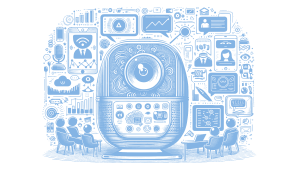 The Vibe Bot is a new AI-powered device designed for office desks and meeting rooms, offering functionalities similar to a smart speaker with added features like a 4K camera and beam-forming microphones. It serves as a voice assistant, smart webcam, and AI note-taker, capable of live transcription and generating AI-driven meeting notes. The device can rotate its screen and camera to track speakers during group conversations, ensuring the right person is always on display. Additionally, it integrates with other apps for enhanced productivity, although specific app integrations have not been confirmed. This matters because it enhances hybrid work environments by streamlining communication and information management.
-
DeskMate: Transform Your iPhone into an AI Assistant
Read Full Article: DeskMate: Transform Your iPhone into an AI Assistant The DeskMate from Yoona is an innovative desktop charging hub that transforms an iPhone into a robotic AI assistant. Equipped with three USB-C ports, one USB-A, and a MagSafe pad, it automatically activates an AI companion app when an iPhone is docked. Utilizing the iPhone's existing display, camera, and microphone, DeskMate avoids additional hardware clutter and even offers features like Slack integration and meeting assistance. While the device is expected to launch via crowdfunding in March, its anticipated price of under $300 may be a concern for potential buyers. This matters because it represents a novel integration of existing smartphone technology to enhance productivity and user interaction without adding extra devices.
-
Gratitude for Big Tech’s Impact on Coding
Read Full Article: Gratitude for Big Tech’s Impact on Coding The author expresses gratitude for the advancements in technology and tools provided by big tech companies, which have significantly eased the process of coding and problem-solving over the past decade. They reflect on the journey from manually searching through programming documentation and forums to utilizing advanced AI tools like OpenAI and Claude. These innovations have streamlined coding tasks and enhanced productivity, allowing for more efficient work processes. This matters because it highlights the transformative impact of AI and technology on everyday tasks, making complex processes more accessible and manageable for a wider range of users.
-
HP’s OmniBooks Get AI Boost with New Chips & OLED
Read Full Article: HP’s OmniBooks Get AI Boost with New Chips & OLED HP has unveiled a refreshed lineup of OmniBook laptops, including the AI-focused OmniBook Ultra 14, which now features Intel’s Panther Lake and Qualcomm’s Snapdragon X2 processors for enhanced AI performance. The Ultra 14 offers up to 64GB of RAM, a 2TB SSD, and a new OLED display with improved resolution, while maintaining a lightweight and slim design. Battery life has been extended to up to 20 hours, or even 30 hours on some configurations, and the laptop includes a compact vapor chamber cooling system to manage heat from intensive tasks. Additional models like the OmniBook 7, 5, 3, and X offer a variety of processor and display options, with some featuring next-gen AMD processors and OLED screens. This matters because the advancements in processing power and display technology enhance productivity and user experience, especially for AI-related tasks.
-
HP OmniStudio X: New Features and Specs
Read Full Article: HP OmniStudio X: New Features and Specs HP's updated 27-inch OmniStudio X desktop features Intel’s next-gen processors and Nvidia’s RTX 5050 GPU, enhancing performance for users who need to share work efficiently. A notable addition is the adjustable webcam, which can tilt downwards to showcase the user's desk during presentations. The inclusion of Thunderbolt Share allows seamless file transfer between two Thunderbolt-connected PCs. While the RTX 5050 is not designed for heavy graphics tasks, HP offers models with integrated graphics for less demanding needs. However, some drawbacks include the lack of updates for the larger 31.5-inch model and a reduction in display resolution from 4K to QHD. Release dates and pricing details remain undisclosed. This matters because it highlights the trend towards more integrated and collaborative technology in professional settings.
-
Tass: Offline Terminal Assistant Tool
Read Full Article: Tass: Offline Terminal Assistant Tool The newly released terminal assistant tool, tass, is designed to streamline command-line tasks by providing an LLM-based solution that allows users to find commands without leaving the terminal. While it includes some file editing capabilities, these are noted to be unreliable and not recommended for use. Tass is built to operate entirely offline, supporting only a local endpoint for the LLM, with no integration for commercial models like OpenAI or Anthropic, and it ensures user privacy by not collecting any data or checking for updates. This matters because it offers a privacy-focused, offline tool for enhancing productivity in terminal environments.
-
Streamline Overleaf Citations with citeAgent
Read Full Article: Streamline Overleaf Citations with citeAgent CiteAgent is an open-source tool designed to streamline the process of managing citations in Overleaf by integrating the Gemini API with the Semantic Scholar API. This tool addresses the common frustration of interrupting the writing flow to search for and manually input citation data. By allowing users to describe their citation needs or analyze their current context in Overleaf, it automatically finds relevant papers and generates the necessary BibTeX entries. This innovative solution transforms the writing experience into a more seamless and efficient process, akin to having a co-pilot, and is available for anyone engaged in academic writing. Sharing this tool can significantly enhance productivity and ease the citation management process for researchers and writers.
-
gsh: A New Shell for Local Model Interaction
Read Full Article: gsh: A New Shell for Local Model Interaction gsh is a newly developed shell that offers an innovative way to interact with local models directly from the command line, providing features like command prediction and an agentic scripting language. It enhances user experience by allowing customization similar to neovim and supports integration with various local language models (LLMs). Key functionalities include syntax highlighting, tab completion, history tracking, and auto-suggestions, making it a versatile tool for both interactive use and automation scripts. This matters as it presents a modern approach to shell environments, potentially increasing productivity and flexibility for developers and users working with local models.
-
Plaud’s New AI NotePin S & Desktop Notetaker
Read Full Article: Plaud’s New AI NotePin S & Desktop Notetaker Plaud has unveiled the Plaud NotePin S, a new AI-powered notetaker, and a desktop app designed to enhance digital meeting note-taking. The NotePin S, priced at $179, features a physical button for recording control, a range of accessories for versatile wearing options, and Apple Find My support for easy tracking. It offers 64GB of storage, 20 hours of battery life, and two MEMS mics for clear audio capture, although it has a shorter recording range and battery life compared to the Note Pro. The desktop app, compatible with various meeting platforms, uses AI to structure transcriptions and supports multimodal inputs, aiming to compete with other meeting notetakers like Granola and Fireflies. This matters because it highlights the ongoing innovation in AI-driven tools that enhance productivity and accessibility in both in-person and virtual meetings.
-
AI Agent for Quick Data Analysis & Visualization
Read Full Article: AI Agent for Quick Data Analysis & Visualization An AI agent has been developed to efficiently analyze and visualize data in under one minute, significantly streamlining the data analysis process. By copying the NYC Taxi Trips dataset to its workspace, the agent reads relevant files, writes and executes analysis code, and plots relationships between multiple features. It also creates an interactive map of trips in NYC, showcasing its capability to handle complex data visualization tasks. This advancement highlights the potential for AI tools to enhance productivity and accessibility in data analysis, reducing reliance on traditional methods like Jupyter notebooks.