
world models
-
LLMs and World Models in AI Planning
Read Full Article: LLMs and World Models in AI Planning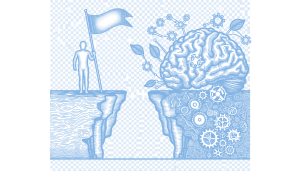 Humans use a comprehensive world model for planning and decision-making, a concept explored in AI research by figures like Jurgen Schmidhuber and Yann Lecun through 'World Models'. These models are predominantly applied in the physical realm, particularly within the video and image AI spheres, rather than directly in decision-making or planning. Large Language Models (LLMs), which primarily predict the next token in a sequence, inherently lack the capability to plan or make decisions. However, a new research paper on Hierarchical Planning demonstrates a method that employs world modeling to outperform leading LLMs in a planning benchmark, suggesting a potential pathway for integrating world modeling with LLMs for enhanced planning capabilities. This matters because it highlights the limitations of current LLMs in planning tasks and explores innovative approaches to overcome these challenges.
-
AI’s Shift from Hype to Practicality by 2026
Read Full Article: AI’s Shift from Hype to Practicality by 2026 In 2026, AI is expected to transition from the era of hype and massive language models to a more pragmatic and practical phase. The focus will shift towards deploying smaller, fine-tuned models that are cost-effective and tailored for specific applications, enhancing efficiency and integration into human workflows. World models, which allow AI systems to understand and interact with 3D environments, are anticipated to make significant strides, particularly in gaming, while agentic AI tools like Anthropic's Model Context Protocol will facilitate better integration into real-world systems. This evolution will likely emphasize augmentation over automation, creating new roles in AI governance and deployment, and paving the way for physical AI applications in devices like wearables and robotics. This matters because it signals a shift towards more sustainable and impactful AI technologies that are better integrated into everyday life and industry.