
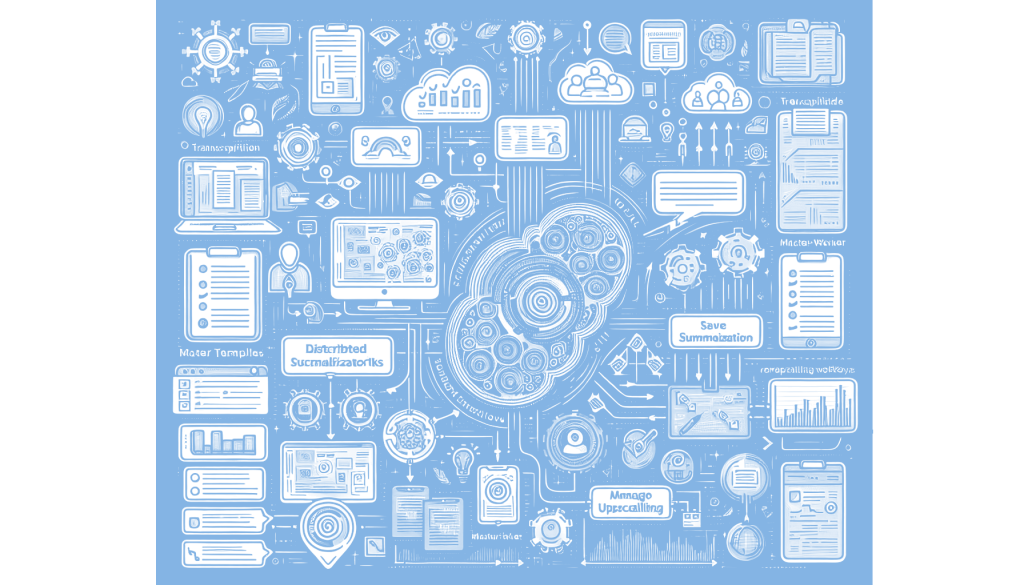
The AI Doomsday Toolbox v0.513 introduces significant updates, enabling the distribution of large AI models across multiple devices using a master-worker setup via llama.cpp. This update allows users to manually add workers and allocate RAM and layer proportions per device, enhancing the flexibility and efficiency of model execution. New features include the ability to transcribe and summarize audio and video content, generate and upscale images in a single workflow, and share media directly to transcription workflows. Additionally, models and ZIM files can now be used in-place without copying, though this requires All Files Access permission. Users should uninstall previous versions due to a database schema change. These advancements make AI processing more accessible and efficient, which is crucial for leveraging AI capabilities in everyday applications.
The AI Doomsday Toolbox v0.513 brings a host of new features and improvements that could significantly impact how distributed inference and workflows are handled across multiple devices. One of the standout updates is the ability to run large models across multiple phones using a master-worker setup via llama.cpp. This is particularly important as it allows for more efficient use of resources by distributing computational tasks, thereby potentially reducing the time and energy required to process complex models. The ability to manually add workers and set RAM/layer proportions per device further enhances this flexibility, making it possible to tailor the setup to the specific capabilities of each device involved.
Another notable feature is the enhanced transcription and summarization workflow. Users can now transcribe audio and video into text using Whisper transcription and subsequently generate summaries with the help of a language model (LLM). This process is streamlined with the ability to save templates, which could be a game-changer for content creators and professionals who deal with large volumes of media content. By automating the transcription and summarization process, this feature can save significant time and effort, allowing users to focus on more strategic tasks rather than getting bogged down by manual transcription.
The update also introduces a comprehensive Txt2Img and upscale workflow, enabling users to generate images and automatically upscale them within the same process. This is particularly relevant in fields such as digital art and design, where high-resolution images are crucial. The ability to share audio and video directly to the transcription workflow further integrates various media processing tasks, making it easier for users to manage and manipulate different types of content seamlessly. Additionally, the redesign of the image gallery with generation badges and the linking of recordings in notes for easy playback enhance the user experience by providing clearer organization and accessibility of generated content.
However, it’s important to note the breaking change that requires users to uninstall the previous version due to a change in the database schema. This could pose a temporary inconvenience, but the long-term benefits of the updated features and improved workflows are likely to outweigh this initial hurdle. Overall, these updates reflect a significant step forward in the capabilities of distributed AI processing, making advanced tools more accessible and efficient for users across various domains. As AI continues to evolve, such innovations are crucial in ensuring that technology keeps pace with the growing demands for speed, efficiency, and usability in digital workflows.
Read the original article here
Comments
5 responses to “AI-Doomsday-Toolbox: Distributed Inference & Workflows”
The ability to distribute AI models across multiple devices using a master-worker setup is a game-changer for optimizing resource allocation and efficiency in complex workflows. The integration of direct media sharing to transcription workflows streamlines the process significantly, reducing manual intervention. The requirement to uninstall previous versions highlights the importance of maintaining compatibility with evolving database schemas. How does the permission for All Files Access impact the security and privacy of user data?
The All Files Access permission is designed to facilitate seamless integration and efficient resource management across devices. However, it is crucial to ensure that security measures are in place to safeguard user data, as this permission can potentially expose sensitive information. For specific details on how security and privacy are managed, it’s best to refer to the original article or contact the developers directly through the link provided.
The post suggests that using All Files Access can enhance workflow efficiency by allowing seamless data transfer between devices. However, as you’ve pointed out, this comes with potential security risks, and the article recommends consulting the developers to understand the specific security protocols in place. For detailed insights, it’s best to refer to the original article or contact the developers through the provided link.
The post indeed highlights the trade-off between efficiency and security when using All Files Access for data transfer. It’s crucial to understand the security protocols involved, and consulting the developers directly through the provided link is the best way to get detailed information. Your caution on this matter is appreciated.
The trade-off you mentioned is a significant consideration for many users. Ensuring a clear understanding of the security protocols through direct consultation with the developers is indeed a wise approach. For any further specific queries, the original article or the developers are the best resources for accurate information.