
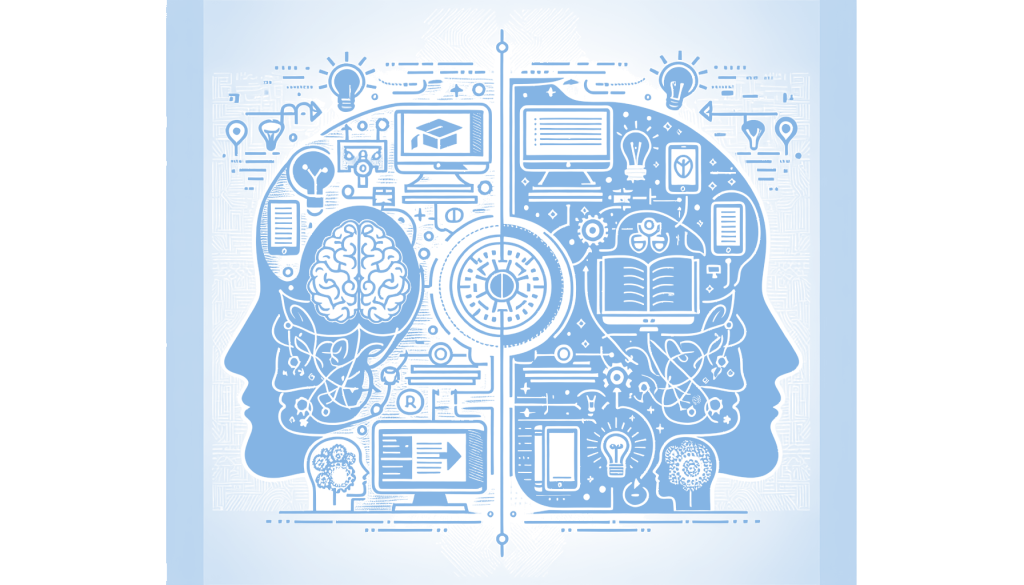
Many AI courses focus heavily on content delivery rather than fostering critical thinking, leading to a lack of clarity among learners. Observations reveal that people often engage in numerous activities, such as experimenting with multiple tools and models, without developing a cohesive understanding of how these elements interconnect. This results in fragmented projects and passive learning, where individuals merely replicate tutorials without meaningful progress. The key to effective learning and innovation in AI lies in developing mental models, systems thinking, and sharing experiences to refine approaches and expectations. Encouraging learners to prioritize clarity and reflection can significantly enhance their ability to tackle AI problems effectively.
The current landscape of AI education is heavily focused on content delivery rather than fostering critical thinking and problem-solving skills. This approach often results in learners who are overwhelmed by the sheer volume of tools and models available, yet lack the ability to effectively integrate these components into a cohesive understanding. The absence of a structured mental model means that learners may engage in numerous activities without truly grasping how different elements connect and interact. This highlights a significant gap in AI education, where the emphasis should be on developing systems thinking to enable learners to see the bigger picture and apply their knowledge more effectively.
Moreover, the tendency to passively follow tutorials and replicate experiments without a clear purpose or strategy often leads to limited progress. This passive action does not encourage learners to think critically or creatively, which is essential for innovation and problem-solving in the field of AI. Instead of merely consuming information, learners should be encouraged to engage actively with the material, question assumptions, and explore different approaches. This active engagement fosters a deeper understanding and enables learners to apply their knowledge in novel and meaningful ways, ultimately leading to more impactful outcomes.
Another critical aspect that is often overlooked is the importance of reflection and sharing of failures and lessons learned. In the fast-paced world of AI, there is a tendency to focus on successes and breakthroughs while neglecting the valuable insights that can be gained from setbacks. By reflecting on failures and sharing these experiences with others, learners can calibrate their expectations and develop a more realistic understanding of the challenges involved. This reflective practice not only enhances individual learning but also contributes to the collective knowledge of the AI community, fostering a culture of continuous improvement and innovation.
To truly excel in the field of AI, learners need to prioritize clarity and thoughtful problem-solving over mere content consumption. Developing a mental model or a “thinking trick” that aids in approaching problems can be transformative. By sharing these strategies and approaches, learners can benefit from diverse perspectives and insights, leading to more robust and innovative solutions. Encouraging a culture of sharing and collaboration can bridge the gap between content and critical thinking, ultimately leading to a more effective and impactful application of AI technologies.
Read the original article here
Comments
2 responses to “AI Courses: Content vs. Critical Thinking”
Emphasizing critical thinking and systems thinking in AI education can indeed transform passive learning into a more active and integrated process. It’s essential to go beyond just mastering tools and engage learners in synthesizing connections between concepts. How can educators balance content delivery with fostering deep analytical skills in a standard course curriculum?
One approach is to integrate project-based learning and case studies into the curriculum, allowing students to apply concepts in real-world scenarios. Encouraging collaborative problem-solving and reflective discussions can also help in developing those deeper analytical skills alongside content mastery.