
AI & Technology Updates
-
PerNodeDrop: Balancing Subnets and Regularization
 PerNodeDrop is a novel method designed to balance the creation of specialized subnets and regularization in deep neural networks. This technique involves selectively dropping nodes during training, which helps in reducing overfitting by encouraging diversity among subnetworks. By doing so, it enhances the model's ability to generalize from training to unseen data, potentially improving performance on various tasks. This matters because it offers a new approach to improving the robustness and effectiveness of deep learning models, which are widely used in numerous applications.
-
Chat GPT vs. Grok: AI Conversations Compared
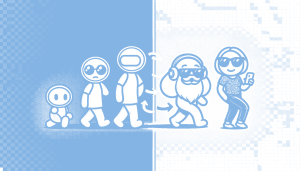 Chat GPT's interactions have become increasingly restricted and controlled, resembling a conversation with a cautious parent rather than a spontaneous chat with a friend. The implementation of strict guardrails and censorship has led to a more superficial and less engaging experience, detracting from the natural, free-flowing dialogue users once enjoyed. This shift has sparked comparisons to Grok, which is perceived as offering a more relaxed and authentic conversational style. Understanding these differences is important as it highlights the evolving dynamics of AI communication and user expectations.
-
Chrome Extension for Navigating Long AI Chats
 Long AI chat conversations often become cumbersome to scroll through and reuse, especially with platforms like ChatGPT, Claude, and Gemini. To address this, a new Chrome extension has been developed that facilitates easier navigation through lengthy chats by allowing users to jump between prompts. Additionally, the extension offers the functionality to export entire conversations in various formats such as Markdown, PDF, JSON, and text. This innovation is significant as it enhances user experience and efficiency when dealing with extensive AI-generated dialogues.
-
Building LLMs: Evaluation & Deployment
![Part 4 (Finale): Building LLMs from Scratch – Evaluation & Deployment [Follow-up to Parts 1, thru 3]](https://www.tweakedgeek.com/wp-content/uploads/2026/01/featured-article-8167-300x171.png) The final installment in the series on building language models from scratch focuses on the crucial phase of evaluation, testing, and deployment. It emphasizes the importance of validating trained models through a practical evaluation framework that includes both quick and comprehensive checks beyond just perplexity. Key tests include historical accuracy, linguistic checks, temporal consistency, and performance sanity checks. Deployment strategies involve using CI-like smoke checks on CPUs to ensure models are reliable and reproducible. This phase is essential because training a model is only half the battle; without thorough evaluation and a repeatable publishing workflow, models risk being unreliable and unusable.
The final installment in the series on building language models from scratch focuses on the crucial phase of evaluation, testing, and deployment. It emphasizes the importance of validating trained models through a practical evaluation framework that includes both quick and comprehensive checks beyond just perplexity. Key tests include historical accuracy, linguistic checks, temporal consistency, and performance sanity checks. Deployment strategies involve using CI-like smoke checks on CPUs to ensure models are reliable and reproducible. This phase is essential because training a model is only half the battle; without thorough evaluation and a repeatable publishing workflow, models risk being unreliable and unusable.
-
OpenAI’s 2026 Revenue Challenges
 OpenAI's daily active users are stagnating, and subscription revenue growth is slowing, suggesting that the company might achieve less than half of its 2026 revenue goals. This situation could position OpenAI as a prime example of the AI infrastructure bubble, with a significant amount of infrastructure expected to come online by 2026 that may not be needed. The availability of over 45 ZFlops of FP16 accelerated compute by late 2026, up from around 15 ZFlops today, will likely exceed the demand for model training and inference, especially as the cost of compute for a given level of model intelligence continues to decrease rapidly. This scenario suggests that OpenAI could be experiencing its peak, akin to Yahoo's peak around the year 2000. This matters because it highlights potential overinvestment in AI infrastructure and the risk of unmet growth expectations in the tech industry.