
AI & Technology Updates
-
LLM Optimization and Enterprise Responsibility
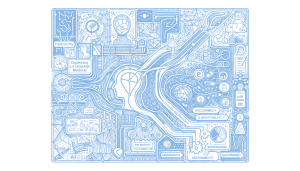 Enterprises using LLM optimization tools often mistakenly believe they are not responsible for consumer harm due to the model's third-party and probabilistic nature. However, once optimization begins, such as through prompt shaping or retrieval tuning, responsibility shifts to the enterprise, as they intentionally influence how the model represents them. This intervention can lead to increased inclusion frequency, degraded reasoning quality, and inconsistent conclusions, making it crucial for enterprises to explain and evidence the effects of their influence. Without proper governance and inspectable reasoning artifacts, claiming "the model did it" becomes an inadequate defense, highlighting the need for enterprises to be accountable for AI outcomes. This matters because as AI becomes more integrated into decision-making processes, understanding and managing its influence is essential for ethical and responsible use.
-
Critical Positions and Their Failures in AI
 An analysis of structural failures in prevailing positions on AI highlights several key misconceptions. The Control Thesis argues that advanced intelligence must be fully controllable to prevent existential risk, yet control is transient and degrades with complexity. Human Exceptionalism claims a categorical difference between human and artificial intelligence, but both rely on similar cognitive processes, differing only in implementation. The "Just Statistics" Dismissal overlooks that human cognition also relies on predictive processing. The Utopian Acceleration Thesis mistakenly assumes increased intelligence leads to better outcomes, ignoring the amplification of existing structures without governance. The Catastrophic Singularity Narrative misrepresents transformation as a single event, while change is incremental and ongoing. The Anti-Mystical Reflex dismisses mystical data as irrelevant, yet modern neuroscience finds correlations with these states. Finally, the Moral Panic Frame conflates fear with evidence of danger, misinterpreting anxiety as a sign of threat rather than instability. These positions fail because they seek to stabilize identity rather than embrace transformation, with AI representing a continuation under altered conditions. Understanding these dynamics is crucial as it removes illusions and provides clarity in navigating the evolving landscape of AI.
-
AI’s Impact on Travel Agents
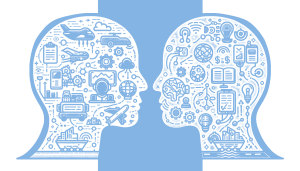 Artificial intelligence is increasingly capable of managing aspects of travel planning, such as creating itineraries and budgeting, often with greater efficiency than human travel agents. However, human agents still play a crucial role in managing complex scenarios like cancellations, providing personal guidance, and handling emergencies. This evolving dynamic suggests that while AI may take over routine tasks, human travel agents will likely shift towards more specialized roles that require personal interaction and problem-solving skills. Understanding this balance is essential as it highlights the ongoing transformation in the travel industry and the potential future roles of human agents.
-
Z.E.T.A.: AI Dreaming for Codebase Innovation
 Z.E.T.A. (Zero-shot Evolving Thought Architecture) is an innovative AI system designed to autonomously analyze and improve codebases by leveraging a multi-model approach. It creates a semantic memory graph of the code and engages in "dream cycles" every five minutes, generating novel insights such as bug fixes, refactor suggestions, and feature ideas. The architecture utilizes a combination of models for reasoning, code generation, and memory retrieval, and is optimized for various hardware configurations, scaling with model size to enhance the quality of insights. This matters because it offers a novel way to automate software development tasks, potentially increasing efficiency and innovation in coding practices.
-
Visualizing LLM Thinking with Python Toolkit
![[Project] I treated LLM inference like a physical signal trajectory. Here is a Python toolkit to visualize the "Thinking Process" (Hidden States).](https://www.tweakedgeek.com/wp-content/uploads/2025/12/featured-article-7292-300x171.png) A PhD student in Electromagnetics developed a Python toolkit to visualize the "thinking process" of Local LLMs by treating inference as a physical signal trajectory. This tool extracts hidden states layer-by-layer and presents them as 2D/3D trajectories, revealing insights such as the "Confidence Funnel," where different prompts converge into a single attractor basin, and distinct "Thinking Styles" between models like Llama-3 and Qwen-2.5. Additionally, the toolkit visualizes model behaviors like "Refusal" during safety checks, offering a geometric perspective on model dynamics and safety tuning. This approach provides a novel way to profile model behaviors beyond traditional benchmarks.
A PhD student in Electromagnetics developed a Python toolkit to visualize the "thinking process" of Local LLMs by treating inference as a physical signal trajectory. This tool extracts hidden states layer-by-layer and presents them as 2D/3D trajectories, revealing insights such as the "Confidence Funnel," where different prompts converge into a single attractor basin, and distinct "Thinking Styles" between models like Llama-3 and Qwen-2.5. Additionally, the toolkit visualizes model behaviors like "Refusal" during safety checks, offering a geometric perspective on model dynamics and safety tuning. This approach provides a novel way to profile model behaviors beyond traditional benchmarks.