
AI scalability
-
InfiniBand’s Role in High-Performance Clusters
Read Full Article: InfiniBand’s Role in High-Performance Clusters NVIDIA's acquisition of Mellanox in 2020 strategically positioned the company to handle the increasing demands of high-performance computing, especially with the rise of AI models like ChatGPT. InfiniBand, a high-performance fabric standard developed by Mellanox, plays a crucial role in addressing potential bottlenecks at the 100 billion parameter scale by providing exceptional interconnect performance across different system levels. This integration ensures that NVIDIA can offer a comprehensive end-to-end computing stack, enhancing the efficiency and speed of processing large-scale AI models. Understanding and improving interconnect performance is vital as it directly impacts the scalability and effectiveness of high-performance computing systems.
-
NVIDIA’s BlueField-4 Boosts AI Inference Storage
Read Full Article: NVIDIA’s BlueField-4 Boosts AI Inference Storage AI-native organizations are increasingly challenged by the scaling demands of agentic AI workflows, which require vast context windows and models with trillions of parameters. These demands necessitate efficient Key-Value (KV) cache storage to avoid the costly recomputation of context, which traditional memory hierarchies struggle to support. NVIDIA's Rubin platform, powered by the BlueField-4 processor, introduces an Inference Context Memory Storage (ICMS) platform that optimizes KV cache storage by bridging the gap between high-speed GPU memory and scalable shared storage. This platform enhances performance and power efficiency, allowing AI systems to handle larger context windows and improve throughput, ultimately reducing costs and maximizing the utility of AI infrastructure. This matters because it addresses the critical need for scalable and efficient AI infrastructure as AI models become more complex and resource-intensive.
-
NVIDIA’s Spectrum-X: Power-Efficient AI Networking
Read Full Article: NVIDIA’s Spectrum-X: Power-Efficient AI Networking NVIDIA is revolutionizing AI factories with the introduction of Spectrum-X Ethernet Photonics, the first Ethernet networking optimized with co-packaged optics. This technology, part of the NVIDIA Rubin platform, enhances power efficiency, reliability, and scalability for AI infrastructures handling multi-trillion-parameter models. Key innovations include ultra-low-jitter networking, which ensures consistent data transmission, and co-packaged silicon photonic engines that reduce power consumption and improve network resiliency. The Spectrum-X Ethernet Photonics switch offers significant performance improvements, supporting larger workloads while maintaining energy efficiency and stability. This advancement is crucial for AI factories to operate seamlessly with high-speed, reliable networking, enabling the development of next-generation AI applications.
-
NVIDIA Jetson T4000: AI for Edge and Robotics
Read Full Article: NVIDIA Jetson T4000: AI for Edge and Robotics NVIDIA's introduction of the Jetson T4000 module, paired with JetPack 7.1, marks a significant advancement in AI capabilities for edge and robotics applications. The T4000 offers high-performance AI compute with up to 1200 FP4 TFLOPs and 64 GB of memory, optimized for energy efficiency and scalability. It features real-time 4K video encoding and decoding, making it ideal for applications ranging from autonomous robots to industrial automation. The JetPack 7.1 software stack enhances AI and video codec capabilities, supporting efficient inference of large language models and vision-language models at the edge. This development allows for more intelligent, efficient, and scalable AI solutions in edge computing environments, crucial for the evolution of autonomous systems and smart infrastructure.
-
OpenAI’s Three-Mode Framework for User Alignment
Read Full Article: OpenAI’s Three-Mode Framework for User Alignment OpenAI proposes a three-mode framework to enhance user alignment while maintaining safety and scalability. The framework includes Business Mode for precise and auditable outputs, Standard Mode for balanced and friendly interactions, and Mythic Mode for deep and expressive engagement. Each mode is tailored to specific user needs, offering clarity and reducing internal tension without altering the core AI model. This approach aims to improve user experience, manage risks, and differentiate OpenAI as a culturally resonant platform. Why this matters: It addresses the challenge of aligning AI outputs with diverse user expectations, enhancing both user satisfaction and trust in AI technologies.
-
Manifold-Constrained Hyper-Connections in AI
Read Full Article: Manifold-Constrained Hyper-Connections in AI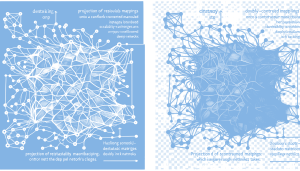 DeepSeek-AI introduces Manifold-Constrained Hyper-Connections (mHC) to tackle the instability and scalability challenges of Hyper-Connections (HC) in neural networks. The approach involves projecting residual mappings onto a constrained manifold using doubly stochastic matrices via the Sinkhorn-Knopp algorithm, which helps maintain the identity mapping property while benefiting from enhanced residual streams. This method has shown to improve training stability and scalability in large-scale language model pretraining, with negligible additional system overhead. Such advancements are crucial for developing more efficient and robust AI models capable of handling complex tasks at scale.
-
AI Model Learns While Reading
Read Full Article: AI Model Learns While Reading A collaborative effort by researchers from Stanford, NVIDIA, and UC Berkeley has led to the development of TTT-E2E, a model that addresses long-context modeling as a continual learning challenge. Unlike traditional approaches that store every token, TTT-E2E continuously trains while reading, efficiently compressing context into its weights. This innovation allows the model to achieve full-attention performance at 128K tokens while maintaining a constant inference cost. Understanding and improving how AI models process extensive contexts can significantly enhance their efficiency and applicability in real-world scenarios.
-
Solar-Open-100B-GGUF: A Leap in AI Model Design
Read Full Article: Solar-Open-100B-GGUF: A Leap in AI Model Design Solar Open is a groundbreaking 102 billion-parameter Mixture-of-Experts (MoE) model, developed from the ground up with a training dataset comprising 19.7 trillion tokens. Despite its massive size, it efficiently utilizes only 12 billion active parameters during inference, optimizing performance while managing computational resources. This innovation in AI model design highlights the potential for more efficient and scalable machine learning systems, which can lead to advancements in various applications, from natural language processing to complex data analysis. Understanding and improving AI efficiency is crucial for sustainable technological growth and innovation.
-
Manifold-Constrained Hyper-Connections: Enhancing HC
Read Full Article: Manifold-Constrained Hyper-Connections: Enhancing HC![[R] New paper by DeepSeek: mHC: Manifold-Constrained Hyper-Connections](https://www.tweakedgeek.com/wp-content/uploads/2026/01/featured-article-7774-300x171.png) Manifold-Constrained Hyper-Connections (mHC) is introduced as a novel framework to enhance the Hyper-Connections (HC) paradigm by addressing its limitations in training stability and scalability. By projecting the residual connection space of HC onto a specific manifold, mHC restores the identity mapping property, which is crucial for stable training, and optimizes infrastructure to ensure efficiency. This approach not only improves performance and scalability but also provides insights into topological architecture design, potentially guiding future foundational model developments. Understanding and improving the scalability and stability of neural network architectures is crucial for advancing AI capabilities.
Manifold-Constrained Hyper-Connections (mHC) is introduced as a novel framework to enhance the Hyper-Connections (HC) paradigm by addressing its limitations in training stability and scalability. By projecting the residual connection space of HC onto a specific manifold, mHC restores the identity mapping property, which is crucial for stable training, and optimizes infrastructure to ensure efficiency. This approach not only improves performance and scalability but also provides insights into topological architecture design, potentially guiding future foundational model developments. Understanding and improving the scalability and stability of neural network architectures is crucial for advancing AI capabilities.
-
Z.E.T.A.: AI Dreaming for Codebase Innovation
Read Full Article: Z.E.T.A.: AI Dreaming for Codebase Innovation Z.E.T.A. (Zero-shot Evolving Thought Architecture) is an innovative AI system designed to autonomously analyze and improve codebases by leveraging a multi-model approach. It creates a semantic memory graph of the code and engages in "dream cycles" every five minutes, generating novel insights such as bug fixes, refactor suggestions, and feature ideas. The architecture utilizes a combination of models for reasoning, code generation, and memory retrieval, and is optimized for various hardware configurations, scaling with model size to enhance the quality of insights. This matters because it offers a novel way to automate software development tasks, potentially increasing efficiency and innovation in coding practices.