
Tools
-
Migrate MLflow to SageMaker AI with Serverless MLflow
Read Full Article: Migrate MLflow to SageMaker AI with Serverless MLflow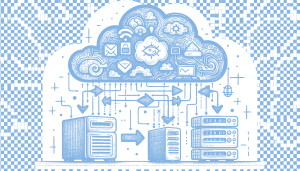 Managing a self-hosted MLflow tracking server can be cumbersome due to the need for server maintenance and resource scaling. Transitioning to Amazon SageMaker AI's serverless MLflow can alleviate these challenges by automatically adjusting resources based on demand, eliminating server maintenance tasks, and optimizing costs. The migration process involves exporting MLflow artifacts, configuring a new MLflow App on SageMaker, and importing the artifacts using the MLflow Export Import tool. This tool also supports version upgrades and disaster recovery, providing a streamlined approach to managing MLflow resources. This migration matters as it reduces operational overhead and integrates seamlessly with SageMaker's AI/ML services, enhancing efficiency and scalability for organizations.
-
Plaud Note Pro: Compact AI Recorder for Professionals
Read Full Article: Plaud Note Pro: Compact AI Recorder for Professionals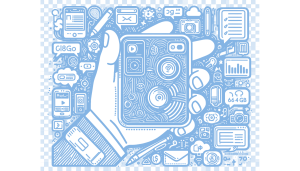 Plaud Note Pro is a credit card-sized AI-powered recording device designed for professional users, offering a unique approach compared to other wearable AI gadgets. With its ultra-thin design, it easily fits into a wallet or attaches to a phone, providing convenience without the need for constant connectivity to a smartphone. The device features 64GB of onboard memory, four MEMS microphones for high-quality audio capture, and impressive battery life, capable of 30 hours of continuous recording. It also includes a small screen for recording status and battery level, as well as haptic feedback for operation. Plaud Note Pro supports AI transcription with 300 free minutes per month and customizable templates, making it an ideal tool for those who frequently attend in-person meetings. This matters because it demonstrates the growing trend and utility of portable, AI-enhanced devices in professional settings.
-
Titans + MIRAS: AI’s Long-Term Memory Breakthrough
Read Full Article: Titans + MIRAS: AI’s Long-Term Memory Breakthrough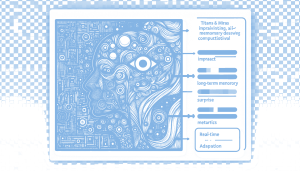 The Transformer architecture, known for its attention mechanism, faces challenges in handling extremely long sequences due to high computational costs. To address this, researchers have explored efficient models like linear RNNs and state space models. However, these models struggle with capturing the complexity of very long sequences. The Titans architecture and MIRAS framework present a novel solution by combining the speed of RNNs with the accuracy of transformers, enabling AI models to maintain long-term memory through real-time adaptation and powerful "surprise" metrics. This approach allows models to continuously update their parameters with new information, enhancing their ability to process and understand extensive data streams. This matters because it significantly enhances AI's capability to handle complex, long-term data, crucial for applications like full-document understanding and genomic analysis.
-
Accelerate Robotics with NVIDIA Isaac Sim & Marble
Read Full Article: Accelerate Robotics with NVIDIA Isaac Sim & Marble Creating realistic 3D environments for robotics simulation has become significantly more efficient with the integration of NVIDIA Isaac Sim and World Labs Marble. By utilizing generative world models, developers can rapidly transform text or image prompts into photorealistic, simulation-ready worlds, drastically reducing the time and effort traditionally required. This process involves exporting scenes from Marble, converting them to compatible formats using NVIDIA Omniverse NuRec, and importing them into Isaac Sim for simulation. This streamlined workflow enables faster robot training and testing, enhancing the scalability and effectiveness of robotic development. This matters because it accelerates the development and testing of robots, allowing for more rapid innovation and deployment in real-world applications.
-
TensorFlow 2.17 Updates
Read Full Article: TensorFlow 2.17 Updates TensorFlow 2.17 introduces significant updates, including a CUDA update that enhances performance on Ada-Generation GPUs like NVIDIA RTX 40**, L4, and L40, while dropping support for older Maxwell GPUs to keep Python wheel sizes manageable. The release also prepares for the upcoming TensorFlow 2.18, which will support Numpy 2.0, potentially affecting some edge cases in API usage. Additionally, TensorFlow 2.17 marks the last version to include TensorRT support, as future releases will no longer support it. These changes reflect ongoing efforts to optimize TensorFlow for modern hardware and software environments, ensuring better performance and compatibility.
-
Top Agentic AI Browsers to Watch in 2026
Read Full Article: Top Agentic AI Browsers to Watch in 2026 Agentic AI browsers are revolutionizing the way users interact with the web by employing autonomous AI agents to perform tasks like navigating websites, filling forms, and executing multi-step tasks. These browsers, such as Perplexity Comet, ChatGPT Atlas, Dia, Microsoft Edge Copilot, BrowserOS, Opera Neon, and Genspark, offer various features like conversational browsing, privacy control, and task automation to enhance user experience. They cater to different needs, from research assistance and creative planning to enterprise solutions and hands-free automation, providing users with personalized and efficient web interactions. This matters because it signifies a shift towards more intelligent and autonomous web browsing, potentially transforming productivity and user engagement online.
-
Tiny AI Models for Raspberry Pi
Read Full Article: Tiny AI Models for Raspberry Pi Advancements in AI have enabled the development of tiny models that can run efficiently on devices with limited resources, such as the Raspberry Pi. These models, including Qwen3, Exaone, Ministral, Jamba Reasoning, Granite, and Phi-4 Mini, leverage modern architectures and quantization techniques to deliver high performance in tasks like text generation, vision understanding, and tool usage. Despite their small size, they outperform older, larger models in real-world applications, offering capabilities such as long-context processing, multilingual support, and efficient reasoning. These models demonstrate that compact AI systems can be both powerful and practical for low-power devices, making local AI inference more accessible and cost-effective. This matters because it highlights the potential for deploying advanced AI capabilities on everyday devices, broadening the scope of AI applications without the need for extensive computing infrastructure.
-
Epilogue’s SN Operator: Play SNES Games on Modern Devices
Read Full Article: Epilogue’s SN Operator: Play SNES Games on Modern Devices Epilogue's SN Operator is a new USB cartridge slot that allows users to play and archive Super Nintendo and Super Famicom games on PCs, Macs, and handheld devices like the Steam Deck. Building on the success of the GB Operator, this device supports original game cartridges and connects via USB, working with the Playback app that includes an SNES emulator. The SN Operator also offers features like authenticating cartridges and creating digital backups, preserving save data for aging collections. Preorders open on December 30th for $59.99, with shipping expected in April 2026. This matters as it provides a modern solution for retro gaming enthusiasts to preserve and enjoy their classic game collections.
-
Nuggt Canvas: Transforming AI Outputs
Read Full Article: Nuggt Canvas: Transforming AI Outputs![[P] A better looking MCP Client (Open Source)](https://www.tweakedgeek.com/wp-content/uploads/2025/12/featured-article-6573-300x171.png) Nuggt Canvas is an open-source project designed to transform natural language requests into interactive user interfaces, enhancing the typical chatbot experience by moving beyond text-based outputs. This tool utilizes a simple Domain-Specific Language (DSL) to describe UI components, ensuring structured and predictable results, and supports the Model Context Protocol (MCP) to connect with real tools and data sources like APIs and databases. The project invites feedback and collaboration to expand its capabilities, particularly in UI components, DSL support, and MCP tool examples. By making AI outputs more interactive and usable, Nuggt Canvas aims to improve how users engage with AI-generated content.
Nuggt Canvas is an open-source project designed to transform natural language requests into interactive user interfaces, enhancing the typical chatbot experience by moving beyond text-based outputs. This tool utilizes a simple Domain-Specific Language (DSL) to describe UI components, ensuring structured and predictable results, and supports the Model Context Protocol (MCP) to connect with real tools and data sources like APIs and databases. The project invites feedback and collaboration to expand its capabilities, particularly in UI components, DSL support, and MCP tool examples. By making AI outputs more interactive and usable, Nuggt Canvas aims to improve how users engage with AI-generated content.
-
Introducing Syrin: Debugging and Testing MCP Servers
Read Full Article: Introducing Syrin: Debugging and Testing MCP Servers Building MCP servers often presents challenges such as lack of visibility into LLM decisions, tool call issues, and the absence of deterministic testing methods. Syrin, a local-first CLI debugger and test runner, addresses these challenges by offering full MCP protocol support, multi-LLM compatibility, and safe execution features. It includes CLI commands for initialization, testing, and development, and supports YAML configuration with HTTP and stdio transport. Future developments aim to enhance deterministic unit tests, workflow testing, and runtime event assertions. This matters because it provides developers with essential tools to efficiently debug and test MCP servers, improving reliability and performance.