
AI & Technology Updates
-
Top Gadgets for Pet Owners
 Pet ownership is becoming more convenient and enjoyable with the latest gadgets and AI technology designed for furry friends. The Petlibro AI-powered Scout Smart Camera offers real-time insights and two-way audio to monitor and interact with pets, while the Life360 GPS pet tracker provides real-time location tracking and geofencing to ensure pets' safety. For feeding needs, the Petlibro Wet Food Feeder keeps cat food fresh for up to 72 hours, and the Pawport Smart Pet Door enhances security with motion-sensing technology and smart controls. Additionally, the PetKit Automatic Litter Box offers odor control and health tracking features, making it a popular choice for cat owners. These innovations not only enhance pet care but also provide peace of mind for pet parents. Why this matters: These advancements in pet technology improve the quality of life for both pets and their owners by enhancing safety, convenience, and health monitoring.
-
Pipeline for Extracting Executive Compensation Data
 A pipeline has been developed to extract executive compensation data from SEC filings, specifically targeting Summary Compensation Tables within DEF-14A proxy statements. Utilizing MinerU for parsing PDFs and extracting table images, along with Qwen3-VL-32B for classifying and structuring the data, the project addresses challenges such as tables spanning multiple pages and format variations between pre- and post-2006 filings. Although still in development with some bugs, the pipeline aims to compile a comprehensive dataset of executive compensation from 2005 to the present for all US public companies. This initiative is crucial for improving transparency and accessibility of executive compensation data, potentially aiding research and analysis in corporate governance and financial studies.
-
Llama 4: Advancements and Challenges
 Llama AI technology has recently made strides with the release of Llama 4, which includes the multimodal variants Llama 4 Scout and Llama 4 Maverick, capable of integrating text, video, images, and audio. Alongside these, Meta AI introduced Llama Prompt Ops, a Python toolkit to enhance prompt effectiveness by optimizing inputs for Llama models. Despite these advancements, the reception of Llama 4 has been mixed, with some users highlighting performance issues and resource demands. Looking ahead, Meta AI is developing Llama 4 Behemoth, though its release has been delayed due to performance challenges. This matters because advancements in AI technology like Llama 4 can significantly impact various industries by improving data processing and integration capabilities.
-
Choosing the Right Language for ML
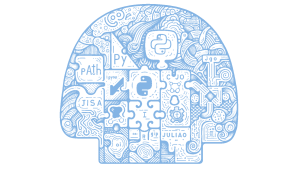 Choosing the right programming language for machine learning can greatly influence efficiency, performance, and resource availability. Python stands out as the most popular choice due to its ease of use, extensive libraries, and strong community support, despite its slower execution speed compared to compiled languages. Other languages like R, Java, C++, Julia, Go, and Rust each offer specific benefits, such as performance, scalability, or ease of integration into existing systems, making them suitable for particular use cases. Ultimately, selecting the best language depends on individual needs, goals, and the specific machine learning tasks at hand. Why this matters: Understanding the strengths and weaknesses of different programming languages helps in selecting the most appropriate one for efficient and effective machine learning projects.
-
Resolving Inconsistencies in Linear Systems
 In the linear equation system Ax=b, inconsistencies can arise when the vector b is not within the column space of A. A common solution is to add a column of 1's to matrix A, which expands the column space by introducing a new direction of reachability, allowing previously unreachable vectors like b to be included in the expanded span. This process doesn't rotate the column space but rather introduces a uniform shift, similar to how adding a constant in y=mx+b shifts the line vertically, transforming the linear system into an affine one. This matters because it provides a method to resolve inconsistencies in linear systems, making them more flexible and applicable to a wider range of problems.