
AI & Technology Updates
-
AI’s Impact on Healthcare Efficiency and Accuracy
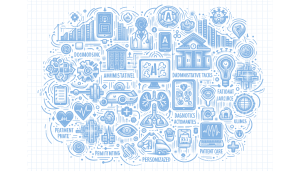 AI is transforming healthcare by optimizing administrative tasks, enhancing diagnostic accuracy, and personalizing patient care. It reduces the administrative burden, aids in charting and documentation, and automates insurance approvals, improving efficiency and reducing burnout. AI also improves diagnostics through image analysis and predictive tools, enabling earlier and more accurate disease detection. Additionally, AI enhances patient care with personalized medication plans, home care monitoring, and triage support, while also revolutionizing medical research. Despite its vast potential, challenges remain in safely integrating AI into healthcare systems. This matters because AI's integration into healthcare can significantly improve efficiency, patient outcomes, and the overall quality of care.
-
VeridisQuo: Open Source Deepfake Detector with Explainable AI
 Python remains the dominant programming language for machine learning due to its comprehensive libraries and user-friendly nature. However, other languages like C++ and Rust are favored for performance-critical tasks due to their speed and optimization capabilities. Julia, while noted for its performance, is less widely adopted, and languages like Kotlin, Java, and C# are used for platform-specific ML applications. High-level languages such as Go, Swift, and Dart are chosen for their ability to compile to native code, enhancing performance, while R and SQL serve roles in statistical analysis and data management. CUDA is utilized for GPU programming to boost ML tasks, and JavaScript is often employed in full-stack web projects involving machine learning. Understanding the strengths of each language allows developers to choose the best tool for their specific ML needs.
-
VeridisQuo: Open Source Deepfake Detector
 VeridisQuo is an open source deepfake detection system that integrates spatial and frequency analysis with explainable AI techniques. The system utilizes EfficientNet-B4 for spatial feature extraction and combines it with frequency analysis using DCT 8×8 blocks and FFT radial bins, resulting in a 2816-dimensional feature vector that feeds into an MLP classifier. This approach not only enhances the accuracy of deepfake detection but also provides insights into the decision-making process through techniques like GradCAM, making the model's predictions more interpretable. Understanding and detecting deepfakes is crucial in maintaining the integrity of digital media and combating misinformation.
-
Highlights from CES 2026: Innovations and Trends
 CES 2026 showcased a range of innovative consumer electronics, with standout products including LG Display's high-refresh-rate OLED panels that address color fringing issues, and Corsair's Galleon 100 SD keyboard featuring an integrated Stream Deck. TCL's X11L SQD-Mini LED TV impressed with its vibrant colors and peak brightness, while Asus's ROG Zephyrus Duo dual-screen laptop promises enhanced gaming and productivity. The Aqara Smart Lock U400 and Mercedes' Drive Assist Pro highlighted advancements in smart home technology and autonomous driving, respectively. Additionally, the Withings Body Scan 2 and L'Oréal's LED face mask offered new approaches to health and beauty tech, emphasizing user-friendly design and regulatory compliance. These innovations reflect a trend towards more integrated, user-centric technology that enhances daily life. Why this matters: The advancements and innovations presented at CES 2026 highlight the future direction of consumer electronics, emphasizing improved user experience, integration, and accessibility across various tech domains.
-
Turning Classic Games into DeepRL Environments
 Turning classic games into Deep Reinforcement Learning environments offers a unique opportunity for research and competition, allowing AI to engage in AI vs AI and AI vs COM scenarios. The choice of a deep learning framework is crucial for success, with PyTorch being favored for its Pythonic nature and ease of use, supported by a wealth of resources and community support. While TensorFlow is popular in the industry for its production-ready tools, its setup, especially with GPU support on Windows, can be challenging. JAX is another option, though less discussed, it offers unique advantages in specific use cases. Understanding these frameworks and their nuances is essential for developers looking to leverage AI in gaming and other applications.