
AI advancements
-
Grafted Titans: Enhancing LLMs with Neural Memory
Read Full Article: Grafted Titans: Enhancing LLMs with Neural Memory An experiment with Test-Time Training (TTT) aimed to replicate Google's "Titans" architecture by grafting a trainable memory module onto a frozen open-weight model, Qwen-2.5-0.5B, using consumer-grade hardware. This new architecture, called "Grafted Titans," appends memory embeddings to the input layer through a trainable cross-attention gating mechanism, allowing the memory to update while the base model remains static. In tests using the BABILong benchmark, the Grafted Titans model achieved 44.7% accuracy, outperforming the vanilla Qwen model's 34.0% accuracy by acting as a denoising filter. However, the model faces limitations such as signal dilution and susceptibility to input poisoning, and further research is needed to address these issues. This matters because it explores innovative ways to enhance neural network performance without extensive computational resources, potentially democratizing access to advanced AI capabilities.
-
Introducing Falcon H1R 7B: A Reasoning Powerhouse
Read Full Article: Introducing Falcon H1R 7B: A Reasoning Powerhouse Falcon-H1R-7B is a reasoning-specialized model developed from Falcon-H1-7B-Base, utilizing cold-start supervised fine-tuning with extensive reasoning traces and enhanced by scaling reinforcement learning with GRPO. This model excels in multiple benchmark evaluations, showcasing its capabilities in mathematics, programming, instruction following, and general logic tasks. Its advanced training techniques and application of reinforcement learning make it a powerful tool for complex problem-solving. This matters because it represents a significant advancement in AI's ability to perform reasoning tasks, potentially transforming fields that rely heavily on logical analysis and decision-making.
-
AI’s Limitations in Visual Understanding
Read Full Article: AI’s Limitations in Visual Understanding Current vision models, including those used by ChatGPT, convert images to text before processing, which can lead to inaccuracies in tasks like counting objects in a photo. This limitation highlights the challenges in using AI for visual tasks, such as improving Photoshop lighting, where precise image understanding is crucial. Despite advancements, AI's ability to interpret images directly remains limited, as noted by research from Berkeley and MIT. Understanding these limitations is essential for setting realistic expectations and improving AI applications in visual domains.
-
AI’s Role in Revolutionizing Healthcare
Read Full Article: AI’s Role in Revolutionizing Healthcare AI is set to transform healthcare by automating clinical documentation and charting, thereby reducing administrative burdens on professionals. It promises to enhance diagnostic accuracy, especially in medical imaging, and enable personalized treatment plans tailored to individual patient needs. AI can also optimize healthcare operations, from supply chain management to emergency planning, and provide accessible mental health support. These advancements aim to improve healthcare outcomes and operational efficiency, making care more effective and personalized for patients. This matters because AI's integration into healthcare could lead to more efficient systems, better patient outcomes, and reduced costs.
-
LEMMA: Rust-Based Neural-Guided Math Solver
Read Full Article: LEMMA: Rust-Based Neural-Guided Math Solver![[P] LEMMA: A Rust-based Neural-Guided Math Problem Solver](https://www.tweakedgeek.com/wp-content/uploads/2026/01/featured-article-8445-300x171.png) LEMMA is a Rust-based neural-guided math problem solver that has been significantly enhanced with over 450 mathematics rules and a neural network that has grown from 1 million to 10 million parameters. This expansion has improved the model's accuracy and its ability to solve complex problems across multiple domains. The project, which has been in development for seven months, shows promising results and invites contributions from the community. This matters because it represents a significant advancement in AI's capability to tackle complex mathematical problems, potentially benefiting various fields that rely on advanced computational problem-solving.
LEMMA is a Rust-based neural-guided math problem solver that has been significantly enhanced with over 450 mathematics rules and a neural network that has grown from 1 million to 10 million parameters. This expansion has improved the model's accuracy and its ability to solve complex problems across multiple domains. The project, which has been in development for seven months, shows promising results and invites contributions from the community. This matters because it represents a significant advancement in AI's capability to tackle complex mathematical problems, potentially benefiting various fields that rely on advanced computational problem-solving.
-
AI Reasoning System with Unlimited Context Window
Read Full Article: AI Reasoning System with Unlimited Context Window A groundbreaking AI reasoning system has been developed, boasting an unlimited context window that has left researchers astounded. This advancement allows the AI to process and understand information without the constraints of traditional context windows, which typically limit the amount of data the AI can consider at once. By removing these limitations, the AI is capable of more sophisticated reasoning and decision-making, potentially transforming applications in fields such as natural language processing and complex problem-solving. This matters because it opens up new possibilities for AI to handle more complex tasks and datasets, enhancing its utility and effectiveness across various domains.
-
Infinitely Scalable Recursive Model (ISRM) Overview
Read Full Article: Infinitely Scalable Recursive Model (ISRM) Overview The Infinitely Scalable Recursive Model (ISRM) is a new architecture developed as an improvement over Samsung's TRM, with the distinction of being fully open source. Although the initial model was trained quickly on a 5090 and is not recommended for use yet, it allows for personal training and execution of the ISRM. The creator utilized AI minimally, primarily for generating the website and documentation, while the core code remains largely free from AI influence. This matters because it offers a new, accessible approach to scalable model architecture, encouraging community involvement and further development.
-
AI Agent for Quick Data Analysis & Visualization
Read Full Article: AI Agent for Quick Data Analysis & Visualization An AI agent has been developed to efficiently analyze and visualize data in under one minute, significantly streamlining the data analysis process. By copying the NYC Taxi Trips dataset to its workspace, the agent reads relevant files, writes and executes analysis code, and plots relationships between multiple features. It also creates an interactive map of trips in NYC, showcasing its capability to handle complex data visualization tasks. This advancement highlights the potential for AI tools to enhance productivity and accessibility in data analysis, reducing reliance on traditional methods like Jupyter notebooks.
-
Tech Billionaires Cash Out $16B Amid Stock Surge
Read Full Article: Tech Billionaires Cash Out $16B Amid Stock Surge In 2025, tech billionaires capitalized on a booming stock market, collectively cashing out over $16 billion as tech stocks reached unprecedented heights. Jeff Bezos led the charge, selling 25 million Amazon shares for $5.7 billion, coinciding with personal milestones like his marriage to Lauren Sanchez. Other notable executives included Oracle’s Safra Catz, who sold $2.5 billion, and Nvidia’s Jensen Huang, who sold $1 billion as Nvidia became the first $5 trillion company. These transactions were largely executed through pre-arranged trading plans, highlighting a strategic approach to leveraging an AI-driven rally that significantly boosted tech stock valuations. This matters because it underscores the influence of AI advancements on market dynamics and the strategic financial maneuvers of tech leaders.
-
Manifold-Constrained Hyper-Connections in AI
Read Full Article: Manifold-Constrained Hyper-Connections in AI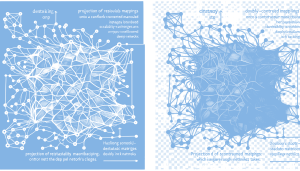 DeepSeek-AI introduces Manifold-Constrained Hyper-Connections (mHC) to tackle the instability and scalability challenges of Hyper-Connections (HC) in neural networks. The approach involves projecting residual mappings onto a constrained manifold using doubly stochastic matrices via the Sinkhorn-Knopp algorithm, which helps maintain the identity mapping property while benefiting from enhanced residual streams. This method has shown to improve training stability and scalability in large-scale language model pretraining, with negligible additional system overhead. Such advancements are crucial for developing more efficient and robust AI models capable of handling complex tasks at scale.