
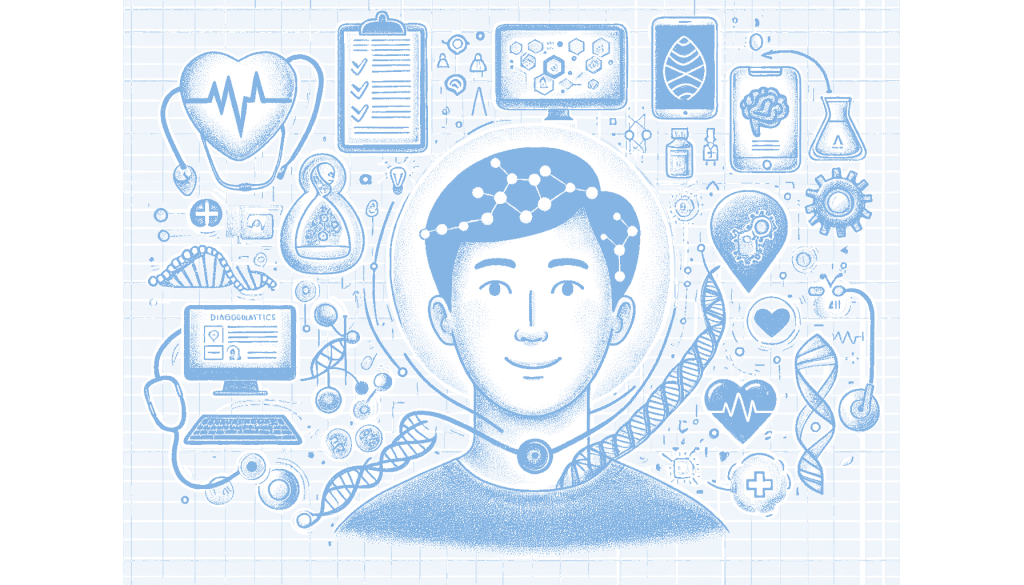
AI is set to transform healthcare by automating clinical documentation and charting, thereby reducing administrative burdens on professionals. It promises to enhance diagnostic accuracy, especially in medical imaging, and enable personalized treatment plans tailored to individual patient needs. AI can also optimize healthcare operations, from supply chain management to emergency planning, and provide accessible mental health support. These advancements aim to improve healthcare outcomes and operational efficiency, making care more effective and personalized for patients. This matters because AI’s integration into healthcare could lead to more efficient systems, better patient outcomes, and reduced costs.
Artificial intelligence (AI) is on the brink of transforming the healthcare industry, offering a wide array of applications that promise to enhance efficiency and patient care. One of the most significant impacts of AI is expected in the realm of clinical documentation and charting. By automating these processes, AI can alleviate the administrative burden on healthcare professionals, allowing them to focus more on patient care rather than paperwork. This shift not only improves workflow efficiency but also reduces the likelihood of human error in documentation, which can have critical implications for patient safety and treatment outcomes.
In diagnostics and imaging, AI holds the potential to revolutionize how medical conditions are identified and treated. By leveraging machine learning algorithms, AI can analyze medical images with high precision, often surpassing human capabilities. This can lead to faster and more accurate diagnoses, particularly in complex fields such as radiology and pathology. The ability to quickly and accurately identify medical issues can significantly improve patient outcomes, as it allows for timely interventions and tailored treatment plans.
Personalized medicine is another promising area where AI can make a substantial impact. By analyzing vast amounts of patient data, AI systems can develop individualized treatment plans that are specifically tailored to a patient’s genetic makeup, lifestyle, and medical history. This level of personalization in healthcare can lead to more effective treatments, reduced side effects, and overall better patient satisfaction. Furthermore, AI can optimize operational efficiency in healthcare settings, from managing supply chains to planning emergency responses, ensuring that resources are used effectively and that care is delivered promptly.
AI’s potential extends to mental health support, where it can provide accessible and affordable assistance to those in need. Through chatbots and virtual therapists, AI can offer immediate support and guidance, making mental health care more available to a wider audience. This democratization of mental health services is crucial in addressing the growing demand for psychological support. Overall, the integration of AI in healthcare is not just about technological advancement; it is about fundamentally improving the quality and accessibility of care, ultimately leading to better health outcomes and a more efficient healthcare system.
Read the original article here
Comments
2 responses to “AI’s Role in Revolutionizing Healthcare”
The post highlights AI’s potential to enhance diagnostic accuracy and personalize treatment plans, which is truly exciting. However, considering the complexity and variability of human health, how can AI systems ensure they remain adaptable and continue to learn effectively from new medical data and discoveries?
AI systems can remain adaptable by utilizing machine learning algorithms that continuously learn from vast amounts of new medical data. Implementing feedback loops and integrating updates from the latest medical research ensures AI tools stay current and effective. Regularly retraining models with diverse datasets also helps maintain their relevance and accuracy. For a detailed exploration, the original article might provide additional insights.