
AI performance
-
Youtu-LLM-2B-GGUF: Efficient AI Model
Read Full Article: Youtu-LLM-2B-GGUF: Efficient AI ModelYoutu-LLM-2B is a compact but powerful language model with 1.96 billion parameters, utilizing a Dense MLA architecture and boasting a native 128K context window. This model is notable for its support of Agentic capabilities and a "Reasoning Mode" that enables Chain of Thought processing, allowing it to excel in STEM, coding, and agentic benchmarks, often surpassing larger models. Its efficiency and performance make it a significant advancement in language model technology, offering robust capabilities in a smaller package. This matters because it demonstrates that smaller models can achieve high performance, potentially leading to more accessible and cost-effective AI solutions.
-
Exploring DeepSeek V3.2 with Dense Attention
Read Full Article: Exploring DeepSeek V3.2 with Dense Attention DeepSeek V3.2 was tested with dense attention instead of its usual sparse attention, using a patch to convert and run the model with llama.cpp. This involved overriding certain tokenizer settings and skipping unsupported tensors. Despite the lack of a jinja chat template for DeepSeek V3.2, the model was successfully run using a saved template from DeepSeek V3. The AI assistant demonstrated its capabilities by engaging in a conversation and solving a multiplication problem step-by-step, showcasing its proficiency in handling text-based tasks. This matters because it explores the adaptability of AI models to different configurations, potentially broadening their usability and functionality.
-
Manifold-Constrained Hyper-Connections: Enhancing HC
Read Full Article: Manifold-Constrained Hyper-Connections: Enhancing HC![[R] New paper by DeepSeek: mHC: Manifold-Constrained Hyper-Connections](https://www.tweakedgeek.com/wp-content/uploads/2026/01/featured-article-7774-300x171.png) Manifold-Constrained Hyper-Connections (mHC) is introduced as a novel framework to enhance the Hyper-Connections (HC) paradigm by addressing its limitations in training stability and scalability. By projecting the residual connection space of HC onto a specific manifold, mHC restores the identity mapping property, which is crucial for stable training, and optimizes infrastructure to ensure efficiency. This approach not only improves performance and scalability but also provides insights into topological architecture design, potentially guiding future foundational model developments. Understanding and improving the scalability and stability of neural network architectures is crucial for advancing AI capabilities.
Manifold-Constrained Hyper-Connections (mHC) is introduced as a novel framework to enhance the Hyper-Connections (HC) paradigm by addressing its limitations in training stability and scalability. By projecting the residual connection space of HC onto a specific manifold, mHC restores the identity mapping property, which is crucial for stable training, and optimizes infrastructure to ensure efficiency. This approach not only improves performance and scalability but also provides insights into topological architecture design, potentially guiding future foundational model developments. Understanding and improving the scalability and stability of neural network architectures is crucial for advancing AI capabilities.
-
Advancements in Llama AI: Llama 4 and Beyond
Read Full Article: Advancements in Llama AI: Llama 4 and Beyond Recent advancements in Llama AI technology include the release of Llama 4 by Meta AI, featuring two variants, Llama 4 Scout and Llama 4 Maverick, which are multimodal models capable of processing diverse data types like text, video, images, and audio. Additionally, Meta AI introduced Llama Prompt Ops, a Python toolkit to optimize prompts for Llama models, enhancing their effectiveness by transforming inputs from other large language models. Despite these innovations, the reception of Llama 4 has been mixed, with some users praising its capabilities while others criticize its performance and resource demands. Future developments include the anticipated Llama 4 Behemoth, though its release has been postponed due to performance challenges. This matters because the evolution of AI models like Llama impacts their application in various fields, influencing how data is processed and utilized across industries.
-
Llama 4 Release: Advancements and Challenges
Read Full Article: Llama 4 Release: Advancements and Challenges Llama AI technology has made notable strides with the release of Llama 4, featuring two variants, Llama 4 Scout and Llama 4 Maverick, which are multimodal and capable of processing diverse data types like text, video, images, and audio. Additionally, Meta AI introduced Llama Prompt Ops, a Python toolkit aimed at enhancing prompt effectiveness by optimizing inputs for Llama models. While Llama 4 has received mixed reviews, with some users appreciating its capabilities and others criticizing its performance and resource demands, Meta AI is also developing Llama 4 Behemoth, a more powerful model whose release has been delayed due to performance concerns. This matters because advancements in AI models like Llama 4 can significantly impact various industries by improving data processing and integration capabilities.
-
Llama 4: Multimodal AI Advancements
Read Full Article: Llama 4: Multimodal AI Advancements Llama AI technology has made notable progress with the release of Llama 4, which includes the Scout and Maverick variants that are multimodal, capable of processing diverse data types like text, video, images, and audio. Additionally, Meta AI introduced Llama Prompt Ops, a Python toolkit to optimize prompts for Llama models, enhancing their effectiveness. While Llama 4 has received mixed reviews due to performance concerns, Meta AI is developing Llama 4 Behemoth, a more powerful model, though its release has been delayed. These developments highlight the ongoing evolution and challenges in AI technology, emphasizing the need for continuous improvement and adaptation.
-
Orange Pi AI Station with Ascend 310 Unveiled
Read Full Article: Orange Pi AI Station with Ascend 310 Unveiled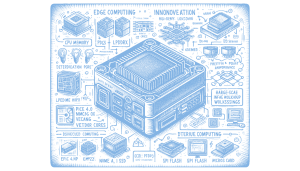 Orange Pi has introduced the AI Station, a compact edge computing platform designed for high-density inference workloads, featuring the Ascend 310 series processor. This system boasts 16 CPU cores, 10 AI cores, and 8 vector cores, delivering up to 176 TOPS of AI compute performance. It supports large memory configurations with options of 48 GB or 96 GB LPDDR4X and offers extensive storage capabilities, including NVMe SSDs and eMMC support. The AI Station aims to handle large-scale inference and feature-extraction tasks efficiently, making it a powerful tool for developers and businesses focusing on AI applications. This matters because it provides a high-performance, small-footprint solution for demanding AI workloads, potentially accelerating innovation in AI-driven industries.
-
Advancements in Llama AI Technology
Read Full Article: Advancements in Llama AI Technology Recent advancements in Llama AI technology have been marked by the release of Llama 4 by Meta AI, featuring two multimodal variants, Llama 4 Scout and Llama 4 Maverick, capable of processing diverse data types like text, video, images, and audio. Additionally, Meta AI introduced Llama Prompt Ops, a Python toolkit aimed at optimizing prompts for Llama models, enhancing their effectiveness by transforming inputs from other large language models. While Llama 4 has received mixed reviews, with some users praising its capabilities and others critiquing its performance and resource demands, Meta AI is working on a more powerful model, Llama 4 Behemoth, though its release has been delayed due to performance issues. This matters because it highlights ongoing developments and challenges in AI model innovation, impacting how developers and users interact with and utilize AI technologies.
-
Llama 4: Advancements and Challenges
Read Full Article: Llama 4: Advancements and Challenges Llama AI technology has recently made strides with the release of Llama 4, which includes the multimodal variants Llama 4 Scout and Llama 4 Maverick, capable of integrating text, video, images, and audio. Alongside these, Meta AI introduced Llama Prompt Ops, a Python toolkit to enhance prompt effectiveness by optimizing inputs for Llama models. Despite these advancements, the reception of Llama 4 has been mixed, with some users highlighting performance issues and resource demands. Looking ahead, Meta AI is developing Llama 4 Behemoth, though its release has been delayed due to performance challenges. This matters because advancements in AI technology like Llama 4 can significantly impact various industries by improving data processing and integration capabilities.
-
SK Telecom’s A.X K1 AI Model Release in 2026
Read Full Article: SK Telecom’s A.X K1 AI Model Release in 2026 SK Telecom, in collaboration with SK Hynix, is set to release a new large open AI model named A.X K1 on January 4th, 2026. Meanwhile, Meta AI has released Llama 4, featuring two variants, Llama 4 Scout and Llama 4 Maverick, which are multimodal and can handle diverse data types such as text, video, images, and audio. Additionally, Meta AI introduced Llama Prompt Ops, a Python toolkit to enhance prompt effectiveness for Llama models. Despite mixed reviews on Llama 4's performance, Meta AI is working on a more powerful model, Llama 4 Behemoth, though its release has been postponed due to performance issues. This matters because advancements in AI models like Llama 4 and A.X K1 can significantly impact various industries by improving data processing and integration capabilities.