
Deep Learning
-
Gradient Descent Visualizer Tool
Read Full Article: Gradient Descent Visualizer Tool A gradient descent visualizer is a tool designed to help users understand how the gradient descent algorithm works in optimizing functions. By visually representing the path taken by the algorithm to reach the minimum of a function, it allows learners and practitioners to gain insights into the convergence process and the impact of different parameters on the optimization. This matters because understanding gradient descent is crucial for effectively training machine learning models and improving their performance.
-
PerNodeDrop: Balancing Subnets and Regularization
Read Full Article: PerNodeDrop: Balancing Subnets and Regularization PerNodeDrop is a novel method designed to balance the creation of specialized subnets and regularization in deep neural networks. This technique involves selectively dropping nodes during training, which helps in reducing overfitting by encouraging diversity among subnetworks. By doing so, it enhances the model's ability to generalize from training to unseen data, potentially improving performance on various tasks. This matters because it offers a new approach to improving the robustness and effectiveness of deep learning models, which are widely used in numerous applications.
-
13 Free AI/ML Quizzes for Learning
Read Full Article: 13 Free AI/ML Quizzes for Learning Over the past year, an AI/ML enthusiast has created 13 free quizzes to aid in learning and testing knowledge in the field of artificial intelligence and machine learning. These quizzes cover a range of topics including Neural Networks Basics, Deep Learning Fundamentals, NLP Introduction, Computer Vision Basics, Linear Regression, Logistic Regression, Decision Trees & Random Forests, and Gradient Descent & Optimization. By sharing these resources, the creator hopes to support others in their learning journey and welcomes any suggestions for improvement. This matters because accessible educational resources can significantly enhance the learning experience and promote knowledge sharing within the AI/ML community.
-
DeepSeek’s mHC: A New Era in AI Architecture
Read Full Article: DeepSeek’s mHC: A New Era in AI Architecture Since the introduction of ResNet in 2015, the Residual Connection has been a fundamental component in deep learning, providing a solution to the vanishing gradient problem. However, its rigid 1:1 input-to-computation ratio limits the model's ability to dynamically balance past and new information. DeepSeek's innovation with Manifold-Constrained Hyper-Connections (mHC) addresses this by allowing models to learn connection weights, offering faster convergence and improved performance. By constraining these weights to be "Double Stochastic," mHC ensures stability and prevents exploding gradients, outperforming traditional methods and reducing training time impact. This advancement challenges long-held assumptions in AI architecture, promoting open-source collaboration for broader technological progress.
-
Build a Deep Learning Library with Python & NumPy
Read Full Article: Build a Deep Learning Library with Python & NumPy![Learn to build a Deep Learning library from scratch in Python and NumPy (autograd, CNNs, ResNets) [free]"](https://www.tweakedgeek.com/wp-content/uploads/2026/01/featured-article-7756-300x171.png) This project offers a comprehensive guide to building a deep learning library from scratch using Python and NumPy, aiming to demystify the complexities of modern frameworks. Key components include creating an autograd engine for automatic differentiation, constructing neural network modules with layers and activations, implementing optimizers like SGD and Adam, and developing a training loop for model persistence and dataset handling. Additionally, it covers the construction and training of Convolutional Neural Networks (CNNs), providing a conceptual and educational resource rather than a production-ready framework. Understanding these foundational elements is crucial for anyone looking to deepen their knowledge of deep learning and its underlying mechanics.
This project offers a comprehensive guide to building a deep learning library from scratch using Python and NumPy, aiming to demystify the complexities of modern frameworks. Key components include creating an autograd engine for automatic differentiation, constructing neural network modules with layers and activations, implementing optimizers like SGD and Adam, and developing a training loop for model persistence and dataset handling. Additionally, it covers the construction and training of Convolutional Neural Networks (CNNs), providing a conceptual and educational resource rather than a production-ready framework. Understanding these foundational elements is crucial for anyone looking to deepen their knowledge of deep learning and its underlying mechanics.
-
Comprehensive AI/ML Learning Roadmap
Read Full Article: Comprehensive AI/ML Learning Roadmap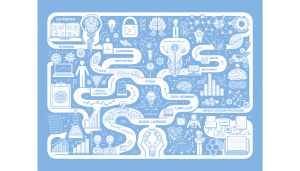 A comprehensive AI/ML learning roadmap has been developed to guide learners from beginner to advanced levels using only free resources. This structured path addresses common issues with existing roadmaps, such as being too shallow, overly theoretical, outdated, or fragmented. It begins with foundational knowledge in Python and math, then progresses through core machine learning, deep learning, LLMs, NLP, generative AI, and agentic systems, with each phase including practical projects to reinforce learning. The roadmap is open for feedback to ensure it remains a valuable and accurate tool for anyone serious about learning AI/ML without incurring costs. This matters because it democratizes access to quality AI/ML education, enabling more individuals to develop skills in this rapidly growing field.
-
HOPE Replica Achieves Negative Forgetting on SplitMNIST
Read Full Article: HOPE Replica Achieves Negative Forgetting on SplitMNIST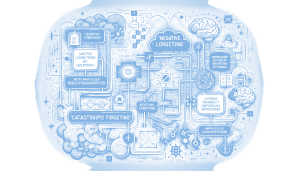 A HOPE replica, inspired by the paper "Nested Learning: The Illusion of Deep Learning Architecture," has achieved negative forgetting on the SplitMNIST task, which is a significant accomplishment in task incremental learning (Task IL). Negative forgetting, also known as positive transfer, implies that the model not only retains previously learned tasks but also improves on them while learning new tasks. This achievement highlights the potential for developing more efficient deep learning models that can better manage and utilize knowledge across multiple tasks. Understanding and implementing such models can lead to advancements in AI that are more adaptable and capable of continuous learning.
-
Dropout: Regularization Through Randomness
Read Full Article: Dropout: Regularization Through Randomness Neural networks often suffer from overfitting, where they memorize training data instead of learning generalizable patterns, especially as they become deeper and more complex. Traditional regularization methods like L2 regularization and early stopping can fall short in addressing this issue. In 2012, Geoffrey Hinton and his team introduced dropout, a novel technique where neurons are randomly deactivated during training, preventing any single pathway from dominating the learning process. This approach not only limits overfitting but also encourages the development of distributed and resilient representations, making dropout a pivotal method in enhancing the robustness and adaptability of deep learning models. Why this matters: Dropout is crucial for improving the generalization and performance of deep neural networks, which are foundational to many modern AI applications.
-
Weight Initialization: Starting Your Network Right
Read Full Article: Weight Initialization: Starting Your Network RightWeight initialization is a crucial step in setting up neural networks, as it can significantly impact the model's convergence and overall performance. Proper initialization helps avoid issues like vanishing or exploding gradients, which can hinder the learning process. Techniques such as Xavier and He initialization are commonly used to ensure weights are set in a way that maintains the scale of input signals throughout the network. Understanding and applying effective weight initialization strategies is essential for building robust and efficient deep learning models. This matters because it can dramatically improve the training efficiency and accuracy of neural networks.
-
Roadmap: Software Developer to AI Engineer
Read Full Article: Roadmap: Software Developer to AI Engineer Transitioning from a software developer to an AI engineer involves a structured roadmap that leverages existing coding skills while diving into machine learning and AI technologies. The journey spans approximately 18 months, with phases covering foundational knowledge, core machine learning and deep learning, modern AI practices, MLOps, and deployment. Key resources include free online courses, practical projects, and structured programs for accountability. The focus is on building real-world applications and gaining practical experience, which is crucial for job readiness and successful interviews. This matters because it provides a practical, achievable pathway for developers looking to pivot into the rapidly growing field of AI engineering without needing advanced degrees.