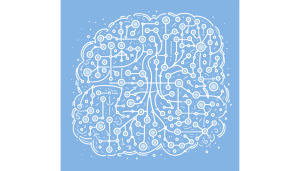
 Neural networks often suffer from overfitting, where they memorize training data instead of learning generalizable patterns, especially as they become deeper and more complex. Traditional regularization methods like L2 regularization and early stopping can fall short in addressing this issue. In 2012, Geoffrey Hinton and his team introduced dropout, a novel technique where neurons are randomly deactivated during training, preventing any single pathway from dominating the learning process. This approach not only limits overfitting but also encourages the development of distributed and resilient representations, making dropout a pivotal method in enhancing the robustness and adaptability of deep learning models. Why this matters: Dropout is crucial for improving the generalization and performance of deep neural networks, which are foundational to many modern AI applications.
