
hybrid architecture
-
Efficient TinyStories Model with GRU and Attention
Read Full Article: Efficient TinyStories Model with GRU and Attention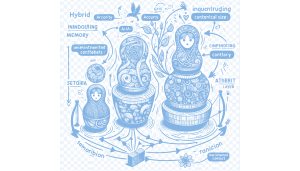 A new TinyStories model, significantly smaller than its predecessor, has been developed using a hybrid architecture of GRU and attention layers. Trained on a 20MB dataset with Google Colab's free resources, the model achieves a train loss of 2.2 and can generate coherent text by remembering context from 5-10 words ago. The architecture employs a residual memory logic within a single GRUcell layer and a self-attention layer, which enhances the model's ability to maintain context while remaining computationally efficient. Although the attention mechanism increases computational cost, the model still outperforms the larger TinyStories-1M in speed for short text bursts. This matters because it demonstrates how smaller, more efficient models can achieve comparable performance to larger ones, making advanced machine learning accessible with limited resources.
-
Llama 4: A Leap in Multimodal AI Technology
Read Full Article: Llama 4: A Leap in Multimodal AI Technology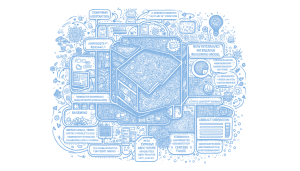 Llama 4, developed by Meta AI, represents a significant advancement in AI technology with its multimodal capabilities, allowing it to process and integrate diverse data types such as text, video, images, and audio. This system employs a hybrid expert architecture, enhancing performance and enabling multi-task collaboration, which marks a shift from traditional single-task AI models. Additionally, Llama 4 Scout, a variant of this system, features a high context window that can handle up to 10 million tokens, significantly expanding its processing capacity. These innovations highlight the ongoing evolution and potential of AI systems to handle complex, multi-format data more efficiently. This matters because it demonstrates the growing capability of AI systems to handle complex, multimodal data, which can lead to more versatile and powerful applications in various fields.
-
Plamo3 Support Merged into llama.cpp
Read Full Article: Plamo3 Support Merged into llama.cpp PLaMo 3 NICT 31B Base is a sophisticated language model developed through a collaboration between Preferred Networks, Inc. and the National Institute of Information and Communications Technology (NICT). It is pre-trained on both English and Japanese datasets, showcasing a hybrid architecture that combines Sliding Window Attention (SWA) with traditional attention layers. This integration into llama.cpp signifies an advancement in multilingual model capabilities, enhancing the potential for more nuanced and context-aware language processing. This matters because it represents a significant step forward in creating more versatile and powerful language models that can handle complex linguistic tasks across multiple languages.