
memory management
-
AI Models: Gemini and ChatGPT Enhancements
Read Full Article: AI Models: Gemini and ChatGPT Enhancements The author expresses enthusiasm for working with Gemini, suggesting it may be subtly introducing some artificial general intelligence (AGI) capabilities. Despite this, they have recently returned to using ChatGPT and commend OpenAI for its improvements, particularly in memory management and user experience. The author utilizes large language models (LLMs) primarily for coding outputs related to financial algorithmic modeling as a hobbyist. This matters because it highlights the evolving capabilities and user experiences of AI models, which can significantly impact various fields, including finance and technology.
-
Introducing memU: A Non-Embedding Memory Framework
Read Full Article: Introducing memU: A Non-Embedding Memory Framework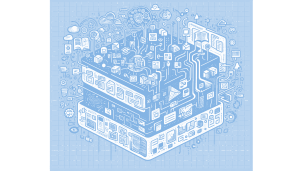 memU is an open-source memory framework designed for large language models (LLMs) and AI agents that deviates from traditional embedding-based memory systems. Instead of relying solely on embedding searches, memU allows models to read actual memory files directly, leveraging their ability to comprehend structured text. The framework is structured into three layers: a resource layer for raw data, a memory item layer for fine-grained facts and events, and a memory category layer for themed memory files. This system is adaptable, lightweight, and supports various data types, with a unique feature where memory structure self-evolves based on usage, promoting frequently accessed data and fading out less-used information. This matters because it offers a more dynamic and efficient way to manage memory in AI systems, potentially improving their performance and adaptability.
-
Rendrflow Update: Enhanced AI Performance & Stability
Read Full Article: Rendrflow Update: Enhanced AI Performance & Stability![[Project Update] I improved the On-Device AI performance of Rendrflow based on your feedback (Fixed memory leaks & 10x faster startup)](https://www.tweakedgeek.com/wp-content/uploads/2026/01/featured-article-8113-300x171.png) The recent update to Rendrflow, an on-device AI image upscaling tool for Android, addresses critical user feedback by enhancing memory management and significantly improving startup times. Memory usage for "High" and "Ultra" upscaling models has been optimized to prevent crashes on devices with lower RAM, while the initialization process has been refactored for a tenfold increase in speed. Stability issues, such as the "Gallery Sharing" bug and navigation loops, have been resolved, and the tool now supports 10 languages for broader accessibility. These improvements demonstrate the feasibility of performing high-quality AI upscaling privately and offline on mobile devices, eliminating the need for cloud-based solutions.
The recent update to Rendrflow, an on-device AI image upscaling tool for Android, addresses critical user feedback by enhancing memory management and significantly improving startup times. Memory usage for "High" and "Ultra" upscaling models has been optimized to prevent crashes on devices with lower RAM, while the initialization process has been refactored for a tenfold increase in speed. Stability issues, such as the "Gallery Sharing" bug and navigation loops, have been resolved, and the tool now supports 10 languages for broader accessibility. These improvements demonstrate the feasibility of performing high-quality AI upscaling privately and offline on mobile devices, eliminating the need for cloud-based solutions.
-
NOMA: Dynamic Neural Networks with Compiler Integration
Read Full Article: NOMA: Dynamic Neural Networks with Compiler Integration![[P] NOMA: Neural networks that realloc themselves during training (compile-time autodiff to LLVM IR)](https://www.tweakedgeek.com/wp-content/uploads/2025/12/featured-article-6346-300x171.png) NOMA, or Neural-Oriented Machine Architecture, is an experimental systems language and compiler designed to integrate reverse-mode automatic differentiation as a compiler pass, translating Rust to LLVM IR. Unlike traditional Python frameworks like PyTorch or TensorFlow, NOMA treats neural networks as managed memory buffers, allowing dynamic changes in network topology during training without halting the process. This is achieved through explicit language primitives for memory management, which preserve optimizer states across growth events, making it possible to modify network capacity seamlessly. The project is currently in alpha, with implemented features including native compilation, various optimizers, and tensor operations, while seeking community feedback on enhancing control flow, GPU backend, and tooling. This matters because it offers a novel approach to neural network training, potentially increasing efficiency and flexibility in machine learning systems.
NOMA, or Neural-Oriented Machine Architecture, is an experimental systems language and compiler designed to integrate reverse-mode automatic differentiation as a compiler pass, translating Rust to LLVM IR. Unlike traditional Python frameworks like PyTorch or TensorFlow, NOMA treats neural networks as managed memory buffers, allowing dynamic changes in network topology during training without halting the process. This is achieved through explicit language primitives for memory management, which preserve optimizer states across growth events, making it possible to modify network capacity seamlessly. The project is currently in alpha, with implemented features including native compilation, various optimizers, and tensor operations, while seeking community feedback on enhancing control flow, GPU backend, and tooling. This matters because it offers a novel approach to neural network training, potentially increasing efficiency and flexibility in machine learning systems.