
training optimization
-
Enhancing PyTorch Training with TraceML
Read Full Article: Enhancing PyTorch Training with TraceML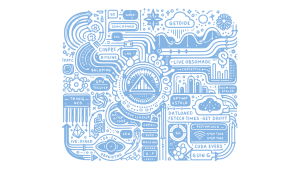 TraceML has been updated to enhance real-time observability during PyTorch training, particularly for long or remote runs. Key improvements include live monitoring of dataloader fetch times to identify input pipeline stalls, tracking GPU step time drift using non-blocking CUDA events, and monitoring CUDA memory to detect leaks before out-of-memory errors occur. Optional layer-wise timing and memory tracking are available for deeper debugging, and the tool is designed to complement existing profilers. Currently tested on single-GPU setups, with plans for multi-GPU support, TraceML aims to address common issues like step drift and memory creep across various training pipelines. Feedback is sought from users to refine signal detection. This matters because it helps optimize machine learning training processes by identifying and addressing runtime issues early.
-
TraceML’s New Layer Timing Dashboard: Real-Time Insights
Read Full Article: TraceML’s New Layer Timing Dashboard: Real-Time Insights![[P] TraceML Update: Layer timing dashboard is live + measured 1-2% overhead on real training runs](https://www.tweakedgeek.com/wp-content/uploads/2025/12/featured-article-6363-300x171.png) TraceML has introduced a new layer timing dashboard that provides a detailed breakdown of training times for each layer on both GPU and CPU, allowing users to identify bottlenecks in real-time. This live dashboard offers insights into where training time is allocated, differentiating between forward and backward passes and per-layer performance, with minimal overhead on training throughput. The tool is particularly useful for debugging slow training runs, identifying unexpected bottlenecks, optimizing mixed-precision setups, and understanding CPU/GPU synchronization issues. This advancement is crucial for those looking to optimize machine learning training processes and reduce unnecessary time expenditure.
TraceML has introduced a new layer timing dashboard that provides a detailed breakdown of training times for each layer on both GPU and CPU, allowing users to identify bottlenecks in real-time. This live dashboard offers insights into where training time is allocated, differentiating between forward and backward passes and per-layer performance, with minimal overhead on training throughput. The tool is particularly useful for debugging slow training runs, identifying unexpected bottlenecks, optimizing mixed-precision setups, and understanding CPU/GPU synchronization issues. This advancement is crucial for those looking to optimize machine learning training processes and reduce unnecessary time expenditure.
-
Training Models on Multiple GPUs with Data Parallelism
Read Full Article: Training Models on Multiple GPUs with Data Parallelism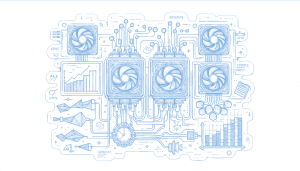 Training a model on multiple GPUs using data parallelism involves distributing data across various GPUs to enhance computational efficiency and speed. The process begins with defining a model configuration, such as the Llama model, which includes hyperparameters like vocabulary size, sequence length, and number of layers. The model utilizes components like rotary position encoding and grouped-query attention to process input data. A distributed data parallel (DDP) setup is employed to manage multiple GPUs, ensuring each GPU processes a portion of the data. The training loop involves loading data, creating attention masks, computing loss, and updating model weights using optimizers and learning rate schedulers. This approach significantly boosts training performance and is essential for handling large-scale datasets and complex models in machine learning. This matters because it enables efficient training of large models, which is crucial for advancements in AI and machine learning applications.