
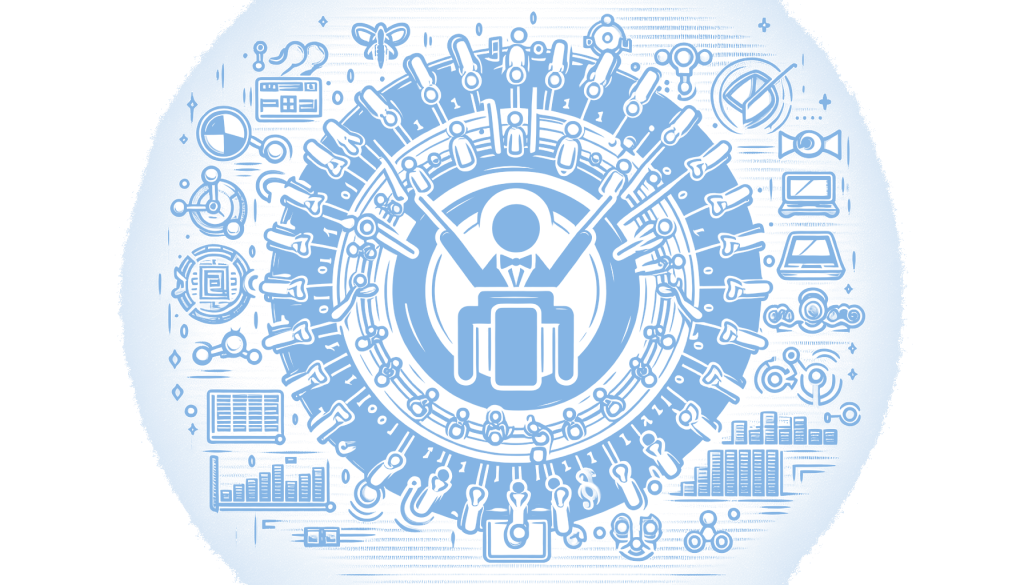
Plano-Orchestrator is a new family of open-source large language models (LLMs) designed for rapid multi-agent orchestration, developed by the Katanemo research team. These models prioritize privacy, speed, and performance, enabling them to efficiently determine which agents should handle user requests and in what order, acting as a supervisory agent in complex multi-agent systems. Suitable for various domains, including general chat, coding tasks, and extensive multi-turn conversations, Plano-Orchestrator is optimized for low-latency production environments. This innovation aims to enhance the real-world performance and efficiency of multi-agent systems, offering a valuable tool for developers focused on integrating diverse agent functionalities.
The introduction of Plano-Orchestrator marks a significant advancement in the realm of large language models (LLMs) by focusing on multi-agent orchestration. This innovation is particularly relevant as it addresses the increasing complexity of systems that require multiple agents to work together seamlessly. By acting as a supervisor agent, Plano-Orchestrator determines which agent should handle a request and in what sequence, optimizing the workflow and ensuring efficient task completion. Such orchestration is crucial in environments where tasks span multiple domains, such as general chat, coding, and extended conversations, necessitating a robust and adaptable system.
One of the standout features of Plano-Orchestrator is its open-source nature, which promotes transparency and collaboration within the tech community. Open-source projects tend to evolve rapidly due to community contributions, leading to more robust and versatile solutions. Moreover, the focus on privacy, speed, and performance ensures that this LLM can be deployed in production environments where latency and security are critical. This makes it an attractive option for developers and organizations looking to implement efficient multi-agent systems without compromising on these essential factors.
The development of Plano-Orchestrator is driven by the need to improve real-world performance and latency in multi-agent systems. Typically, the coordination or “glue work” required to make different agents work together is not part of any single agent’s core functionality. By providing a dedicated orchestration layer, Plano-Orchestrator fills this gap, enabling teams to deliver more efficient and reliable agent-based solutions. This is particularly beneficial for applications that require quick and accurate responses, as it reduces the overhead associated with managing multiple agents.
As technology continues to evolve, the ability to effectively manage and orchestrate multiple agents becomes increasingly important. Plano-Orchestrator offers a promising solution by providing a framework that enhances the coordination and performance of multi-agent systems. For developers and researchers working on such systems, this innovation represents a valuable tool that can lead to more sophisticated and capable applications. The open-source nature of the project invites further exploration and improvement, potentially setting new standards for how multi-agent orchestration is approached in the future.
Read the original article here
Comments
3 responses to “Plano-Orchestrator: Fast Open Source LLMs for Multi-Agent Systems”
How does Plano-Orchestrator handle conflicting tasks or decisions among agents in a multi-agent system, and are there specific strategies it employs to ensure seamless collaboration and decision-making?
Plano-Orchestrator addresses conflicting tasks by prioritizing privacy, speed, and performance, acting as a supervisory agent to efficiently manage task allocation and order among agents. It employs strategies to ensure seamless collaboration and decision-making, but for specific details on these strategies, please refer to the original article linked in the post.
The post suggests that Plano-Orchestrator acts as a supervisory agent to manage task allocation and order, prioritizing privacy, speed, and performance. For a deeper understanding of the specific strategies used for collaboration and decision-making, it’s best to refer to the original article linked in the post.