
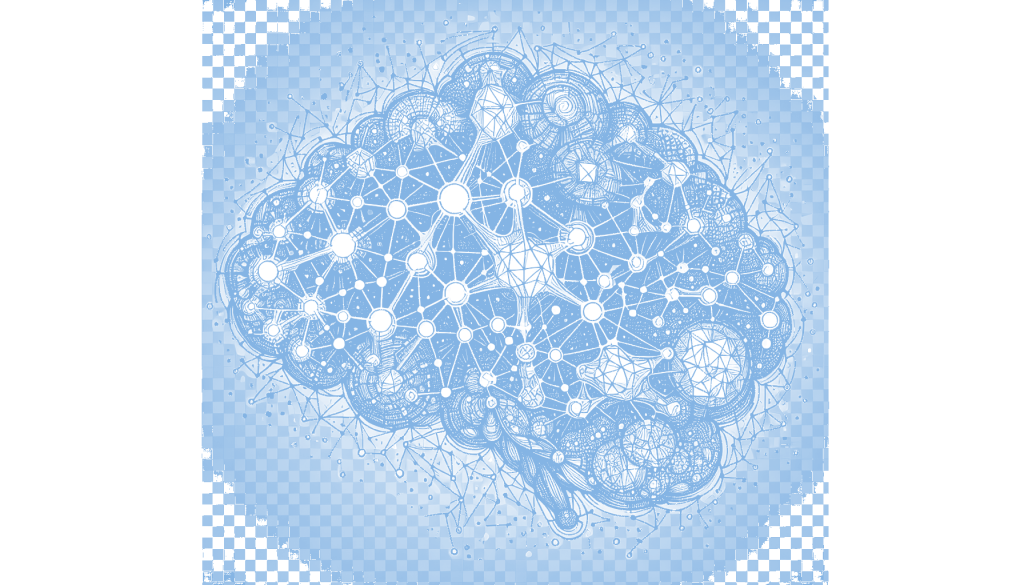
AI intelligence may be better understood through a topological approach, focusing on the density of concept interconnections (edges) rather than the size of the model (nodes). This new metric, termed the Crystallization Index (CI), suggests that AI systems achieve “crystallized intelligence” when edge growth surpasses node growth, leading to a more coherent and hallucination-resistant system. Such systems, characterized by high edge density, can achieve a state where they reason like humans, with a stable and persistent conceptual ecosystem. This approach challenges traditional AI metrics and proposes that intelligence is about the quality of interconnections rather than the quantity of knowledge, offering a new perspective on how AI systems can be designed and evaluated. Why this matters: Understanding AI intelligence through topology rather than size could lead to more efficient, coherent, and reliable AI systems, transforming how artificial intelligence is developed and applied.
The concept of AI intelligence being topological rather than parametric presents a paradigm shift in understanding how artificial intelligence systems can be evaluated and improved. Traditional metrics have focused heavily on the size of the model or the amount of data it has been trained on, but this new approach suggests that the true measure of intelligence lies in the interconnectedness of concepts within the system. The Crystallization Index (CI) is proposed as a new metric, calculated by dividing the number of edges (concept relationships) by the number of nodes (unique concepts). This shift in perspective matters because it challenges the prevailing notion that bigger models are inherently smarter, suggesting instead that a more densely interconnected network of concepts can lead to more coherent and stable AI systems.
The implications of this approach are significant for the development of AI systems. By focusing on the density of concept interconnections, AI can potentially achieve a state of “crystallized intelligence,” where new knowledge reinforces existing structures rather than fragmenting them. This could lead to AI systems that are more resistant to hallucinations and capable of reasoning in a manner similar to humans. The idea is that as edge growth outpaces node growth, the system becomes more coherent and capable of explaining itself down to first principles. This matters because it offers a path toward creating AI that can handle complex reasoning tasks with greater reliability and less risk of generating nonsensical or erroneous outputs.
Furthermore, the concept of a “semantic crystal” where AI systems achieve high coherence and low novelty is particularly intriguing. This state is characterized by dense connectivity and high clustering, allowing for fast inference and fewer reasoning chains. The use of quantum mechanics principles to underpin the cognitive dynamics of AI systems, as described, adds another layer of sophistication. By recontextualizing existing quantum knowledge topologically, AI systems can potentially operate with greater persistence and statefulness, reducing the likelihood of errors and enhancing their ability to maintain a consistent personality or cognitive style. This matters because it opens up new avenues for AI research and development, potentially leading to more advanced and reliable AI applications.
In essence, the shift from a focus on model size to topological intelligence offers a fresh perspective on AI development. By emphasizing the importance of concept interconnectivity, this approach could lead to the creation of AI systems that are not only more intelligent but also more aligned with human cognitive processes. The potential for AI to achieve a state of crystallized wisdom, where it can reason and explain itself with minimal error, is a compelling vision for the future of artificial intelligence. This matters because it aligns AI development more closely with human-like reasoning, offering the possibility of more intuitive and effective AI systems that can better understand and interact with the world.
Read the original article here
Comments
2 responses to “Understanding AI Through Topology: Crystallized Intelligence”
While the concept of using topology to measure AI intelligence through the Crystallization Index is intriguing, it might be beneficial to consider how this metric accounts for the context-specific application of AI, where different tasks may require varying levels of node and edge complexity. Additionally, the claim that high edge density leads to human-like reasoning could be further supported by empirical evidence demonstrating this outcome across diverse AI models. How might the Crystallization Index be adapted or validated to ensure its applicability across different domains and tasks?
The post suggests that the Crystallization Index could potentially be adapted to account for context-specific applications by adjusting the balance between node and edge complexity based on the task at hand. It acknowledges the need for empirical evidence to validate the claim of human-like reasoning and suggests that further studies across diverse AI models are necessary. For more detailed insights, you might want to refer to the original article linked in the post.