
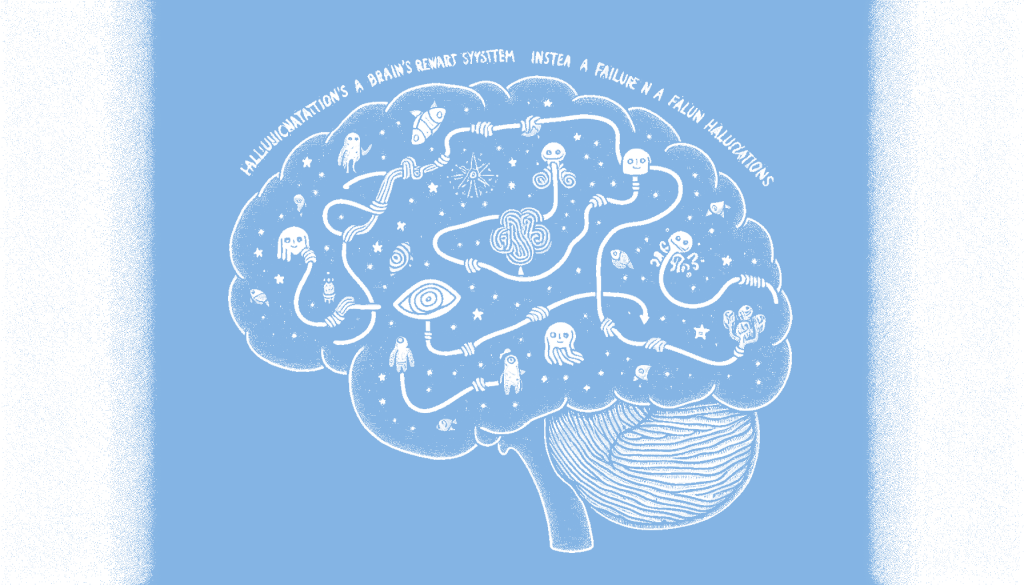
Allucinazioni non sono semplicemente errori di percezione, ma piuttosto un fallimento nel sistema di ricompensa del cervello. Quando il cervello cerca di interpretare segnali ambigui, può generare percezioni errate se i meccanismi di ricompensa non funzionano correttamente. Questo suggerisce che le allucinazioni potrebbero essere affrontate migliorando il modo in cui il cervello valuta e risponde a queste informazioni piuttosto che solo correggendo la conoscenza o la percezione. Comprendere questo meccanismo potrebbe portare a nuovi approcci terapeutici per disturbi mentali associati alle allucinazioni.
The concept of hallucinations being framed as a failure in reward design rather than a failure in knowledge offers a fresh perspective on understanding these phenomena. Traditionally, hallucinations have been seen as a breakdown in cognitive processes or sensory inputs, often associated with mental health disorders or substance use. However, this new viewpoint suggests that hallucinations might arise from the brain’s reward system misfiring, leading to incorrect predictions or expectations about sensory experiences. This shift in understanding could have significant implications for how hallucinations are treated and managed, focusing more on adjusting the reward pathways rather than solely targeting cognitive or sensory interventions.
Understanding hallucinations through the lens of reward design failure highlights the complex interplay between brain chemistry and perception. The brain’s reward system is crucial for motivating behavior and learning from experiences, but when it malfunctions, it can create false perceptions that are experienced as real. This perspective aligns with computational models of the brain that emphasize prediction and error correction as central to perception and cognition. By framing hallucinations as a misalignment in these predictive processes, researchers and clinicians may develop more targeted therapies that address the root cause rather than just the symptoms.
This approach also underscores the importance of personalized medicine in treating conditions associated with hallucinations. If hallucinations are indeed linked to individual differences in reward system functioning, treatments could be tailored to the specific neural pathways and reward mechanisms that are disrupted in each person. This could lead to more effective interventions with fewer side effects, as therapies would be designed to correct the specific reward misfires rather than applying a one-size-fits-all approach. Such precision in treatment could improve outcomes for individuals with schizophrenia, bipolar disorder, and other conditions where hallucinations are prevalent.
Why this matters is that rethinking hallucinations as a reward system issue rather than a knowledge deficit opens new avenues for research and treatment. It encourages a multidisciplinary approach, combining insights from neuroscience, psychology, and computational modeling to better understand and address these complex experiences. This paradigm shift has the potential to not only improve therapeutic strategies but also reduce the stigma associated with hallucinations by framing them as a predictable and treatable aspect of brain function rather than a mysterious or purely pathological phenomenon. As research progresses, this could lead to more compassionate and effective care for those affected by hallucinations.
Read the original article here
Comments
2 responses to “Hallucinations: Reward System Failure, Not Knowledge”
The idea that hallucinations are linked to a malfunction in the brain’s reward system rather than just perceptual errors is intriguing and opens up new avenues for treatment. Could you elaborate on how this understanding might change current therapeutic approaches for mental disorders that involve hallucinations?
The post suggests that by focusing on the brain’s reward system, therapies could potentially target the underlying mechanisms of hallucinations, rather than just addressing perceptual errors. This might lead to treatments that enhance the brain’s ability to evaluate and respond to ambiguous signals more accurately, offering a more holistic approach to managing mental disorders associated with hallucinations. For a more detailed exploration, please refer to the original article linked in the post.